 ultimate-guide
How to Manage Pool Chemistry: A Step-by-Step Guide
Table of Contents
- Understanding Pool Chemistry Basics
- Ideal Pool Chemical Levels Chart and What They Mean
- Pool Water Testing Frequency and Methods
- Step-by-Step Process for Balancing Pool Chemicals
- Can You Swim After Shocking Your Pool?
- Troubleshooting Cloudy Pool Water
- Chemical Safety and Storage
- Managing Pool Chemistry Seasonally and During High Use
- Frequently Asked Questions
Last Updated: October 5, 2026
Understanding Pool Chemistry Basics
To manage pool chemistry effectively is the foundation of keeping your water safe, clear, and inviting year-round. At Palm Leaf Pools, we've helped countless homeowners understand that pool maintenance isn't as intimidating as it sounds, it's really about understanding a few key chemical relationships and testing regularly.
Your pool water is a delicate balance. Three main factors control water quality: pH (how acidic or basic the water is), sanitizer levels (usually chlorine), and alkalinity (the water's ability to resist pH changes). When these three work together, everything else falls into place.
The reason most pool owners struggle isn't because the chemistry is complex. It's because they don't understand the order in which chemicals need to be added or why certain adjustments matter more than others.
Ideal Pool Chemical Levels Chart and What They Mean
pH Balance and Alkalinity
pH balance is the measure of how acidic or basic your pool water is, on a scale from 0 to 14. This narrow window matters because it affects how chlorine works, how comfortable swimmers feel, and whether your pool equipment corrodes or gets damaged by scale buildup.
When pH drifts too low (below 7.0), the water becomes acidic. Acidic water corrodes metal equipment, irritates skin and eyes, and makes chlorine work inefficiently.
Total alkalinity is different from pH, though they're related. Alkalinity is the water's buffering capacity, its ability to resist pH changes. Think of it as a shock absorber for your pH. Ideal total alkalinity sits between 80 and 120 ppm (parts per million).
The relationship between these two is critical: you should always adjust alkalinity first, then pH. If you reverse the order, you'll chase your tail making adjustments that don't stick.
Chlorine and Sanitization
Free chlorine is the active sanitizer in your pool, the chlorine that's actually available to kill bacteria, viruses, and algae. The ideal range is 1.0 to 3.0 ppm for residential pools. This is the number you should focus on most because it's what keeps swimmers safe.
Combined chlorine is chlorine that's already been used up fighting contaminants. It doesn't sanitize anymore, but it creates that strong "chlorine smell" most people associate with pools. High combined chlorine means your pool is being stressed by bather load, sunlight, or organic matter.
Shock treatment (also called oxidation) is a large dose of oxidizer that burns out combined chlorine and kills algae spores. Most pools need shocking once a week during heavy use, or every two weeks during normal conditions.
Calcium Hardness and Stabilizer
Calcium hardness measures dissolved calcium in your water, ideally between 200 and 400 ppm. Too little calcium, and water becomes corrosive, it will leach calcium from plaster, grout, and equipment. Too much, and calcium precipitates out as scale on surfaces and inside equipment.
Cyanuric acid (also called pool stabilizer or conditioner) protects chlorine from being destroyed by sunlight. Without it, chlorine breaks down in hours. With it, chlorine lasts longer. The ideal range is 30 to 50 ppm. However, if stabilizer gets too high (above 100 ppm), it can interfere with chlorine's ability to sanitize, a problem called chemical lock that we'll address later.
Pool Water Testing Frequency and Methods
How Often to Test
Test your pool water at least twice a week during normal conditions. If you're using your pool heavily, hosting parties, or dealing with rain and wind, test three times a week. At the start of the season, test daily for the first week while you're balancing chemistry.
The best time to test is in the morning, before the sun has broken down chlorine and before swimmers have stressed the water. Test in the deep end, away from returns where fresh chemicals have just entered.
Testing Tools and Techniques
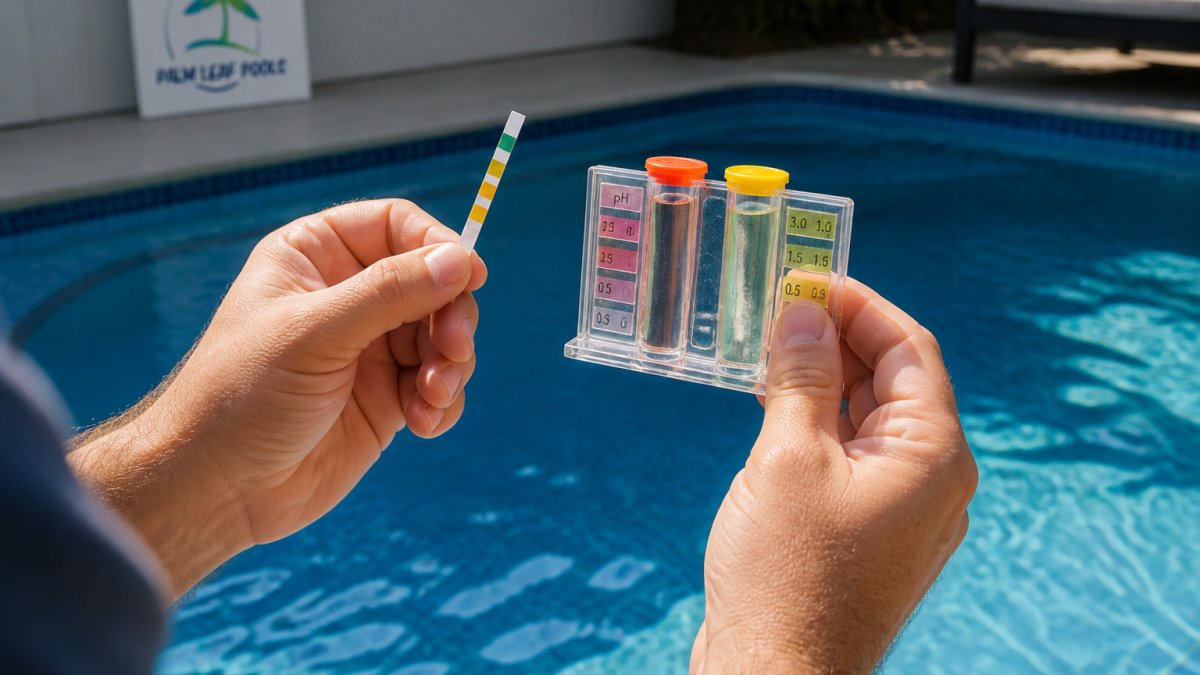
You have two main options: test strips and liquid test kits. Test strips are quick and convenient, dip one in the water for a few seconds and compare the color to the chart. Liquid test kits (like the Taylor kit) are more accurate because you're counting drops and watching color changes in a vial. For serious pool management, a liquid kit is worth the extra few minutes.
Test for pH, total alkalinity, free chlorine, and combined chlorine at minimum. If you're managing calcium hardness or suspect stabilizer problems, test those too. Keep a log of your results, you'll start seeing patterns that help you anticipate adjustments.
Step-by-Step Process for Balancing Pool Chemicals
The Correct Order to Add Pool Chemicals
This is where most DIY pool owners go wrong. Adding chemicals in the wrong order wastes money and creates chemistry problems that are harder to fix.
The correct sequence is:
- Add alkalinity increaser first (sodium bicarbonate or alkalinity up). Wait 2-4 hours and retest. Alkalinity is the foundation, everything else depends on it being right.
- Adjust pH second (muriatic acid to lower, soda ash to raise). Wait 2-4 hours and retest.
- Add chlorine or shock treatment third. Never mix chlorine with acid or alkalinity adjusters in the water, they can react dangerously.
- Add calcium hardness increaser if needed (calcium chloride). Wait several hours before testing.
- Add stabilizer last if you're raising cyanuric acid levels. Stabilizer dissolves slowly, so add it in the evening and let it circulate overnight.
Never add multiple chemicals at once. Never add chlorine while the pH is still being adjusted. The order matters because each chemical affects the others, and mixing them can cause precipitation or dangerous reactions.
Adjusting pH and Total Alkalinity
Start by testing both. If alkalinity is low (below 80 ppm), add alkalinity increaser according to the product label, typically 1.5 pounds per 10,000 gallons raises alkalinity by 10 ppm. Run the pump for 2-4 hours, then retest.
Once alkalinity is in range, check pH. If it's below 7.2, add soda ash (sodium carbonate). If it's above 7.6, add muriatic acid. These adjustments are dose-sensitive, add small amounts, wait several hours, and retest. Overshooting is common and frustrating.
A pro tip: if pH and alkalinity are both high, lower alkalinity first, which will help bring pH down naturally. If both are low, raise alkalinity first, which often raises pH as a side effect.
Adding Chlorine and Shock Treatment
Daily chlorine maintenance keeps free chlorine in the 1.0 to 3.0 ppm range. Add chlorine tablets to a floater or skimmer basket, or use liquid chlorine or granular chlorine added directly to the pool. Tablets dissolve slowly, so they're convenient but less flexible. Liquid and granular chlorine work faster, giving you more control.
Shock treatment is different. It's a large dose meant to oxidize combined chlorine and kill algae. Add shock in the evening, after swimmers have left. Run the pump all night. Test the next morning, free chlorine should be back in the normal range. Don't let anyone swim until free chlorine drops below 3.0 ppm and the water is clear.
Can You Swim After Shocking Your Pool?
No, not immediately. After shocking, free chlorine levels spike to 10-20 ppm or higher, which is unsafe for swimming. The chlorine is too strong and will irritate skin, eyes, and respiratory systems.
Wait until free chlorine drops back to 3.0 ppm or below before allowing swimmers. This usually takes 8-24 hours depending on the shock dose, water temperature, and sunlight. Test before opening the pool, don't guess based on time.
Troubleshooting Cloudy Pool Water
Common Causes and Chemical Solutions
Cloudy water usually means one of three things: low chlorine, high pH, or poor filtration. Start by testing chlorine and pH. If free chlorine is below 1.0 ppm, add chlorine immediately and retest in 4-6 hours. If pH is above 7.8, lower it with muriatic acid, which often clears the water as chlorine becomes more effective.
If chlorine and pH are both normal, the problem is usually filtration. Run the pump 24 hours a day, backwash the filter, or clean the filter media. Sometimes cloudiness is caused by high calcium hardness or high alkalinity, both can cause calcium to precipitate out of solution as a white haze. In those cases, you may need to partially drain and refill the pool to dilute the minerals.
Preventing Cloudy Water Long-Term
Test regularly so you catch problems early. Keep free chlorine between 1.0 and 3.0 ppm, pH between 7.2 and 7.6, and total alkalinity between 80 and 120 ppm. Maintain good water circulation, run the pump at least 8-12 hours daily, longer during heavy use or hot weather. Clean or backwash the filter weekly.
One common mistake is letting stabilizer (cyanuric acid) creep too high. If you've been adding stabilizer regularly and it's now above 100 ppm, you have chemical lock, chlorine can't work effectively even though the level looks fine. The only fix is partial draining and refilling to dilute the stabilizer.
Chemical Safety and Storage
Store all pool chemicals in a cool, dry place away from direct sunlight and moisture. Keep chlorine, acid, and oxidizers separate, never store them together. Many pool chemicals are corrosive or oxidizing and can react dangerously if they touch.
Always add chemicals to the pool, never add pool water to chemicals. When diluting acid, pour acid into water slowly, never the reverse. Wear gloves and eye protection when handling chemicals. Read the label on every product before using it, different brands have different concentrations and dosing instructions.
Never mix chlorine and acid. Never combine different chlorine products. Never use pool chemicals for any other purpose. If you spill a chemical, clean it up immediately and ventilate the area. If you get chemicals on skin or in eyes, rinse with water immediately and seek medical attention if irritation persists.
Managing Pool Chemistry Seasonally and During High Use
During summer or when hosting parties, test more frequently, ideally daily. Bather load (how many people are swimming) stresses chemistry quickly. Sunlight breaks down chlorine faster in hot weather. Rain dilutes chemicals and introduces contaminants.
In winter, when the pool isn't being used as heavily, you can test less frequently (once or twice a week), but don't skip testing entirely. Cold water holds chlorine longer, but algae can still grow if chemistry drifts.
If you're closing the pool for the season, balance chemistry one final time and add algaecide and winterizing chemicals according to your pool type and local climate.
Many homeowners find that managing pool chemistry becomes routine after a few months. Call today to learn how we can simplify your pool maintenance year-round.
Managing pool chemistry doesn't require a chemistry degree, it requires consistency, the right tools, and understanding the relationships between pH, alkalinity, and chlorine. If managing these details feels overwhelming or you'd rather have a professional handle it, Palm Leaf Pools provides weekly maintenance services designed to keep your chemistry balanced and your water safe.
Frequently Asked Questions
How often should I test my pool water chemistry?
Test your pool water at least 2-3 times per week during regular use, and daily during peak swimming season or after heavy rainfall. If your pool experiences high bather load or extreme weather, increase testing frequency. Weekly testing is the minimum for off-season maintenance. Consistent testing prevents chemical imbalances that lead to cloudy water, algae, or equipment damage.
Can you swim after shocking your pool?
No. After shock treatment, wait 8-24 hours before swimming, depending on the chlorine level and shock type used. Free chlorine must drop below 5 ppm for safe swimming. Always retest before allowing swimmers back in. Shock treatment temporarily raises chlorine to high levels to kill algae and bacteria; swimming too soon risks skin and eye irritation.
What is the correct order to add pool chemicals?
Always add chemicals in this sequence: alkalinity increaser first, then pH adjusters, calcium hardness, stabilizer, and finally chlorine or shock. Never mix chemicals directly; always dilute in water before adding. Wait 15-30 minutes between additions to allow each chemical to circulate. Adding chemicals out of order or mixing them can cause dangerous reactions and reduce effectiveness.
How do I fix cloudy pool water using chemistry?
Cloudy water usually results from poor filtration, low chlorine, high alkalinity, or suspended particles. Test all chemical levels first. Shock the pool to kill bacteria and algae, ensure your filter is clean, and run circulation continuously for 24 hours. If cloudiness persists, use a clarifier to help bind particles for easier filtration. Check calcium hardness and pH; imbalances often cause haziness even with proper chlorine levels.