 how-to
Why Pool Water Turns Green Quickly: A Fix Guide
Table of Contents
- Why Pool Water Turns Green Overnight
- Diagnosing the Cause: Algae vs. Metal Staining
- How to Shock a Pool and Restore Water Clarity
- Can You Swim After Shocking Your Pool?
- Post-Shock Maintenance and Prevention
- When to Call a Professional
- Frequently Asked Questions
Last Updated: September 23, 2026
Why Pool Water Turns Green Overnight
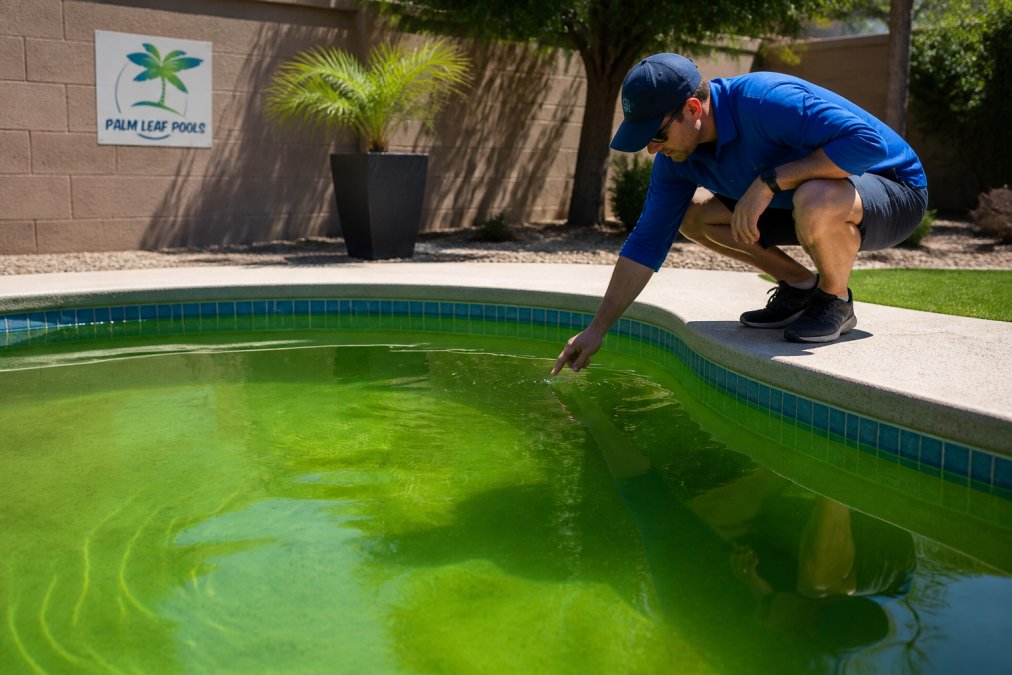
Green pool water is one of the most frustrating problems homeowners face. It happens fast, sometimes overnight, leaving you with murky water you can't swim in. The good news is that understanding why pool water turns green quickly helps you fix it and prevent it from happening again.
Several factors cause this rapid discoloration. The most common culprit is algae bloom, but metal oxidation and chemical imbalances also play major roles. The speed of the color change tells us a lot about what's actually happening in your water.
Algae bloom as the primary culprit
Algae grows fast when conditions are right. Warm water, sunlight, and low chlorine create the perfect environment for algae to explode in a matter of hours. This is why you can have clear water one day and green water the next.
Algae produces the green pigment that makes your pool look like a swamp. It feeds on phosphates and thrives when sanitization fails. Even a small drop in chlorine levels can trigger rapid growth. The faster the algae spreads, the greener your water becomes.
Three types of algae affect pools: green algae, yellow (mustard) algae, and black algae. Green algae is the most common and grows the quickest. It floats freely in the water, making it cloudy and green. Yellow algae clings to pool surfaces and is harder to kill. Black algae burrows into plaster and requires aggressive treatment.
Low chlorine levels and sanitization failure
Chlorine is your pool's primary defense against algae. It kills bacteria, viruses, and algae spores before they multiply. When chlorine drops below safe levels, nothing stops algae from taking over.
Low chlorine happens for several reasons. UV light from the sun breaks down chlorine. Heavy bather load (lots of swimmers) consumes chlorine faster. Rain dilutes your pool and reduces chemical concentration. Equipment failures, like a broken chlorinator, also cause chlorine to plummet.
Testing your water regularly catches low chlorine before algae blooms. Most pools need chlorine levels between 1 and 3 parts per million (ppm) to stay clear. Below 1 ppm, algae can start growing within hours.
Metal oxidation and copper discoloration
Not all green water is algae. Metals in your water can also turn it green. Copper is the most common culprit. It comes from corroded copper pipes, old pool equipment, or algaecide products that contain copper compounds.
When copper oxidizes (reacts with oxygen and chlorine), it turns the water green or blue-green. This type of discoloration looks different from algae. The water is usually clearer, but distinctly colored.
Diagnosing the Cause: Algae vs. Metal Staining
Knowing whether you have algae or metal staining changes how you treat the problem. The wrong diagnosis leads to wasted chemicals and continued green water.
How to tell if you have an algae problem
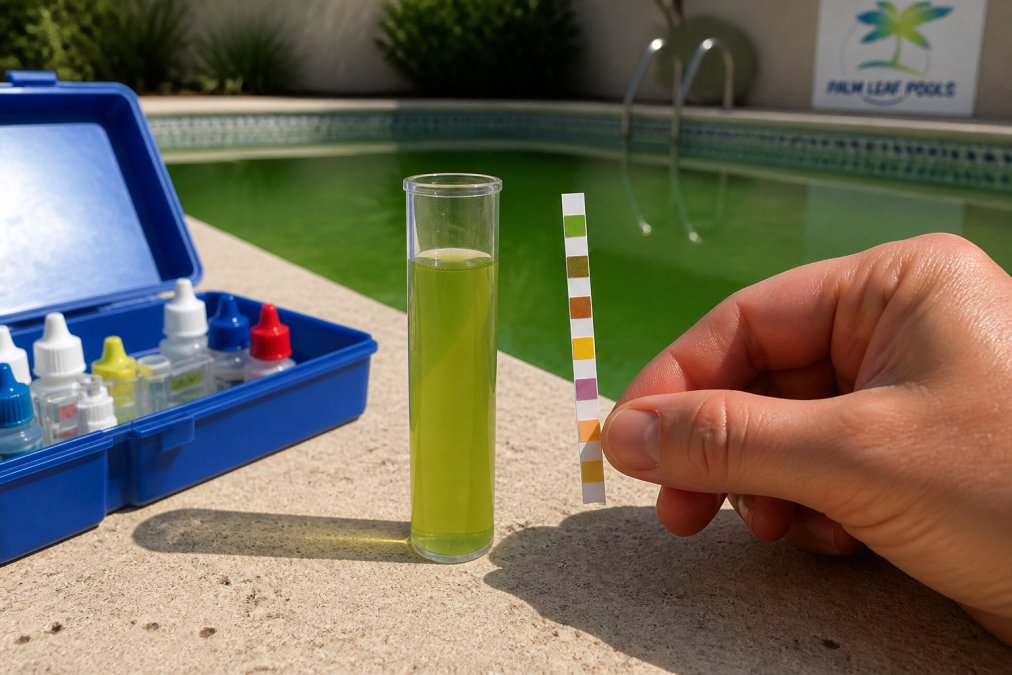
Algae water has distinct characteristics. The water is cloudy and green, ranging from light green to dark green or even brown. You can't see the pool bottom. The water feels slightly slimy if you touch it. Algae also produces a musty, earthy smell.
To confirm, use a water testing kit:
- Test chlorine levels (should be 1-3 ppm)
- Test pH balance (should be 7.2-7.6)
- Test alkalinity (should be 80-120 ppm)
Identifying metal-induced green water
Metal staining looks different. The water is usually clear or slightly cloudy, but distinctly green or blue-green. You can see the pool bottom even though the water is colored. Metal water doesn't feel slimy and doesn't have the musty smell of algae.
Test for metals using a specialized metal test kit or by checking your water chemistry:
- If chlorine and pH are normal but water is green, suspect metals
- If the green tint is uniform throughout the water, likely metals
- If you see dark spots on the pool floor or walls, definitely metals
How to Shock a Pool and Restore Water Clarity
Pool shock is a high-dose chemical treatment that kills algae and bacteria. It's the most effective way to restore clear water fast. The process takes several steps and requires careful attention to water chemistry.
Step 1: Test your water chemistry balance
Before shocking, test your water to know what you're working with. Use a water testing kit to check:
- Chlorine level
- pH balance
- Total alkalinity
- Calcium hardness (if you have hard water)
Write down all the numbers. If pH is above 7.8, lower it before shocking. High pH reduces shock effectiveness. Use pH decreaser to bring it to 7.2-7.6. Wait a few hours for the chemicals to mix, then test again.
Step 2: Calculate and apply pool shock
Shock dosage depends on your pool size and how bad the algae is. Most pools need 1-2 pounds of shock per 10,000 gallons of water. Heavily algae-infected pools may need double-dose shock.
- Turn on your pool pump and filter
- Dissolve shock in a bucket of pool water (follow package instructions)
- Pour the mixture around the pool perimeter while walking around
- Distribute evenly to avoid concentrated spots
- Keep the pump running overnight
Step 3: Run your filtration system and backwash
Your filter removes dead algae and particles from the water. Run the pump continuously for 24 hours after shocking. This circulates the shock chemical throughout the pool and pushes debris into the filter.
To backwash:
- Turn off the pump
- Set the filter valve to "backwash"
- Turn the pump back on and run for 2-3 minutes
- Turn off the pump again
- Set the valve back to "filter"
- Resume normal operation
Can You Swim After Shocking Your Pool?
This is one of the most common questions homeowners ask. The answer depends on chlorine levels and how long you're willing to wait.
Chlorine levels and safe swimming windows
Chlorine levels must drop below 5 ppm before swimming is safe. Immediately after shocking, chlorine levels spike to 10-15 ppm or higher. This is too strong and can irritate skin, eyes, and respiratory systems.
Saltwater vs. chlorine pool recovery times
Saltwater pools recover slightly faster than traditional chlorine pools. Saltwater systems generate chlorine continuously, so levels stabilize more predictably. Recovery typically takes 12-18 hours instead of 24.
Post-Shock Maintenance and Prevention
After your water clears, maintaining it prevents future green water problems. The 24 hours after shocking are critical for stabilizing your chemistry.
What to do in the 24 hours after shocking
Keep the pump running continuously for the first 24 hours. This circulates chemicals and removes debris. After 24 hours, you can return to normal pump schedules (usually 8-12 hours per day).
Test water chemistry again after 24 hours:
- Chlorine should be 1-3 ppm
- pH should be 7.2-7.6
- Alkalinity should be 80-120 ppm
Preventing green water: weekly testing and circulation
The best way to prevent green water is consistent maintenance. Test your water weekly, even when it looks clear. Early detection of chemical imbalances stops algae before it blooms.
Weekly testing checks:
- Chlorine level (should be 1-3 ppm)
- pH balance (should be 7.2-7.6)
- Total alkalinity (should be 80-120 ppm)
When to Call a Professional
Some situations are beyond DIY treatment. If you've shocked your pool twice and it's still green, or if you're unsure about water chemistry, it's time to call a professional.
Frequently Asked Questions
How long does it take for green pool water to clear up after shocking?
Most pools clear within 24 to 48 hours after shocking, depending on the severity of the algae bloom and your filtration system's efficiency. If you have a saltwater pool, expect clarity slightly faster due to the oxidizer's strength. Run your pump continuously during this period and backwash your filter every 8 hours to remove suspended solids. If water remains cloudy after 48 hours, your pH balance may need adjustment or you may need a second shock treatment.
Can you swim after shocking a pool, and how long should you wait?
You should not swim immediately after shocking your pool. For chlorine pools, wait until chlorine levels drop to 3 ppm or lower, typically 24 hours. Saltwater pools usually require 12 to 24 hours. Always test chlorine levels before allowing swimmers back in. High chlorine irritates eyes, skin, and lungs. Check your pool water chemistry balance with a test kit to confirm it's safe, pH should be between 7.2 and 7.6, and alkalinity between 80 and 120 ppm.
What causes a pool to turn green even with chlorine in it?
Green water despite chlorine typically means your chlorine isn't working effectively, usually due to high pH (above 7.8), low cyanuric acid (stabilizer), or a heavy algae bloom that outpaces your sanitization. Low chlorine levels can also result from UV degradation on sunny days or phosphate buildup that feeds algae growth. Test your water chemistry balance to identify the problem. If pH is high, lower it with pH decreaser. If algae is severe, shock treatment and algaecide may be necessary alongside regular chlorine.
Is it safe to swim in green pool water?
No, green pool water is not safe for swimming. Green discoloration indicates either algae or metal oxidation, both of which harbor bacteria and reduce water clarity to dangerous levels. Swimmers cannot see the pool floor, creating drowning risks. Additionally, algae-filled water can cause skin rashes, ear infections, and respiratory irritation. Do not allow anyone to swim until the water is clear and your chlorine levels are within safe range (2-4 ppm). Test your water before reopening.
Green pool water is frustrating, but it's fixable. Most cases clear within 24-48 hours of proper shock treatment. The key is diagnosing the cause correctly, testing your chemistry before and after, and maintaining your pool consistently to prevent future problems. Whether you handle it yourself or call a professional, acting quickly stops algae from getting worse and keeps your pool safe for your family.