 listicle
Signs Your Pool Needs Professional Cleaning
Table of Contents
- 7 Warning Signs Your Pool Needs Professional Cleaning
- How to Tell If Pool Cleaning Actually Happened
- Your Pool Water Chemistry Guide: What the Numbers Mean
- Signs of Pool Filter Failure You Shouldn't Ignore
- Stains, Scale, and Debris: When Surface Cleaning Isn't Enough
- DIY vs. Professional Pool Cleaning: A Cost-Benefit Breakdown
- Seasonal Timing: When Pools Need Extra Attention
- Frequently Asked Questions
Last Updated: September 18, 2026
7 Warning Signs Your Pool Needs Professional Cleaning
Most pool owners wait until the water turns green before calling anyone. That's a mistake. The clearest signs your pool needs professional cleaning usually show up weeks before a visible problem, and catching them early is the difference between a routine service visit and an expensive restoration.
CDC guidance on healthy swimming and pool water quality
Cloudy or Dull Water That Won't Clear
Cloudy water is the most common early signal. If the pool looks hazy and won't clear after a normal shock and filter cycle, the problem is usually deeper than surface debris.
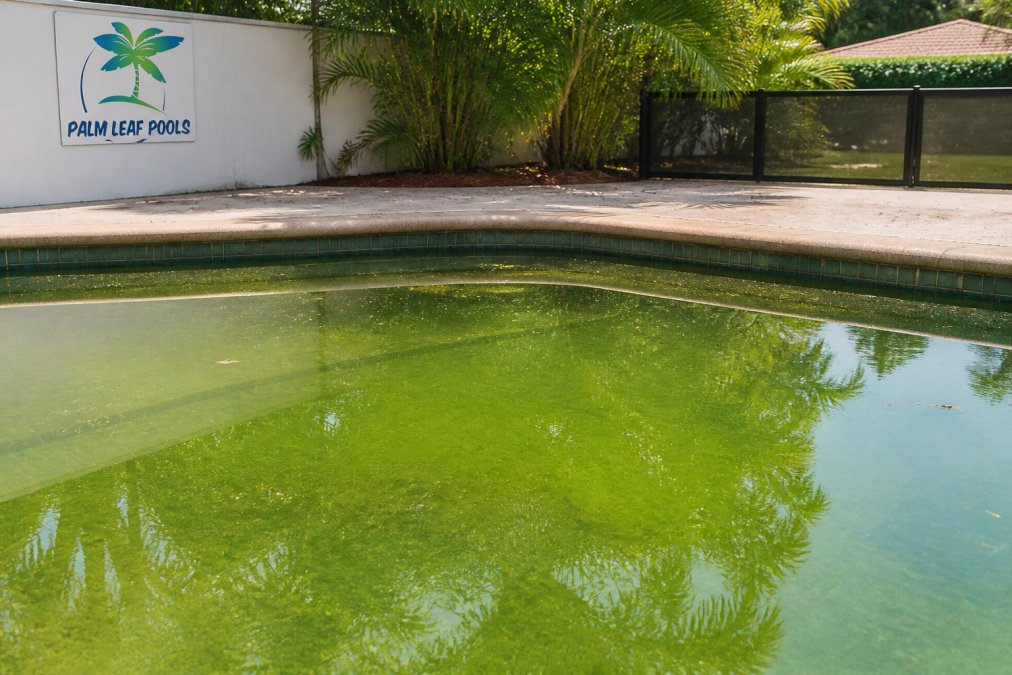
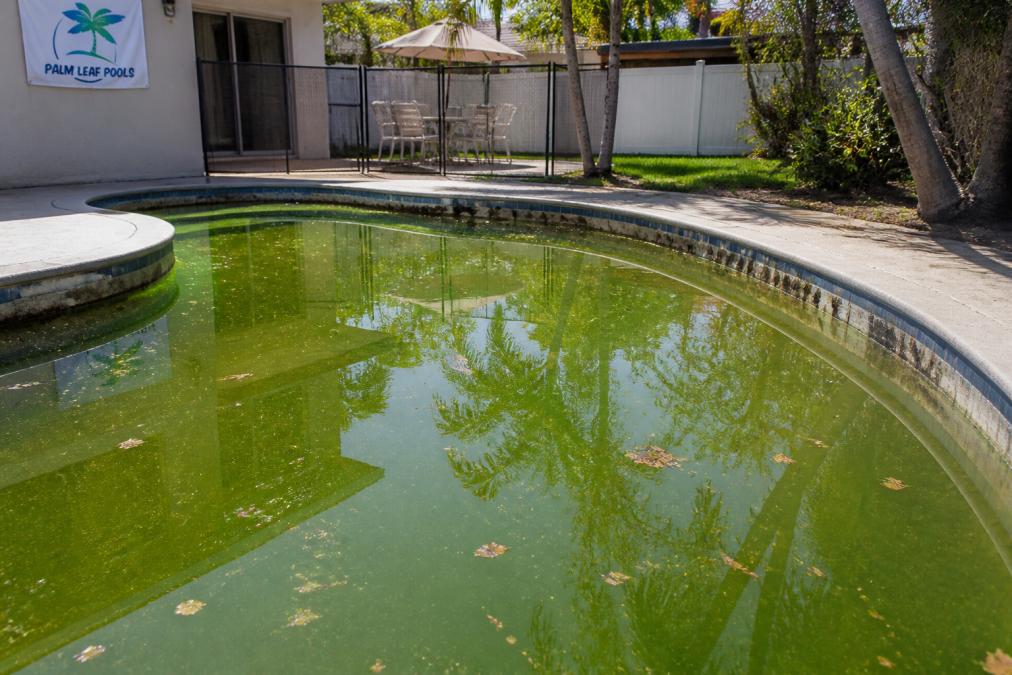
Algae Growth and Green Discoloration
Green water means algae has already established itself. Algae blooms feed on unbalanced water chemistry, especially low chlorine levels and high cyanuric acid, which reduces chlorine's ability to sanitize.
Rising Filter Pressure and Weak Circulation
Check the filter pressure gauge weekly. A reading 8-10 PSI above your clean baseline means the filter is loading up with debris and needs attention.
Strong Chemical Odors and Skin Irritation
That sharp "chlorine" smell is not a sign of too much chlorine. It's chloramines, the byproduct of chlorine reacting with sweat, sunscreen, and other contaminants.
How to Tell If Pool Cleaning Actually Happened
If you've hired help before, you know the frustration: the pool looks the same after the visit as it did before. Here's how to verify real work.
- Skimmer and pump baskets are empty. A service that skims but leaves full baskets didn't finish the job.
- Waterline tile is wiped clean. The scum line is one of the first things a thorough cleaning addresses.
- Filter pressure is recorded. Good technicians log the reading before and after.
- Chemistry numbers are documented. You should receive pH, chlorine, and alkalinity readings, not just a "looks good."
- Brush marks are visible on walls and steps. Algae hides in corners; brushing leaves evidence.
Your Pool Water Chemistry Guide: What the Numbers Mean
Water chemistry is where most DIY pool care falls apart. Here's the short version of what each reading tells you.
| Reading | Healthy Range | What It Signals When Off |
|---|---|---|
| pH | 7.4-7.6 | Low: corrosion and eye irritation. High: cloudy water, weak chlorine |
| Free chlorine | 1-3 ppm | Low: algae risk. High: skin and eye irritation |
| Total alkalinity | 80-120 ppm | Low: pH swings. High: cloudy water, scale |
| Calcium hardness | 200-400 ppm | Low: corrosive water. High: scale buildup |
| Cyanuric acid | 30-50 ppm | High: chlorine stops working effectively |
Signs of Pool Filter Failure You Shouldn't Ignore
A failing filter rarely announces itself. It just quietly stops doing its job while the pump keeps running. Watch for these equipment-specific warning signs:
- Sand or DE blowing back into the pool through the return jets
- Pressure gauge stuck at zero or maxed out
- Pump noise that's louder or rougher than usual
- Short filter cycles, where pressure rises within hours of backwashing
- Visible debris passing through the system and settling on the floor
Stains, Scale, and Debris: When Surface Cleaning Isn't Enough
Brown or gray stains along the waterline, rough patches on the plaster, and white crusty buildup around the tile are all signs that surface cleaning won't fix the problem.
DIY vs. Professional Pool Cleaning: A Cost-Benefit Breakdown
Most articles on this topic list signs and stop. The harder question is what to do once you've spotted them. That's a math problem, not a vibe check, and the math usually favors DIY for routine upkeep and professional service for anything involving chemistry drift, equipment wear, or recurring algae.
The Real Cost of DIY Isn't the Chemicals
A typical DIY owner spends 2-4 hours per week on testing, brushing, skimming, vacuuming, and balancing. That time is the visible cost. The invisible costs are the ones that decide the ROI:
- Chemical overspend. Without accurate testing, owners tend to over-correct, adding shock, algaecide, clarifier, and pH adjusters in sequence rather than diagnosing the root cause. A single misdiagnosed algae bloom can burn through a season's worth of chemicals in a few weeks.
- Equipment wear. A pump run against a clogged filter, a heater fed unbalanced water, or a salt cell scaled by high pH all fail earlier than they should. Replacement costs dwarf the price of the service visits that would have prevented them.
- Deferred problems. Stains, scale, and biofilm get more expensive to remove the longer they sit. A stain treated in week one is a brushing job. The same stain in month six is an acid wash or a resurface.
- Water waste. Chasing chemistry with drain-and-refill cycles is common when cyanuric acid or total dissolved solids creep up. That's water, sewer, and rebalancing cost stacked on top of the original problem.
When DIY Genuinely Wins
DIY is the right call when the pool is small, new, lightly used, and the owner is willing to test twice a week and stay ahead of chemistry. In that scenario, the cost of a weekly service often exceeds the cost of chemicals plus the owner's time, and the owner gets faster feedback on problems because they're in the water regularly.
When Professional Service Pays for Itself
The calculus flips when any of these are true:
- Persistent chemistry drift. If pH, alkalinity, or cyanuric acid won't hold a stable range despite regular testing, the underlying issue is usually circulation, filtration, or source water, not the chemicals. A pro diagnoses the cause; a DIY owner tends to treat the symptom.
- Recurring algae or biofilm. A bloom that returns within days of a proper shock-and-brush cycle is a plumbing or media problem. Repeated DIY attempts cost more in chemicals than a single professional deep clean.
- Aging equipment. Once a pump, filter, or heater is past its expected service life, small imbalances accelerate failure. Professional monitoring catches the warning signs earlier.
- High bather load or rental use. Pools used by many swimmers, or managed as short-term rentals, generate chloramines and debris faster than a weekly DIY routine can keep up with.
- Owner time is genuinely scarce. Two to four hours a week is real time. For many owners, the opportunity cost of that time exceeds the price of a service visit.
A Simple Decision Framework
Ask three questions:
- Is the problem visual or chemical? Visual (debris, light cloudiness) is usually DIY. Chemical (persistent imbalance, rising chlorine demand) usually needs a pro.
- Does it come back? A one-time issue is DIY. A recurring issue is a system problem, hire someone who can diagnose it.
- What's the downside if I get it wrong? If the worst case is a slightly cloudy pool, DIY is fine. If the worst case is a burned-out pump, a stained plaster surface, or swimmers getting sick, the professional visit is the cheaper option.
| Factor | DIY | Professional Service |
|---|---|---|
| Time per week | 2-4 hours | None |
| Chemical accuracy | Depends on test kit and consistency | Documented, repeatable |
| Equipment wear | Higher risk of missed early warnings | Monitored and logged |
| Problem resolution | Trial and error | Diagnosed and corrected |
| Best fit | New, small, lightly used pools | Older pools, recurring issues, high bather load, busy owners |
Seasonal Timing: When Pools Need Extra Attention
Pool care isn't the same year-round. In warmer markets with long swim seasons, demand on the system peaks in late summer, right when algae and chemistry problems tend to spike.
Three moments when professional cleaning pays off most:
- Before swim season opens. A full cleaning and chemistry reset prevents problems from starting.
- Mid-season, after heavy use. Bather load drives up chloramine levels and debris faster than normal maintenance can handle.
- Before closing or during cooler months. Skipping this step lets stains and scale set in over the off-season.
Frequently Asked Questions
How often should a pool be professionally cleaned?
Most pools benefit from professional cleaning once a week during swim season and at least every two weeks in cooler months. Pools with heavy debris, nearby trees, or frequent use may need more frequent service. A professional pool cleaning visit typically includes skimming, brushing, vacuuming, basket emptying, and water testing. If you notice recurring algae or cloudy water between visits, your pool may need a deep cleaning or a more frequent maintenance schedule.
What are the signs of a pool chemical imbalance?
Watch for cloudy water, strong chlorine odor, eye or skin irritation after swimming, scaling on tiles, and algae growth. These point to off-balance pH, alkalinity, chlorine, or calcium hardness. A water chemistry guide recommends testing pH, alkalinity, and sanitizer levels at least twice a week. When numbers drift outside normal ranges, a professional pool cleaning service can rebalance the water and identify the root cause rather than just treating symptoms.
Why is my pool water cloudy even after shocking?
Shocking alone won't fix cloudy water if the filter is clogged, circulation is weak, or pH and alkalinity are out of range. Check your filter pressure gauge first. If it reads 8-10 PSI above the clean baseline, the filter needs backwashing or a deep clean. Also verify the pump runs long enough each day. When shock treatment doesn't clear the water within 24-48 hours, it's usually a sign of pool filter failure or a chemistry issue that needs professional diagnosis.
Can a dirty pool cause skin irritation?
Yes. Unbalanced pH, high chloramine levels, and bacterial growth in neglected water can cause rashes, itchy skin, and eye irritation. A pool with visible algae or a strong chemical odor is especially likely to irritate skin. If irritation happens after swimming, test the water immediately and avoid using the pool until levels are corrected. Professional pool cleaning addresses both the visible debris and the underlying water chemistry that causes irritation.
Pool ownership shouldn't mean weekends spent testing water and scrubbing tiles. When warning signs stack up, the smart move is a professional assessment before small issues become structural repairs. Palm Leaf Pools provides weekly pool maintenance, complete pool remodeling services, and constant communication with customers, so you always know what's happening with your pool and why. Get started with Palm Leaf Pools and keep your backyard oasis clean, safe, and beautiful year-round. Call today.