 how-to
How to Maintain Pool Water Chemistry: 2026 Guide
Table of Contents
- The 5 Numbers That Actually Matter in Pool Water
- Your Weekly Pool Chemical Maintenance Schedule
- The Right Order to Add Pool Chemicals
- Best Pool Water Testing Kits for Homeowners
- Can You Swim After Shocking Pool? Timing and Safety
- Troubleshooting Pool Water by Color and Clarity
- How Weather and Bather Load Change Your Chemistry
- When to Call a Pool Professional
- Frequently Asked Questions
Last Updated: September 13, 2026
The 5 Numbers That Actually Matter in Pool Water
Learning how to maintain pool water chemistry starts with ignoring most of what you read online. You do not need to chase a dozen different readings. Five parameters decide whether your water stays clear and safe or turns cloudy and irritating: pH, total alkalinity, calcium hardness, cyanuric acid, and free chlorine.
Pool water chemistry is the balance of these five measurements, kept within specific ranges so that sanitizer works and water stays comfortable. The CDC guidance on healthy swimming and pool water treats sanitizer level and pH as the two figures that matter most for swimmer safety.
Here is what each one controls:
- pH (7.4-7.6): how acidic or basic the water is. Low pH corrodes metal and stings eyes; high pH clouds water and weakens chlorine.
- Total alkalinity (80-120 ppm): the water's ability to resist pH swings. Think of it as a buffer, not a target in itself.
- Calcium hardness (200-400 ppm): too soft and water pulls calcium from plaster; too hard and you get scale formation on tiles and equipment.
- Cyanuric acid (30-50 ppm): stabilizer that shields free chlorine from sunlight. Above 50 ppm it starts locking chlorine up.
- Free chlorine (1-3 ppm): the active sanitizer that kills bacteria and algae.
Get these five in range and almost every other problem solves itself.
Your Weekly Pool Chemical Maintenance Schedule
A consistent pool chemical maintenance schedule beats reactive dosing every time. The homeowners who struggle are usually the ones who test only when the water looks off.
Daily (2 minutes): skim debris, check the pump is running, and glance at water clarity. A quick visual check catches problems before they cost you a weekend.
Twice weekly: test free chlorine and pH with strips or a liquid reagent kit. Adjust as needed.
Weekly: run a full panel (pH, alkalinity, hardness, CYA, chlorine), brush walls, and empty skimmer baskets. This is your main maintenance session.
Monthly: inspect the filtration system, backwash when the pressure gauge climbs, and check total dissolved solids if your water is older.
| Task | Frequency | Time Needed |
|---|---|---|
| Skim and visual check | Daily | 2 min |
| Chlorine and pH test | Twice weekly | 5 min |
| Full panel and brushing | Weekly | 30 min |
| Filter inspection | Monthly | 20 min |
The Right Order to Add Pool Chemicals
Adding chemicals in the wrong sequence wastes money and can create dangerous reactions. The order matters as much as the dose.
- Balance total alkalinity first. Everything downstream depends on it holding pH steady.
- Adjust pH second. Once alkalinity is set, pH moves predictably.
- Add calcium hardness third. Raise it slowly and retest before adding more.
- Set cyanuric acid fourth. Add stabilizer in small increments; it does not come down easily.
- Sanitize last. Add chlorine or shock once the water can hold it.
Never mix chemicals together before adding them to the pool. Add each one to the water separately, run the pump, and wait the recommended interval before the next product. The EPA information on safe handling of pool chemicals is clear that improper mixing is a leading cause of preventable pool chemical injuries.
Best Pool Water Testing Kits for Homeowners
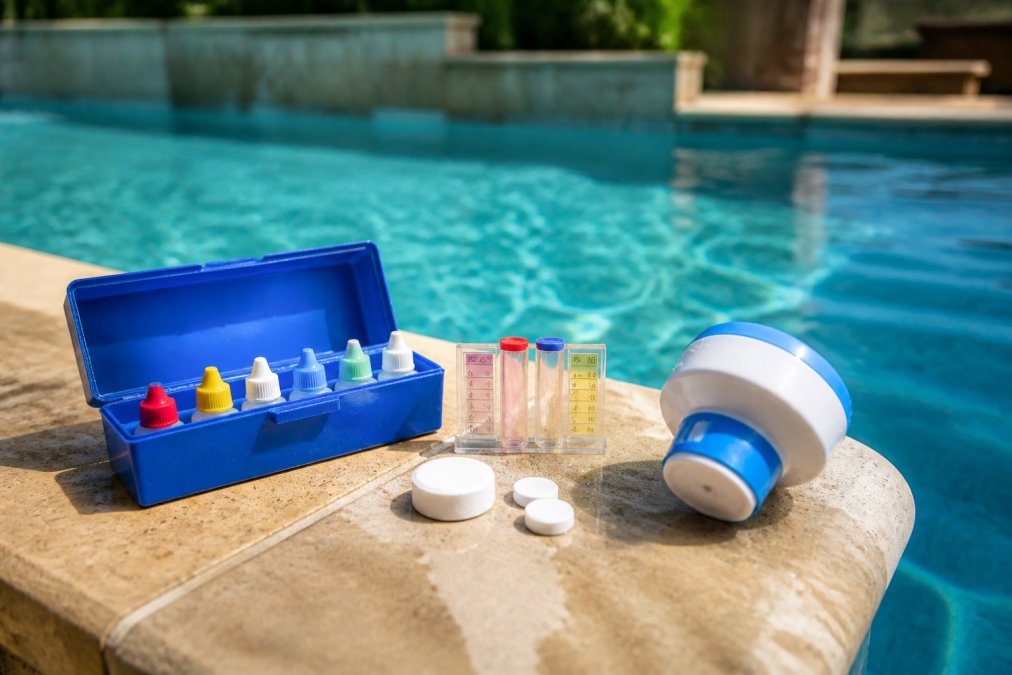
The best pool water testing kits are the ones you will actually use consistently, and that depends on how often you test, which parameters you need, and how much precision your pool demands. Three formats dominate the market, and each has a real place in a homeowner's routine. Mastering these specific pool metrics provides a reliable foundation for broader household maintenance, as the principles of testing water quality remain consistent across all domestic systems.
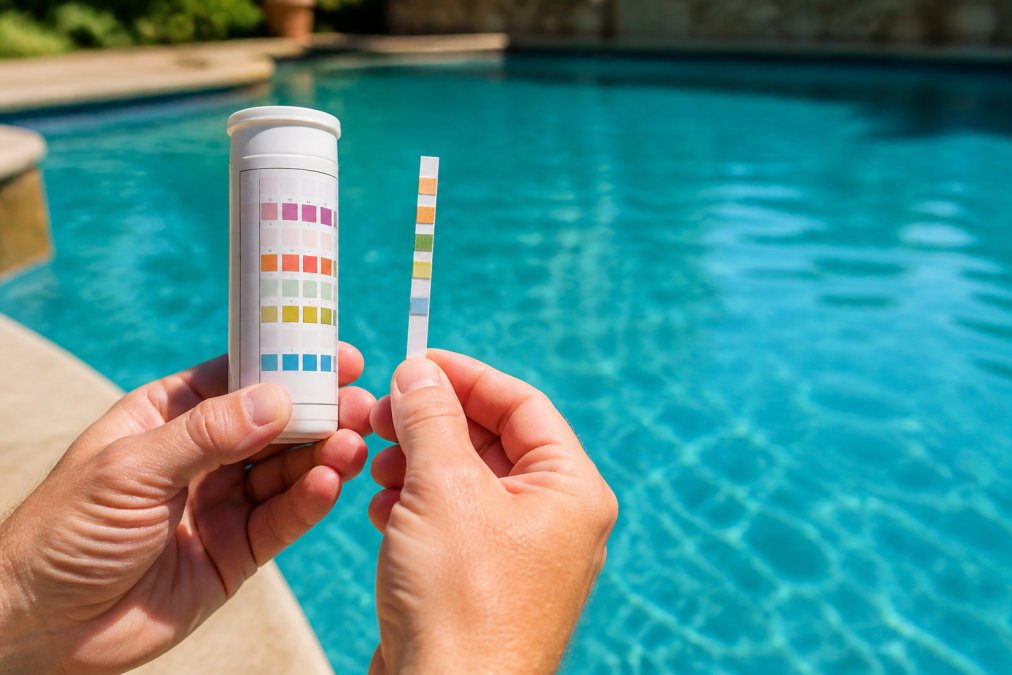
Test strips are the fastest and cheapest option, typically running $10 to $20 for a bottle of 50. Brands like AquaChek and HTH make 6-way and 7-way strips that read free chlorine, pH, total alkalinity, cyanuric acid, and hardness in about 15 seconds. The trade-off is resolution: strips read CYA in wide bands (often 0, 30-50, 100+) and can be skewed by humidity, expired reagents, or holding them past the read window. They are fine for confirming that chlorine and pH are in range on a Tuesday, but they are a poor tool for diagnosing a stubborn problem.
Liquid reagent kits use drop-count titration and a color comparator. The Taylor K-2006 and K-2006C are the standard reference kits most pool professionals carry, and the FAS-DPD chlorine test in those kits reads free and combined chlorine down to 0.2 ppm, which is what you need to confirm a shock actually finished. Expect $60 to $120 depending on the kit size and refill availability. The K-2006 uses a smaller reagent set; the K-2006C ships with larger bottles that last a full season for most residential pools. The cost per test is low, but the process takes 5 to 10 minutes for a full panel.
Digital meters read pH and sanitizer electronically. Handheld pH meters in the $40 to $150 range can be accurate to 0.01 pH when calibrated, but they drift and need fresh calibration solution every few weeks. ORP probes, which measure the oxidizing potential of the water, are common on salt systems and automated controllers, but ORP readings are affected by CYA level and pH, so they are not a substitute for a manual chlorine test. Digital meters are best for owners who test daily and want a fast read, not for someone who tests weekly.
A common mistake is relying on strips alone for a full panel. Use strips for the twice-weekly chlorine and pH check, and a liquid reagent kit for the weekly full panel and any time you are troubleshooting. If you run a salt chlorine generator, add a salt test kit (Taylor K-1766 is the common choice) because your controller's reading is not always accurate. Match the kit to your pool volume and bather load: a 30,000-gallon pool with heavy use justifies the K-2006C, while a small above-ground pool with light use can get by with strips plus a monthly liquid check.
Can You Swim After Shocking Pool? Timing and Safety
You can swim after shocking pool water once free chlorine drops back to 1-3 ppm, which typically takes 8 to 24 hours depending on the product and sunlight. Never guess. Test before anyone gets in.
The waiting period exists because shock raises chlorine to levels that irritate skin, eyes, and airways. Wait until the reading falls into the safe range, not just until the water looks clear. Water can look perfect while chlorine is still elevated.
A few practical points:
- Shock in the evening so sunlight does not burn off the chlorine before it works.
- Run the pump continuously during the wait to circulate and clear the water.
- Test free and combined chlorine before reopening; combined chlorine above 0.5 ppm means you are not done.
Troubleshooting Pool Water by Color and Clarity
Water color tells you what is wrong before any test does, which is why it belongs in any guide on pool water chemistry.
- Green water: algae bloom. Usually low free chlorine or high CYA locking it up. Shock and brush.
- Cloudy white or milky: high pH, high calcium hardness, or a filtration problem. Check the filter and your saturation index.
- Brown or tea-colored: metals, often from source water or corroded fittings. A sequestering agent helps.
- Blue but stinging eyes: pH out of range or high combined chlorine, not a sanitizer shortage.
- Foamy surface: low calcium hardness or leftover algaecide and clarifier residue.
Test before you treat. Adding shock to cloudy water with high pH makes the cloud worse, and adding algaecide to a metal problem does nothing.
How Weather and Bather Load Change Your Chemistry
Heat, rain, and heavy use move your numbers faster than any dosing error, and most guides stop at "retest after a storm" without telling you what actually changed. Here is the mechanism behind each shift and the adjustment that follows.
Heat and sunlight. Free chlorine is consumed by UV light at a rate that roughly doubles for every 10-degree rise in water temperature within the normal swimming range (the CDC). A pool at 90 degrees in full sun can lose 50 to 90 percent of its free chlorine in a single day if CYA is below 30 ppm. That is why raising CYA into the 30-50 ppm range matters more in hot climates than cool ones. If your pool sits in direct sun all day and you are losing more than 2 ppm of free chlorine daily, check CYA before you assume you need more chlorine.
Heavy rain. An inch of rain on a 20,000-gallon pool adds roughly 500 gallons, which dilutes total alkalinity and calcium hardness proportionally. A 2-inch storm can drop alkalinity by 10 to 15 ppm and pull pH down with it, especially if the rain is acidic. Rain also washes in pollen, dust, and organic debris that consume chlorine as they break down. After a storm, retest alkalinity and pH first, rebalance those, then bring chlorine back up. Do not just top off chlorine and assume the rest held.
Bather load. Each swimmer introduces sweat, urine, sunscreen, and skin cells that react with chlorine to form combined chlorine (chloramines). The industry rule of thumb is that each bather contributes roughly 0.5 to 1 ppm of chlorine demand per hour of active swimming. A party with 10 people for three hours can consume 15 to 30 ppm of free chlorine, which is why a pool that read 3 ppm before the party can read near zero the next morning. Test and shock after the gathering, not just before. Combined chlorine above 0.5 ppm is the signal that you need to shock, not just add more chlorine.
Long stretches of no use. Stagnant water still grows algae, and with no bather load to consume chlorine, the sanitizer can actually climb above the ideal range and bleach liners or irritate skin on the next swim. Run the pump at least a few hours a day and test weekly even when nobody is swimming. If you leave for a week, raise free chlorine to the top of the range and lower pH slightly before you go.
Watch for these shifts and adjust accordingly:
- Hot, sunny stretches: expect faster chlorine loss; keep CYA at 30-50 ppm and consider a weekly shock.
- Heavy rain: retest alkalinity and pH, rebalance, then restore chlorine; expect dilution of calcium and CYA.
- Big gatherings: test and shock afterward; expect combined chlorine to spike.
- Long stretches of no use: still test weekly; stagnant water grows algae too.
- Wildfire smoke and ash: ash raises pH and consumes chlorine; skim, retest, and shock if chlorine demand spikes.
When to Call a Pool Professional
Some problems sit beyond home testing and dosing. Call a professional when readings will not stabilize after repeated corrections, when you see persistent scale formation or corrosion on equipment, or when the pool has sat untreated for a long season.
At Palm Leaf Pools, we handle weekly maintenance and full pool remodeling across the area, and a big part of that work is catching chemistry problems before they damage plaster, pumps, or heaters. If your numbers keep drifting, or you simply want pool ownership to be effortless, our team keeps the water balanced year-round and explains what is happening in plain language.
The honest truth: most "mystery" water problems are a filtration issue or a CYA level nobody tested. A professional panel finds it in one visit.
Frequently Asked Questions
How often should you check pool chemistry?
Test free chlorine and pH at least twice a week, and total alkalinity once a week. After heavy rain, a pool party, or if the water looks cloudy, test again before adding anything. Cyanuric acid and calcium hardness only need testing every two to four weeks because they change slowly. Keeping a simple log of your readings helps you spot trends before they turn into cloudy water or scale.
What is the ideal pH level for a swimming pool?
The ideal pH range is 7.4 to 7.6. Below 7.2, water becomes corrosive and can damage the pool pump, heater, and vinyl liners. Above 7.8, chlorine loses effectiveness and scale can form on tiles and equipment. Test pH alongside free chlorine because the two work together. If pH drifts outside 7.2 to 7.8, adjust it before shocking or adding algaecide.
What chemicals should I add to my pool every week?
Most weeks you will add chlorine or another sanitizer, plus a small dose of muriatic acid or pH increaser to hold pH in range. Shock the pool weekly or after heavy use. Algaecide every one to two weeks helps prevent growth. Add chemicals in this order: adjust alkalinity first, then pH, then sanitizer, then shock, then specialty products. Always run the pump and wait between additions.
How does alkalinity affect pool water chemistry?
Total alkalinity acts as a buffer that keeps pH from swinging wildly. The target range is 80 to 120 ppm. Low alkalinity lets pH bounce with every chemical addition, while high alkalinity locks pH high and causes cloudy water and scale. Adjust alkalinity before pH, because changing it will shift pH too. Use baking soda to raise it and muriatic acid to lower it, then retest after the pump runs for a few hours.
Keeping water balanced is a weekly commitment, and it is the one most owners quietly fall behind on. Palm Leaf Pools takes that off your plate with dependable weekly pool maintenance, complete pool remodeling services, and constant communication so you always know what is happening with your investment. Our team delivers expert care and top-tier results that keep your pool clean, safe, and beautiful year-round. Call Today to get started with Palm Leaf Pools and enjoy a pool that is always ready.