 how-to
What Happens If You Skip Pool Cleaning for Weeks
Table of Contents
- How Quickly a Skipped Pool Cleaning Shows Up in the Water
- What Happens If You Skip Pool Cleaning for a Week
- How Long Can a Pool Go Without Cleaning Before Damage Sets In
- Chemical Imbalance, Algae and Equipment Damage
- How to Clean a Neglected Pool Step by Step
- Pool Maintenance After Vacation: Preventing the Problem
- Scheduling Your Pool Service Visit With Palm Leaf Pools
- Frequently Asked Questions
Last Updated: November 5, 2026
How Quickly a Skipped Pool Cleaning Shows Up in the Water
Skipping pool cleaning for a few days rarely causes trouble on its own. Skipping it for weeks is different, and the water shows it fast.
When weekly testing and chemical treatments stop, chlorine levels can drop and pH can drift out of range. Pro Clear Pools guidance on skipped weekly pool service and water chemistry That chemistry shift is the first thing to watch.
The early signs are easy to miss:
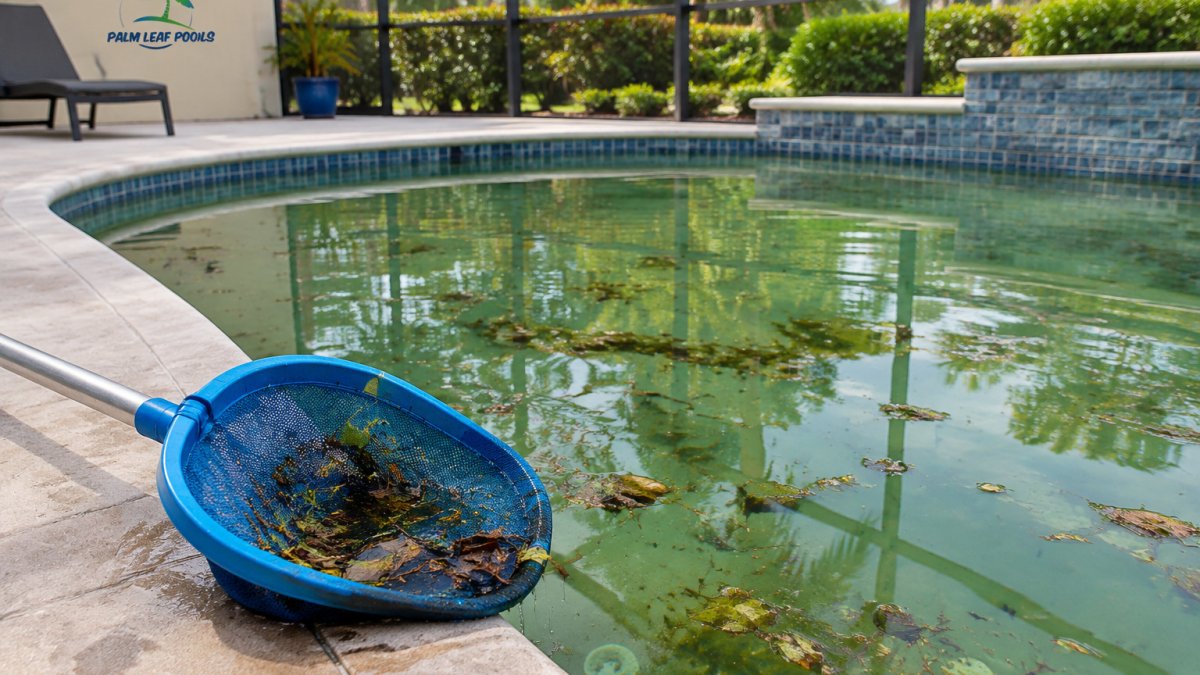
- Water that looks slightly dull or hazy
- A chlorine smell that seems stronger than usual
- Slippery walls or a film along the waterline
Catching these signs early keeps the fix small. Waiting turns a simple cleanup into a bigger job.
What Happens If You Skip Pool Cleaning for a Week
One missed week is usually manageable.
The risk comes from what builds up during that week. Debris sinks, settles on steps and corners, and starts to break down.
A common mistake is to assume a week of neglect means you can skip testing too. Test the water anyway.
Quick check after one week: test free chlorine and pH, skim the surface, brush the walls and steps, then run the filter for a full cycle before you swim.
How Long Can a Pool Go Without Cleaning Before Damage Sets In
There is no single number that works for every pool, but the variables that move the timeline are predictable: water temperature, sun exposure, bather load, rainfall, pool type, and whether a cover is in use. In hot, sunny conditions with heavy use, chemistry can drift out of range in days; in a shaded, covered pool with light use, the same drift may take weeks.
Stage 1: Under one week
Most pools tolerate a missed week. Expect slightly dull water, a dirtier skimmer basket, and a filter that needs a backwash sooner than usual. Test free chlorine and pH before swimming. If free chlorine is at or near zero, or pH is far outside the normal range, treat the water before anyone gets in. A common pattern is that the pool looks fine but the sanitizer has already fallen below the effective level.
Stage 2: One to three weeks
This is where visible problems start. Cloudiness, a slippery film on walls and steps, and green patches in shaded corners are typical. Test free chlorine, pH, total alkalinity, and calcium hardness. If two or more readings are out of range, stop swimming until the water is corrected and the sanitizer is back in range. At this stage, a normal weekly routine plus a shock treatment and a full filter cycle can recover the pool, but the longer you wait, the more likely algae has established in the plumbing and filter media, not just on surfaces.
Stage 3: One to three months
Expect established algae, staining on plaster and tile, scale on surfaces and heater parts, and a filter that clogs quickly. The pump may be working against clogged baskets and dirty media, which raises energy use and shortens equipment life. Recovery at this stage is a multi-day project: debris removal, brushing, vacuuming, shock, continuous filtration, and repeated testing.
Stage 4: Beyond three months
Water left alone for a full season can require a drain, scrub, and refill, plus inspection of the pump, filter, heater, and any lights or fittings. Surface damage and equipment strain are more likely, and the cost of recovery can exceed a year of routine service. At this point, a professional assessment may be worth considering before you spend on chemicals.
Pool type, climate, and season modifiers
- Saltwater pools: The salt cell keeps producing chlorine, but it does not remove debris or balance pH. Skipped cleaning still leads to algae and scale, and the cell can foul faster in hard water.
- Above-ground pools: Smaller water volume means chemistry moves faster; a week of neglect in summer heat can cloud the water sooner than in a large in-ground pool.
- Covers: A cover slows debris and evaporation but traps heat and can concentrate chemistry problems; water under a cover still needs testing.
Watch out: do not use the stage timeline as a substitute for testing. A pool that looks clear at three weeks can still have zero free chlorine and be unsafe to swim in.
The article breaks neglect into stages, and this table summarises what to expect and do at each one.
| Neglect period | What you'll see | What to do |
|---|---|---|
| Under one week | Slightly dull water, dirtier skimmer basket | Test free chlorine and pH before swimming |
| One to three weeks | Cloudiness, slippery film, green patches | Test four readings; stop swimming if two or more are out of range |
| One to three months | Established algae, staining, scale, clogged filter | Multi-day recovery: debris removal, brushing, shock, continuous filtration |
| Beyond three months | Surface damage, equipment strain | Drain, scrub and refill; consider a professional assessment |
Chemical Imbalance, Algae and Equipment Damage
Chemistry is where neglect causes the most lasting problems. For the specific fix once green water appears, see Why Pool Water Turns Green Quickly: A Fix Guide.
Imbalanced water also works against equipment. Water that is too acidic can corrode metal parts and etch surfaces. Water that is too alkaline or high in calcium can leave scale on tile, heaters and filter parts.
Testing Thresholds That Signal a Problem
Test at least once a week, and more often during heavy use or hot spells. For a step-by-step guide to correcting the chemistry once readings are out of range, see How to Manage Pool Chemistry: A Step-by-Step Guide. These are the readings to watch:
- Free chlorine: Keep it in the range recommended for your pool type. If it reads at zero, sanitize right away.
- pH: Aim for the middle of the recommended range. Readings far outside it reduce chlorine's effectiveness and irritate swimmers.
- Alkalinity: Helps hold pH steady. Low alkalinity makes pH swing.
If two or more readings are out of range, do not guess. Correct the chemistry in the right order, retest after the water circulates, and avoid swimming until the sanitizer level is back in range.
How to Clean a Neglected Pool Step by Step
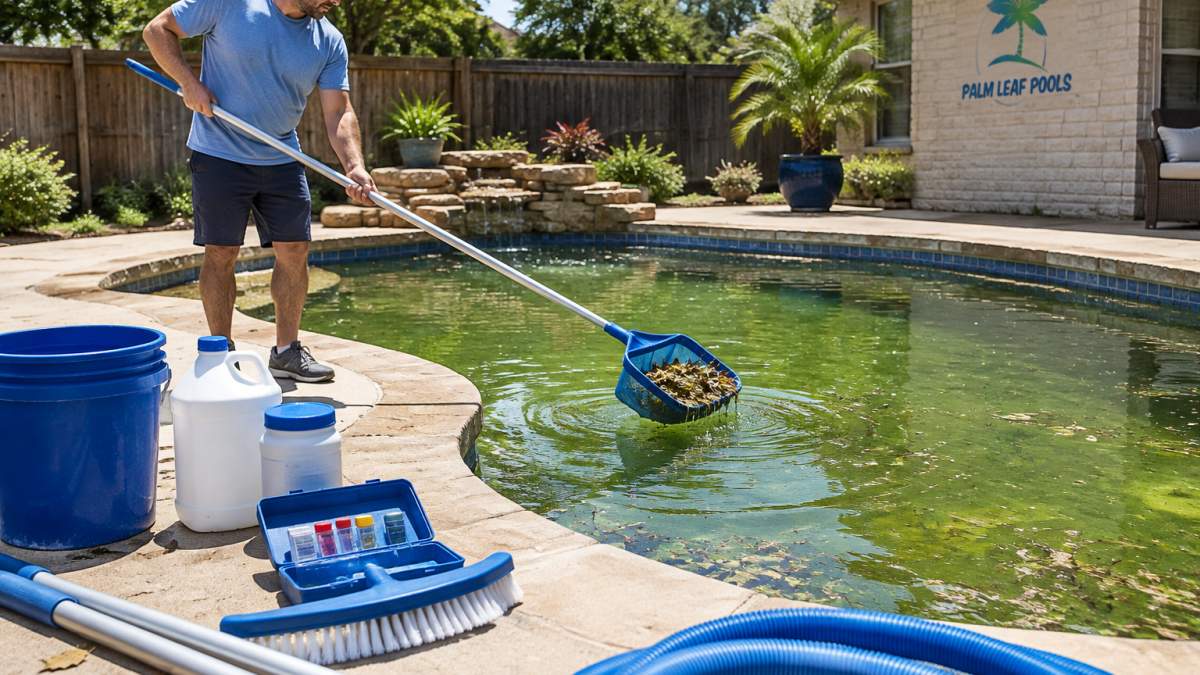
The right cleanup depends on how long the pool was neglected. A one-week gap needs a reset; a multi-month gap needs a staged recovery. Use the plan below, and scale the intensity to the stage you identified in the timeline section.
Before you start: safety and assessment
- Do not swim in water with visible algae, cloudy water where you cannot see the floor drain, or sanitizer readings at zero.
- Wear gloves and eye protection when handling chemicals. Store products in their original containers, keep them dry, and never mix chemicals together, mixing can release toxic gas or cause a fire.
- Keep children and pets away from the pool area until sanitizer is back in range and the water is clear.
Step 1: Remove large debris
Use a leaf rake or skimmer net to pull out leaves, branches, bugs, and floating trash. The more organic material you remove now, the less chlorine the water will consume later.
Watch out: if the pump basket is clogged and the pump has been running dry, shut it off and let it cool before restarting; running dry can damage the seal and impeller.
Step 2: Brush every surface
Scrub walls, steps, corners, the waterline, and behind ladders and lights. Algae hides in shaded areas and in rough plaster. Brushing breaks the biofilm so sanitizer and filter can do their job. For a pool neglected for weeks, brush twice, once before vacuuming and once after shocking.
Step 3: Vacuum the floor
Use a manual vacuum for heavy sediment, or an automatic cleaner if the pool has one. Vacuum to waste if the sediment is thick, so you do not send it straight into the filter. Check the filter pressure before and after; a rise of 8 to 10 psi above the clean starting pressure is a common signal to backwash or clean the filter media.
Step 4: Shock the water
Raise the sanitizer level to handle organic buildup. Follow the product label for dosage and application. For a badly neglected pool, you may need more than one shock treatment, spaced according to the label and retested between applications. Do not add shock and then immediately swim; wait until free chlorine drops back into the normal range.
Step 5: Run the filter continuously
Keep the pump running 24 to 48 hours, or longer for a heavily neglected pool, and backwash or clean the filter as pressure rises. Check that return jets are pushing water and that the skimmer is pulling. If flow is weak, inspect the baskets, the pump impeller, and the filter before assuming the chemistry is the problem.
Step 6: Retest and rebalance in the right order
After the water has circulated, retest free chlorine, pH, total alkalinity, and calcium hardness. Correct in this order: alkalinity first, then pH, then sanitizer, then calcium hardness. Retest after each adjustment and let the water circulate before the next correction. If two or more readings stay out of range after a full cycle, the water may need a partial drain and refill, or a professional assessment.
Step 7: Equipment-specific checks
- Pump: Listen for grinding or cavitation, check for leaks at the seal, and confirm the basket is clean.
- Filter: Note the clean starting pressure, backwash or clean the cartridges when pressure rises, and check for torn grids or worn cartridges after a long neglect period.
- Skimmer: Confirm the weir door moves freely and the basket is intact; a cracked basket lets debris into the pump.
Recovery by neglect period
- One week: Skim, brush, empty baskets, test, and run a normal filter cycle. Shock only if free chlorine is low.
- Two to four weeks: Full brush and vacuum, shock, run the filter continuously for 24 to 48 hours, retest, and rebalance.
- One to three months: Repeat the above, expect multiple shock treatments, clean or replace filter media, and inspect the pump and heater. Consider a partial drain if stabilizer or calcium is high.
Watch out: never mix chlorine products with acid or with each other, and never add water to acid, add acid to water. If you are unsure about a chemical interaction, stop and call a professional.
Pool Maintenance After Vacation: Preventing the Problem
Vacations are the most common reason pools get neglected. A two-week trip in July can undo months of good maintenance.
If you cannot arrange a service visit, ask a neighbor or service provider to check the water. For a deeper look at whether your pool needs professional attention right now, see our guide: Signs Your Pool Needs Professional Cleaning.
Scheduling Your Pool Service Visit With Palm Leaf Pools
Palm Leaf Pools offers weekly pool maintenance and complete remodeling for homeowners in the Dallas-Fort Worth area. Owners who want to know what a recurring visit involves before booking can read Book Weekly Pool Cleaning Service: What to Expect.
Cost depends on pool size, condition and the service plan you choose. Cost of Weekly Pool Maintenance Services: 2026 Guide before committing.
Frequently Asked Questions
How long can a pool go without cleaning?
Most residential pools can go about a week between cleanings before water quality noticeably slips, though the exact window depends on heat, sun exposure, rainfall and how much debris falls in. In hot Texas summers, chlorine is used up faster and algae can start within days. If you must be away longer, ask a service to test and balance the water before you leave and to check again partway through.
What happens if you skip pool cleaning for a week?
After a week without cleaning, leaves and debris start to sink and decompose, sanitizer levels can drop, and pH may drift out of range. Walls and steps can pick up a thin film, and the water may look dull. Shaded corners are the first place algae takes hold. A week is usually recoverable with a shock treatment, brushing and a filter clean, but waiting longer raises the cost and effort of getting the pool back in shape.
How do you clean a pool after it has been neglected?
Start by skimming debris and vacuuming the bottom to waste or a clean outlet. Test the water, balance alkalinity and pH, then shock the pool to bring free chlorine up. Brush walls, steps and corners to loosen algae, run the pump and filter continuously, and backwash or clean the filter as pressure rises. Retest after 24 hours and repeat shocking if the water stays cloudy. Heavy algae or a green pool may need a professional assessment.
Can you swim in a pool that has not been cleaned?
It is not recommended. Low sanitizer levels and bacteria can cause skin, eye and ear irritation, and in a severely neglected pool, chlorine may be too low to control germs. Test the free chlorine and pH before anyone enters. Wait until chlorine is back in the recommended range and the water is clear enough to see the main drain before swimming.