 how-to
How to Know When It's Safe to Swim After Shocking a Pool
Last Updated: November 1, 2026
Quick Summary
You can swim after shocking a pool once the water has been tested and the free chlorine has dropped back into the safe range. Follow the shock product's label for the minimum wait, then test before anyone gets in. Elapsed time alone is not a reliable signal, because the water chemistry decides whether a swim is safe.
- Read the shock product label first and treat its stated wait time as the minimum.
- Test free chlorine and pH at elbow depth before swimming, not just after the clock runs out.
- A common safe swimming target is 1 to 4 ppm free chlorine.
- Keep the pump running so the shock is circulated and spread through the water.
- Retest every few hours if free chlorine is still high, and do not swim on a guess.
Table of Contents
- Why Shocking a Pool Changes the Swimming Rules
- How Long After Shocking a Pool Can You Swim?
- When Is Pool Chlorine Safe for Swimming?
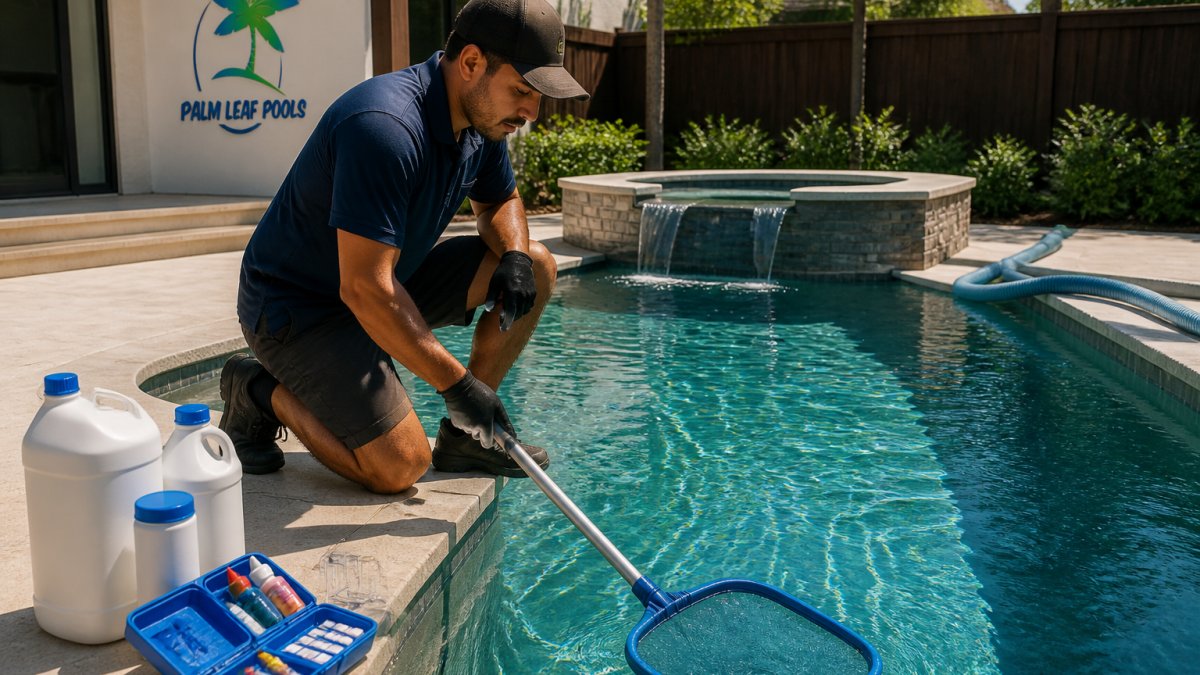
- What You'll Need to Test Your Pool Water
- How to Test Pool Chlorine After Shocking
- What Happens If You Swim After Pool Shock?
- Booking a Pool Water Check With Palm Leaf Pools
- Frequently Asked Questions
How long you wait before you can swim after shocking a pool depends on the shock type, your free chlorine level, and whether you have tested the water.
Sources differ on fixed waiting windows, which is why elapsed time alone is not a reliable signal. That spread is exactly why elapsed time alone is not a reliable signal. The water chemistry is what decides whether it is safe.
Why Shocking a Pool Changes the Swimming Rules
Pool shock is a concentrated dose of an oxidizer, usually chlorine in a stronger form. It kills bacteria, breaks down contaminants, and clears cloudy water.
Swimming in water that is still high in chlorine can irritate eyes and skin, and it can make the air smell sharp near the surface. The goal is to let those levels drop back to a safe range before anyone gets in.
How Long After Shocking a Pool Can You Swim?
The honest answer is that no single clock applies to every pool. The wait time is set by three things: the shock product's label, the free chlorine reading, and how fast your water can shed the extra oxidizer.
A common pattern among pool professionals is to treat the label as the floor and the test as the gate. Maintaining this balance protects your equipment from the harsh chemical environment, just as consistent maintenance helps to remove pool cage oxidation before the metal begins to pit.
Start With the Product Label, Not a Generic Timeline
Shock products differ by active ingredient, concentration, and dose, and the label is written for that exact combination. Read three things on the label before you open the container:
- The active ingredient, calcium hypochlorite, sodium dichloroisocyanurate (dichlor), sodium hypochlorite (liquid chlorine), or a non-chlorine oxidizer such as potassium monopersulfate.
- The recommended dose for your pool volume and the problem you are treating (routine oxidation versus algae or cloudy water).
- The swimming wait time the manufacturer states for that dose.
If the label says 15 minutes for a non-chlorine oxidizer at a maintenance dose, that is the manufacturer's instruction for that product. If a granular calcium hypochlorite label says 24 hours after a heavy dose, treat 24 hours as the floor. When two sources disagree, the label on the container in your hand wins.
How Wait Times Differ by Shock Ingredient
| Shock type | What it does to free chlorine | Typical label wait (confirm on your product) |
|---|---|---|
| Calcium hypochlorite (granular) | Raises free chlorine sharply; adds calcium | Often 8-24 hours at normal dose; longer after heavy dosing |
| Dichlor (granular) | Raises free chlorine; adds cyanuric acid | Often 8-24 hours; repeated use raises stabilizer |
| Liquid chlorine (sodium hypochlorite) | Raises free chlorine quickly; no calcium or stabilizer | Often 8-12 hours at normal dose |
| Non-chlorine oxidizer (potassium monopersulfate) | Oxidizes contaminants with little free-chlorine rise | Often as little as 15 minutes at maintenance dose |
Two practical cautions. First, dichlor adds cyanuric acid with every dose, and high cyanuric acid can lock up free chlorine so it reads present but works poorly, a reason to rotate products rather than rely on one. Second, calcium hypochlorite adds calcium hardness; repeated heavy doses can push hardness up and contribute to scaling. Neither point changes the label wait time, but both affect how your water behaves afterward.
The Test-Based Go/No-Go Decision
Elapsed time is a starting point, not a verdict. Use free chlorine as the measurable gate:
- Record the shock time and dose. Note the product name and the label's stated wait time.
- Run the pump to circulate and distribute the oxidizer.
- Wait the label's minimum time before your first reading.
- Sample at elbow depth, away from return jets and the surface.
- Test free chlorine. A common safe swimming target is 1-4 ppm free chlorine, with cyanuric acid considered, many practitioners use the cyanuric-acid-to-chlorine relationship rather than a flat number when stabilizer is high.
- Test pH. Chlorine is most effective around 7.2-7.8.
- Retest every few hours if free chlorine is still above your target. Do not swim on a guess.
If free chlorine is above 4 ppm, or the water still smells sharply of chlorine (a sign of combined chloramines), wait and retest. Learn why pool water turns green quickly and how to fix it if the problem persists. If free chlorine has dropped into range and pH is in band, the water is ready by the measurable standard, even if less time has passed than a neighbor's rule of thumb.
What Speeds Up or Slows Down the Drop
- Sunlight degrades free chlorine, so a pool in full sun often clears faster than a shaded one.
- Water temperature and bather load affect oxidizer demand; warm, busy water consumes chlorine faster but can also produce more chloramines.
- Circulation and filtration spread the dose and help clear cloudiness; a pump that runs only a few hours a day slows recovery.
- Pool volume changes concentration: the same dose in a large pool produces a lower ppm than in a small one.
Run the pump long enough to turn over the pool volume at least once after shocking, and keep testing until the numbers, not the clock, say go.
When Is Pool Chlorine Safe for Swimming?
A common target is a free chlorine level between 1 and 4 parts per million (ppm) before swimming (the CDC). Below that range, the water is likely safe from a chlorine standpoint. Above it, wait and retest.
Keep an eye on combined chlorine too (the CDC). High combined chlorine can cause a strong chlorine smell and eye irritation even when free chlorine seems fine.
Test the water before every swim after shocking. Do not guess.
What You'll Need to Test Your Pool Water
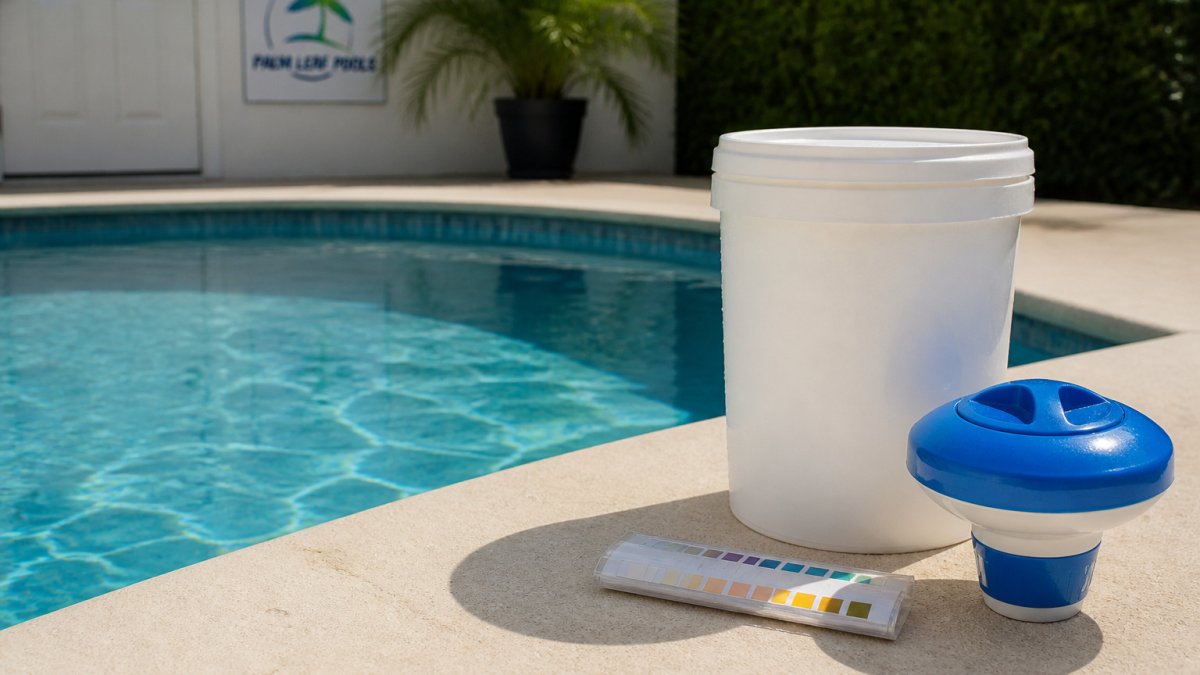
Before you test, gather these items:
- A pool test kit or test strips that measure free chlorine and pH, plus equipment options for efficient pool pumps if circulation is a concern.
- The shock product label, so you know its instructions
- A notebook or phone to record readings and times
- A pump running for at least a few hours to circulate the water
Keep the test kit out of direct sun and store it dry. Old strips give unreliable readings.
How to Test Pool Chlorine After Shocking
Follow these steps to decide when the pool is ready:
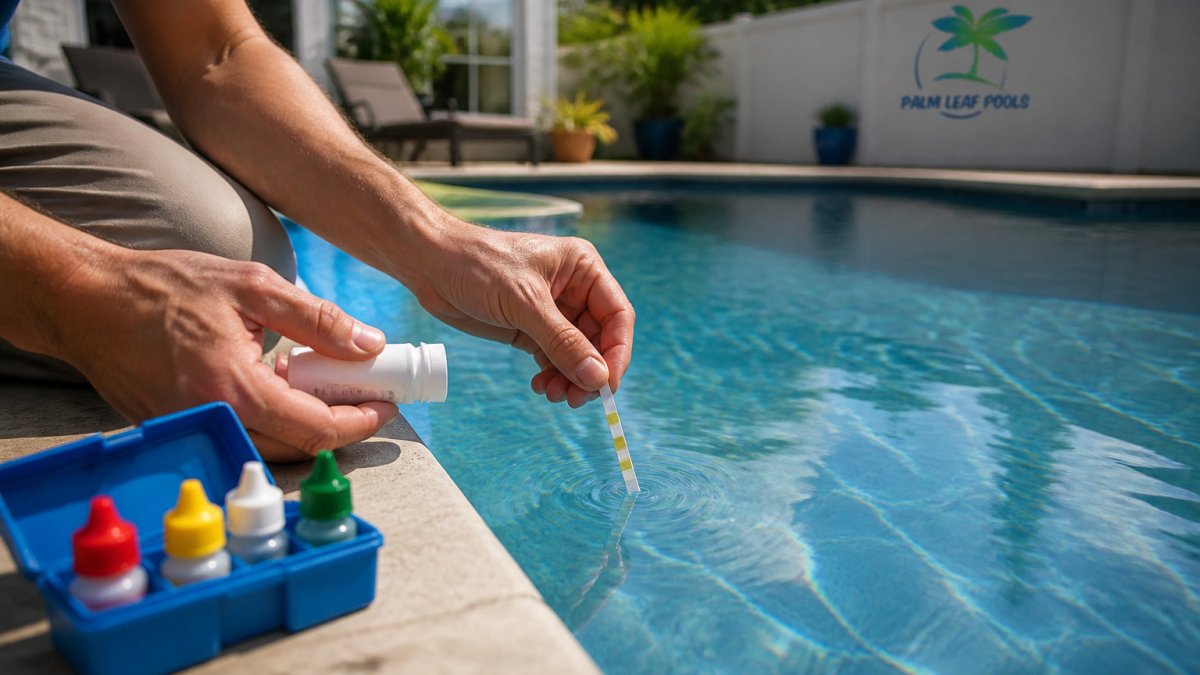
- Note the time you added the shock. This gives you a starting point.
- Run the pump for several hours. Circulation spreads the chemicals.
- Wait the label's minimum time. Do not test early and assume the reading is final.
- Take a water sample from elbow depth. Avoid the surface and the area right by the return jets.
- Test free chlorine. Look for a reading between 1 and 4 ppm.
- Test pH. Chlorine works best in the 7.2 to 7.8 range. Follow this step-by-step guide to managing pool chemistry balance to keep readings in line.
- Retest if the reading is high. Wait a few more hours, then test again.
Keep testing until you get a reading in the safe range and the water looks clear.
What Happens If You Swim After Pool Shock?
Swimming too soon usually means exposure to free chlorine above the safe swimming range and, often, to combined chloramines, the irritants that form when chlorine reacts with sweat, sunscreen, and other bather waste. The result is rarely an emergency, but it is uncomfortable and worth handling deliberately rather than shrugging off.
Get Out and Rinse First
If you realize the water is still heavily shocked, leave the pool. Then:
- Rinse off with fresh water, a full shower with soap removes residual chlorine from skin and hair.
- Flush eyes with clean, cool water for several minutes if they sting. Remove contact lenses if they are uncomfortable.
- Change out of wet swimwear and rinse it, since fabric holds chlorine against skin.
- Drink water, chlorinated pool water can leave a dry throat, and hydration helps.
Most mild irritation fades within an hour or two of rinsing. The goal is to stop the exposure and remove residue, not to wait it out in wet clothing.
Recognize the Symptoms by Severity
| Symptom | What it usually means | What to do |
|---|---|---|
| Stinging or red eyes | Mild chlorine irritation | Flush with clean water; avoid rubbing |
| Itchy or dry skin, mild rash | Contact irritation | Shower, moisturize after drying |
| Sharp chlorine smell, coughing | Chloramine exposure | Move to fresh air; monitor breathing |
| Wheezing, chest tightness | Airway irritation | Leave the area; seek medical advice if it persists |
| Severe pain, spreading rash, trouble breathing | Possible significant exposure | Seek medical care right away |
Special Considerations for Children and Sensitive Swimmers
Children have thinner skin and spend more time with their faces in the water, so they tend to show irritation sooner. Households with young children, eczema, or eye sensitivity should treat the free chlorine test as non-negotiable, not a suggestion, before anyone gets in after shocking.
A cautious, test-based rule works better than a fixed hour count for these households: if free chlorine is in the 1-4 ppm range, pH is in band, and the water does not smell sharply of chlorine, the risk of irritation is low. If any of those fail, wait and retest.
What to Do Next Time
The lesson from an accidental early swim is not to avoid shocking, it is to build a retest step into the routine. Note the shock time, run the pump, and test free chlorine and pH before the first swimmer enters. If you are unsure how to read the results, a pool professional can test the water and confirm it is back in range.
Booking a Pool Water Check With Palm Leaf Pools
If you are unsure whether your water is ready, or you want someone to handle the testing and balance, Palm Leaf Pools provides weekly pool maintenance and remodeling services. Compare weekly pool service pricing in Dallas before you book. Our team communicates clearly and consistently, so you can focus on enjoying your pool. Call Today!
Frequently Asked Questions
Can you swim after shocking a pool if the water looks clear?
Clear water does not confirm that chlorine has dropped to a safe level. Shocking raises free chlorine well above normal swimming levels, and that concentration is invisible. Test the water with a reliable kit and confirm the reading is within the range listed on the shock product label, typically 1-4 ppm free chlorine for swimming, before anyone gets in. If you are unsure, wait longer and retest.
Should you run the pool pump after shocking the water?
Yes. Running the pump and filter circulates the shock evenly and helps it dissipate faster. Keep the pump running for the period listed on the product label, often several hours or overnight, so chemicals do not sit in one spot. Circulation also helps the chlorine level fall more evenly before testing, which gives you a more accurate reading when you check the water.
Does the type of pool shock affect how long you need to wait?
Yes. Calcium hypochlorite and dichlor shocks are chlorine-based and raise free chlorine significantly, so they usually require a longer wait. Non-chlorine shocks use a different oxidizer and often allow swimming sooner, but the label still governs. Always follow the manufacturer's instructions for your specific product, and confirm the result with a test before swimming.
Is it okay to shock a pool two days in a row?
Shocking on consecutive days is generally not recommended without testing first. Repeated shocking can push free chlorine and combined chlorine higher than intended, extending the wait before swimming and increasing the chance of skin or eye irritation. Test the water before each treatment, and only shock again when the readings show it is needed.