 ultimate-guide
What to Expect During Pool Remodeling: A 2026 Guide
Table of Contents
- Signs It Is Time to Remodel Your Pool
- Understanding the Pool Remodeling Timeline
- The Pool Remodeling Process Step-by-Step
- Average Cost of Pool Resurfacing and Budget Planning
- Pool Renovation Permit Requirements and Legal Compliance
- Best Time of Year to Remodel a Pool
- Hidden Costs, Contingency Planning, and Post-Remodel Maintenance
- Frequently Asked Questions
Last Updated: October 2, 2026
Signs It Is Time to Remodel Your Pool
Your pool isn't just a backyard feature, it's an investment that requires attention. Knowing when a remodel makes sense separates smart maintenance decisions from expensive emergency repairs. Most homeowners wait too long, letting structural problems compound into major headaches.
Cracks in the plaster finish are often the first warning sign. Small hairline fractures seem harmless, but they allow water to seep behind the surface, damaging the structural integrity of your pool shell. Once that happens, you're looking at accelerated deterioration that spreads quickly.
Persistent leaks are another clear indicator. If you're refilling your pool more frequently than normal, beyond the expected water loss from evaporation and splashing, something is wrong. A slow leak might seem manageable, but it wastes water and money while weakening your pool's foundation.
Outdated or failing equipment tells you the remodeling timeline is approaching. Variable-speed pumps, modern filtration systems, and automation features weren't standard in older pools. When your original equipment reaches 15-20 years old, replacement becomes inevitable. Bundling equipment upgrades into a full remodel is more efficient than piecemeal repairs.
Algae growth that returns quickly despite regular chemical treatment suggests your waterline tile and coping aren't sealing properly. Debris accumulation and stubborn staining indicate the pool's surfaces are degrading. These aren't cosmetic issues, they're signs the pool's protective barriers are failing.
A proactive remodel protects your investment and restores the enjoyment you should get from your backyard.
Understanding the Pool Remodeling Timeline
Pool remodeling isn't a weekend project. Understanding the realistic timeline helps you plan around disruption to your backyard and daily routines. Most complete pool remodeling projects take 6-12 weeks from start to finish, though the exact duration depends on scope, weather, and whether complications emerge during demolition.
The timeline breaks into distinct phases. Initial site inspection and planning typically takes 1-2 weeks. This is when structural assessment happens and you finalize design choices. Demolition and site preparation usually requires 2-3 weeks, depending on how much of the old pool structure needs removal. Structural repairs and equipment upgrades add another 2-3 weeks. Resurfacing and finishing work, the visible transformation, takes 3-4 weeks. Final touches like tile installation and coping replacement add 1-2 weeks.
Weather plays a major role. Cold temperatures can extend curing time for plaster and concrete. Heavy rain disrupts demolition and delays structural work. Humidity affects how quickly finishes cure. Planning your pool remodeling during favorable weather windows reduces delays significantly. Securing a professional team early ensures that these environmental variables are managed effectively, which makes hiring structural remodeling services a critical step in maintaining your project timeline.
Contingencies always emerge. Hidden structural damage discovered during demolition might require additional work. Plumbing pressure tests sometimes reveal issues in underground lines. Supply chain delays for specialized materials can extend timelines. Smart homeowners budget extra time and budget for these unknowns.
Communication frequency matters during remodeling. We maintain regular updates so you understand progress and any changes to the original timeline. Transparency prevents surprises and keeps expectations aligned with reality.
The Pool Remodeling Process Step-by-Step
Pool remodeling follows a logical sequence, but each phase demands precision. Rushing any step compromises the final result. Here's what happens at each stage.
Site Inspection and Structural Assessment
Before any work begins, a thorough site inspection identifies what you're working with. This isn't a casual walkthrough, it's a detailed evaluation of the pool's structural integrity, plumbing systems, and surrounding terrain.
The inspector examines the pool shell for cracks, settling, or shifts in the concrete. They check the deck and patio for deterioration or drainage problems. Underground plumbing gets assessed for leaks or pressure issues. Terrain dynamics around the pool, how water drains, whether the ground slopes correctly, influence what repairs are needed.
A structural assessment determines whether you need minor cosmetic updates or major structural work. This phase typically takes 1-2 weeks and sets the scope and budget for everything that follows.
Demolition and Site Preparation
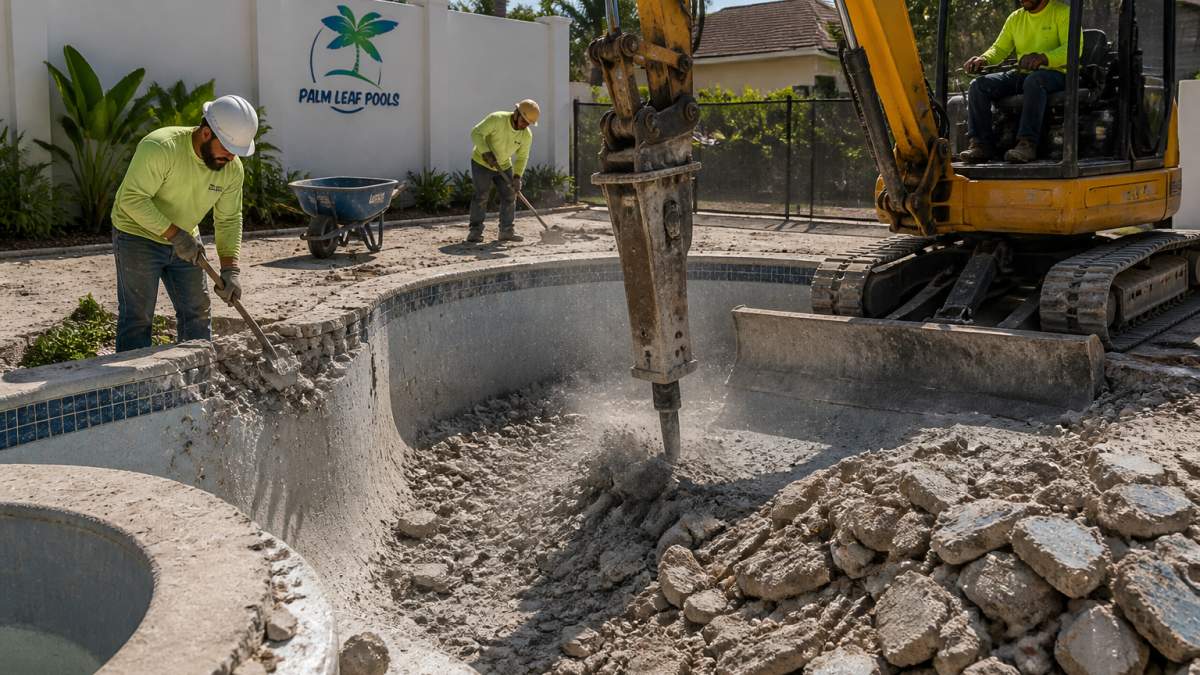
Demolition is controlled and methodical, not chaotic. The goal is to remove what needs replacing while preserving structural elements worth keeping. This phase typically lasts 2-3 weeks.
Crews drain the pool completely and remove existing equipment. The old plaster finish gets acid washed and stripped. If structural repairs are needed, damaged concrete is removed. Construction debris is carefully managed and hauled away. The site is prepared for the next phase by establishing proper drainage patterns and ensuring the pool basin is clean and ready for repairs.
Structural Repairs and Plumbing Upgrades
This is where hidden problems often surface. Once the pool is drained and exposed, cracks in the shell become visible. Structural repairs address these issues before resurfacing happens.
Plumbing pressure tests verify that underground lines are intact. If leaks are found, sections of pipe get replaced. Skimmer replacement often happens during this phase if the original equipment is failing. Modern plumbing upgrades, like adding circulation lines for better water chemistry management, are installed now. Equipment pad preparation ensures new pumps and filters have a solid foundation.
This phase typically takes 2-3 weeks. Proper structural repair prevents problems from recurring after resurfacing.
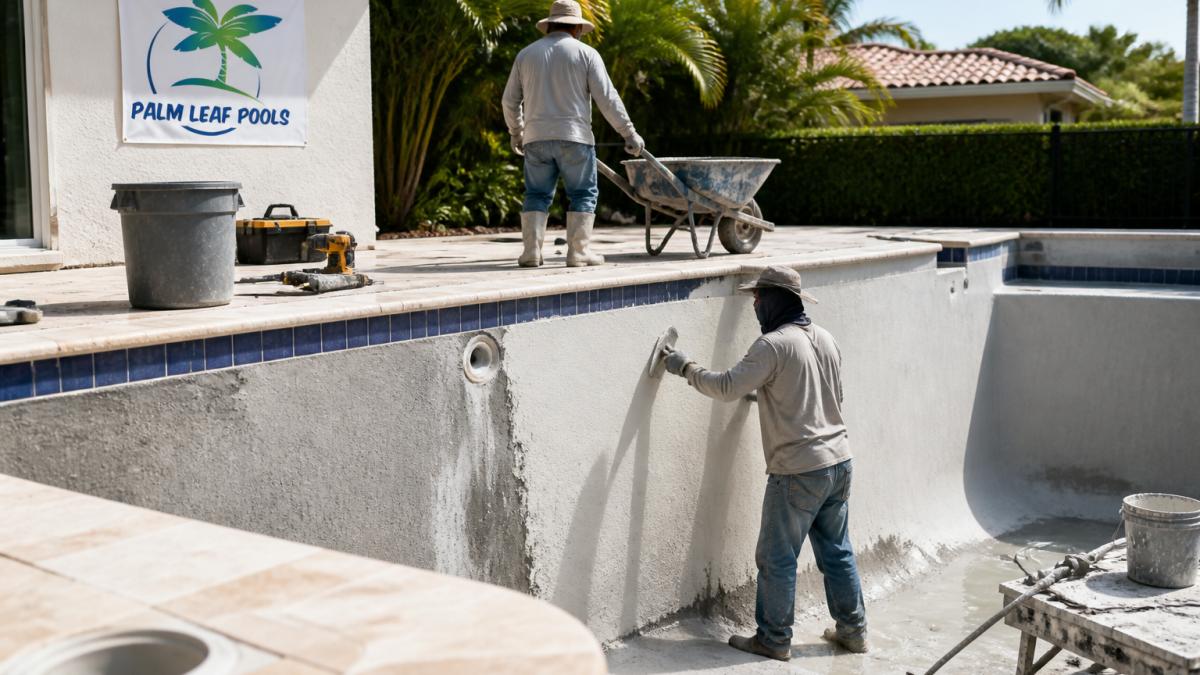
Resurfacing and Finishing Options
Resurfacing is the transformation phase. The pool shell gets a fresh, protective surface. Several options exist, each with different durability and appearance characteristics.
Plaster finish is the traditional choice, affordable and widely available. Shotcrete provides a durable base layer. Pebble finish offers superior durability and aesthetic appeal, with aggregate stones embedded in the surface. Quartz aggregate finishes combine durability with a refined appearance.
Curing time varies by finish type. Plaster typically cures in 7-10 days. Pebble and quartz finishes require 14-21 days of curing before the pool can be filled. During curing, the surface is protected from direct sunlight and heavy rain.
Tile and Coping Replacement
Waterline tile serves both functional and aesthetic purposes. It marks the water line visually and protects the pool shell from freeze-thaw damage and chemical exposure. Old tile gets removed and new tile is installed. Coping, the cap that edges the pool, is replaced simultaneously for a cohesive look.
This work typically takes 1-2 weeks.
Decking and Patio Considerations
Deck renovation often accompanies pool remodeling. Old concrete gets replaced or resurfaced. New decking materials, pavers, composite materials, or textured concrete, improve safety and appearance.
Average Cost of Pool Resurfacing and Budget Planning
Pool remodeling costs vary widely based on scope, materials selected, and regional factors. Without knowing your specific situation, we can't quote a price, but we can explain what drives costs and how to budget intelligently.
Pool Renovation Permit Requirements and Legal Compliance
Pool renovation typically requires permits in most jurisdictions. Permitting requirements vary by location, so check with your local building department before starting work.
Best Time of Year to Remodel a Pool
Timing your pool remodeling affects the project timeline and your ability to enjoy your pool. Spring and early fall are ideal windows in most climates.
Hidden Costs, Contingency Planning, and Post-Remodel Maintenance
Smart budgeting accounts for surprises. Construction projects routinely uncover issues invisible until demolition begins. Planning for contingencies prevents budget shock.
Frequently Asked Questions
How long should a pool remodel take?
A typical pool remodeling project ranges from 4 to 12 weeks, depending on the scope of work. Simple resurfacing may take 3-4 weeks, while a complete renovation with structural repairs, plumbing upgrades, and new decking can extend to 8-12 weeks or longer. The pool remodeling timeline also depends on weather conditions, permit approval time, and whether unexpected structural issues are discovered during demolition. Your contractor should provide a detailed schedule upfront and communicate any delays immediately.
What is the average cost of a pool remodel?
Pool remodeling costs vary widely based on project scope, size, and materials chosen. A basic resurfacing might cost less, while a comprehensive renovation with new equipment, decking, and automation systems costs significantly more. The average cost of pool resurfacing depends on whether you're addressing just the interior finish or tackling structural repairs, plumbing upgrades, and deck renovation simultaneously. For an accurate quote tailored to your pool's condition and goals, contact a local contractor who can assess your specific needs.
What time of year is best to resurface a pool?
The best time of year to remodel a pool is typically late fall through early spring, when cooler temperatures aid curing and demand for contractors is lower. Avoid peak summer months when heat can interfere with resurfacing materials and crews are fully booked. Spring and fall also offer moderate weather conditions that prevent weather-related delays. Consider your local climate and the contractor's availability when scheduling; a professional can advise on seasonal factors specific to your region.
Does a pool remodel require a building permit?
Most pool renovation projects require a building permit, especially if you're making structural changes, upgrading plumbing systems, adding new decking, or installing equipment. Pool renovation permit requirements vary by jurisdiction, so check with your local building department before starting work. Permits ensure your project meets safety and construction codes. A reputable contractor will handle the permitting process and ensure all work is inspected and compliant, protecting your investment and property value.
What are the most common pool renovation mistakes to avoid?
Common mistakes include underestimating the project timeline, ignoring structural issues discovered during demolition, choosing low-quality materials to save money, skipping the permitting process, and failing to plan for post-remodel maintenance. Many homeowners also overlook drainage patterns and terrain dynamics, which can lead to water damage. Hiring an experienced contractor and maintaining open communication throughout the project helps avoid costly oversights and ensures your remodeled pool functions properly for years to come.
How do I prepare my backyard for a pool renovation crew?
Clear the area around your pool of furniture, plants, and personal items. Ensure the contractor has safe access to the pool and adequate space for equipment and construction debris removal. Mark any underground utilities and inform the crew of their locations. Discuss parking arrangements and the daily work schedule. Protect nearby landscaping and inform neighbors about the project timeline. Ask your contractor for a detailed preparation checklist; proper site preparation prevents delays and protects your property during the renovation.