 ultimate-guide
Professional Pool Remodeling Services DFW: 2026 Guide
Table of Contents
- What Professional Pool Remodeling Services in DFW Include
- Pool Remodeling Costs for Older Pools: What Drives the Price
- Average Cost to Replaster a Pool and What Affects It
- Pool Resurfacing Timeline: How Long Your Renovation Takes
- Energy Efficient Pool Equipment Upgrades That Cut Bills
- Permits, Compliance, and Post-Remodel Maintenance
- Frequently Asked Questions
Last Updated: September 16, 2026
What Professional Pool Remodeling Services in DFW Include
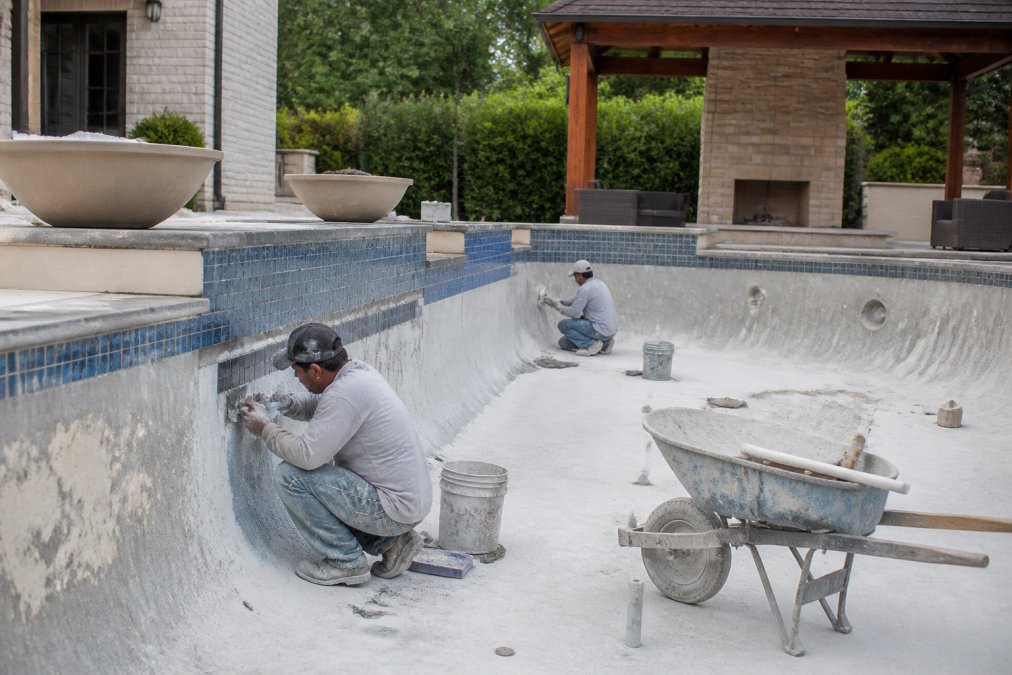
Professional pool remodeling services in DFW cover the full renovation of an aging pool: resurfacing the interior, replacing waterline tile and coping, upgrading the deck, and swapping out failing equipment. At Palm Leaf Pools, we treat a remodel as one coordinated project rather than a series of disconnected repairs. That matters because a pool is a single system, and fixing the finish without addressing the plumbing underneath it usually means paying twice.
A full renovation typically includes:
- Plaster or aggregate resurfacing of the pool interior
- Waterline tile replacement and new coping installation
- Decking updates and patio resurfacing
- Equipment upgrades, including pumps, filters, and lighting
- Structural repair and leak detection where the shell has moved or cracked
The scope depends entirely on what the shell and plumbing look like once the old surface comes off. Below, we break down each piece.
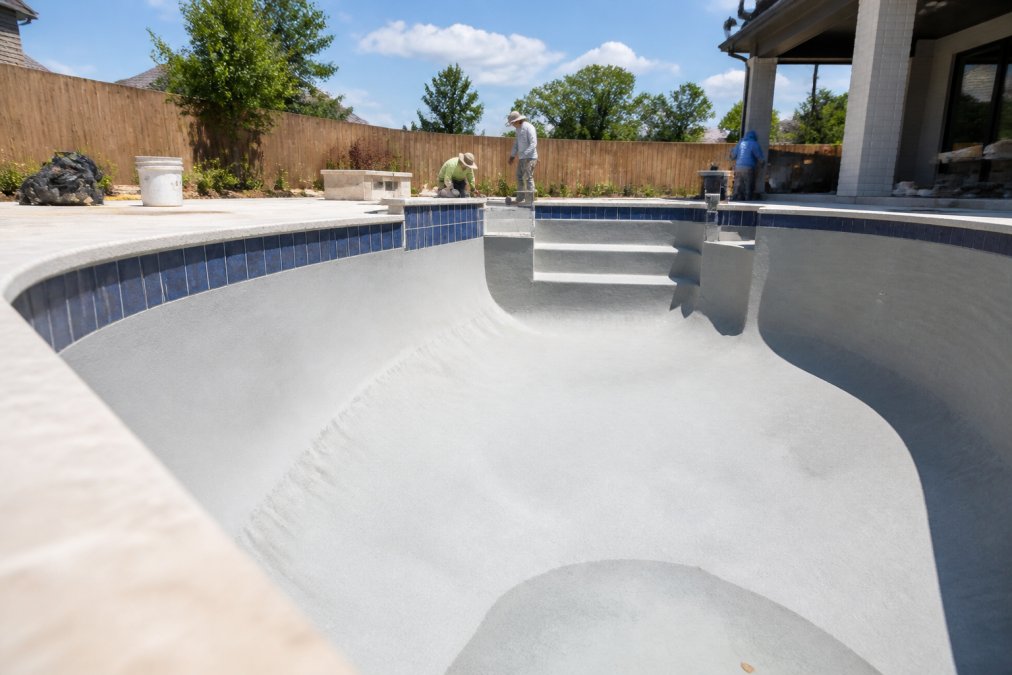
Plaster Resurfacing and Interior Finishes
Plaster resurfacing is the process of removing a worn interior finish and applying a new surface to the pool shell. It restores both appearance and watertightness.
Standard white plaster is an option, as are pebble and quartz finishes. A common mistake is choosing a finish on color alone. In practice, the surface texture and the installer's prep work matter far more than the shade.
Tile, Coping, and Decking Updates
Tile and coping take the most abuse of any part of the pool. Coping is the cap at the water's edge, and when it cracks or comes loose, water gets behind it and damages the shell.
Replacing waterline tile and coping at the same time as resurfacing costs far less than doing them separately, because the pool is already drained and the crew is already on site.
Pool Remodeling Costs for Older Pools: What Drives the Price
Pool remodeling costs for older pools come down to four variables: the condition of the shell, the finish you select, how much tile and coping needs replacing, and whether the equipment is still serviceable. Two pools of the same size can land in very different places on price, and the spread is wider than most homeowners expect.
Here is how each variable actually moves the number:
- Shell condition. A sound shell that only needs surface prep sits at the low end. Cracks, delamination, or a shifted shell that requires structural repair can multiply the labor portion of the job.
- Finish selection. Standard white plaster is an interior finish option. Quartz and pebble aggregate finishes are also available.
- Tile and coping scope. Replacing a few cracked coping stones is a small line item. Replacing the full waterline tile run and all coping is a major one, and it is almost always cheaper bundled with resurfacing than done alone.
- Equipment age. A pump, filter, and heater that are still serviceable can stay. Equipment at or near the end of its service life should be replaced while the pool is drained and the pad is accessible.
How to Build Your Own Cost Estimate
You can rough out a budget before anyone visits your property by working through four questions:
- What is the pool's surface area? Measure length times width for a rectangular pool, or break an irregular shape into rectangles and add them. Surface area, not gallons, drives material and labor.
- What finish tier do you want? Plaster, quartz, and pebble sit in three distinct price bands, and the band you pick sets the floor for the whole project.
- How much tile and coping is being replaced? Full replacement versus spot repair is one of the largest swing factors in any bid.
- Is any equipment being swapped? A variable-speed pump, LED lights, or a new filter adds to the total but is cheaper now than as a standalone job later.
Why Bids for the Same Pool Differ
Pricing depends on the scope of work, the materials you choose, and the condition found during demolition. We quote after an on-site assessment rather than over the phone, and we walk you through what we find before any work begins.
Average Cost to Replaster a Pool and What Affects It
The cost to replaster a pool varies widely based on pool size, finish type, and how much prep the shell needs. There is no single number that applies across the board, and any contractor who quotes one without seeing your pool is guessing. Significant structural modifications often require a more comprehensive approach than simple resurfacing, which is why understanding the complexities of a custom pool installation helps homeowners distinguish between minor repairs and full-scale renovations.
What moves the number most:
- Pool size and depth. More surface area means more material and more labor.
- Finish selection. Standard plaster sits at the low end; pebble and quartz sit at the high end.
- Surface prep. Removing failing plaster, patching cracks, and repairing the shell add labor.
- Tile and coping. Usually bundled with a replaster, but a significant line item on its own.
- Access. Tight side yards and difficult equipment access slow the job down.
Pool Resurfacing Timeline: How Long Your Renovation Takes
A pool resurfacing timeline runs roughly one to three weeks from drain to refill for a straightforward resurfacing job. Projects that include structural repair, tile and coping replacement, or deck work run longer.
| Phase | Typical Duration | What Happens |
|---|---|---|
| Drain and demolition | 1-2 days | Pool drained, old finish and tile removed |
| Structural repair | 1-5 days | Cracks patched, shell prepped, leaks addressed |
| Tile and coping | 2-4 days | New waterline tile and coping installed |
| Resurfacing | 2-3 days | New finish applied and curing begins |
| Refill and startup | 2-3 days | Pool refilled, water balanced, equipment checked |
Energy Efficient Pool Equipment Upgrades That Cut Bills
Energy efficient pool equipment upgrades are usually the fastest way to reduce the ongoing cost of owning a pool. The pump is the place to start, because it runs more hours than anything else on the system, often six to eight hours a day, year-round in this climate.
Start With the Pump
A single-speed pump runs at one speed. A variable-speed pump lets you dial the flow rate down and run longer at lower speed. This can lead to energy savings, which is why variable-speed pumps are a common upgrade.
Lighting, Filtration, and Heating
- LED lighting. LED fixtures are an energy-efficient lighting option that can offer benefits over older incandescent pool lights.
- Efficient filters. Right-sizing the filter to the pool can help keep water clear. Matching the filter to your pool volume is important for efficient operation.
- Modern heaters. Heat pumps and high-efficiency gas heaters are modern heating options. Upgrading can be beneficial if you heat your pool regularly.
- Automation systems. Scheduling and remote control keep equipment from running when it does not need to. A controller that runs the pump during off-peak hours and shuts down the heater when the pool is covered can trim run time without any change in water quality.
How to Sequence the Upgrades
Not every homeowner needs to replace everything at once. A practical order of operations:
- Replace the pump first. It is the largest single energy consumer and the upgrade with the clearest payback.
- Add LED lighting when fixtures fail or when you are already draining the pool. Swapping lights during a remodel avoids a second drain-down later.
- Right-size the filter when the pump is replaced. The two work together, and matching them at the same time avoids a second service call.
- Add automation last. It multiplies the savings from the other upgrades by running them on a smarter schedule.
Permits, Compliance, and Post-Remodel Maintenance
Once the pool is back in service, a consistent maintenance routine keeps it that way. That is where the CDC's guidance on healthy swimming and water treatment is worth reviewing, since proper disinfection and pH control protect both the finish and the people using the pool.
Frequently Asked Questions
How much does a typical pool remodel cost?
The final price for a pool remodel depends on your pool's condition and the materials you choose. Because every project is different, Palm Leaf Pools recommends requesting a personalized quote after an on-site evaluation rather than relying on generic estimates.
How long does a professional pool remodeling project take?
The timeline for pool remodeling projects varies. Weather, permit approvals, and material availability can affect the schedule. A reliable contractor will give you a written timeline and keep you updated on progress so you can plan around the work.
Is it better to replaster or resurface an existing pool?
Replastering applies a new cement-based finish over the existing surface. Resurfacing can involve different materials like pebble or quartz finishes. If your pool has cracks, leaks, or widespread deterioration, a full resurfacing with structural repair may be necessary. A professional inspection will determine which option suits your pool.
What permits are required for pool remodeling in this region?
Permit requirements vary by city and county, but most municipalities require permits for structural changes, electrical work, and plumbing modifications. Cosmetic updates like replastering may not need a permit, but it is always best to confirm with your local building department. A professional pool contractor can assist with understanding and meeting applicable codes.