 how-to
Maintain Pool Equipment for Longevity: 7 Essential Steps
Table of Contents
- Why Maintaining Pool Equipment for Longevity Matters
- Step 1: Establish a Pool Filter Maintenance Schedule
- Step 2: Keep Your Pool Pump Running Efficiently
- Step 3: Monitor Water Chemistry and Circulation
- Step 4: Inspect and Maintain Your Pool Heater
- Step 5: Recognize Signs of Failing Pool Equipment and Troubleshoot Common Issues
- Step 6: DIY vs. Professional Maintenance Checklist
- Step 7: Winterization and Seasonal Equipment Care
- Frequently Asked Questions
Last Updated: September 28, 2026
Why Maintaining Pool Equipment for Longevity Matters
A pool is a major investment. Without proper care, equipment fails fast and costs pile up. This guide covers how to maintain pool equipment longevity through seven practical steps any homeowner can follow.
Equipment breakdown is expensive, a new pump costs $1,200-$2,500 installed, a heater $2,000-$5,000. Most failures are preventable. Regular maintenance catches small problems before they become big ones.
A broken pump means no circulation, leading to cloudy water, algae blooms, and unsafe conditions, downtime your family can't enjoy.
Step 1: Establish a Pool Filter Maintenance Schedule
Your filter removes debris, algae, and contaminants. When clogged, flow drops and pressure builds, forcing the pump to work harder and shortening its lifespan.
Most homeowners need to clean or backwash their filter every 1-2 weeks during swimming season; high-use pools may need weekly attention.
Cleaning Your Filter Cartridge
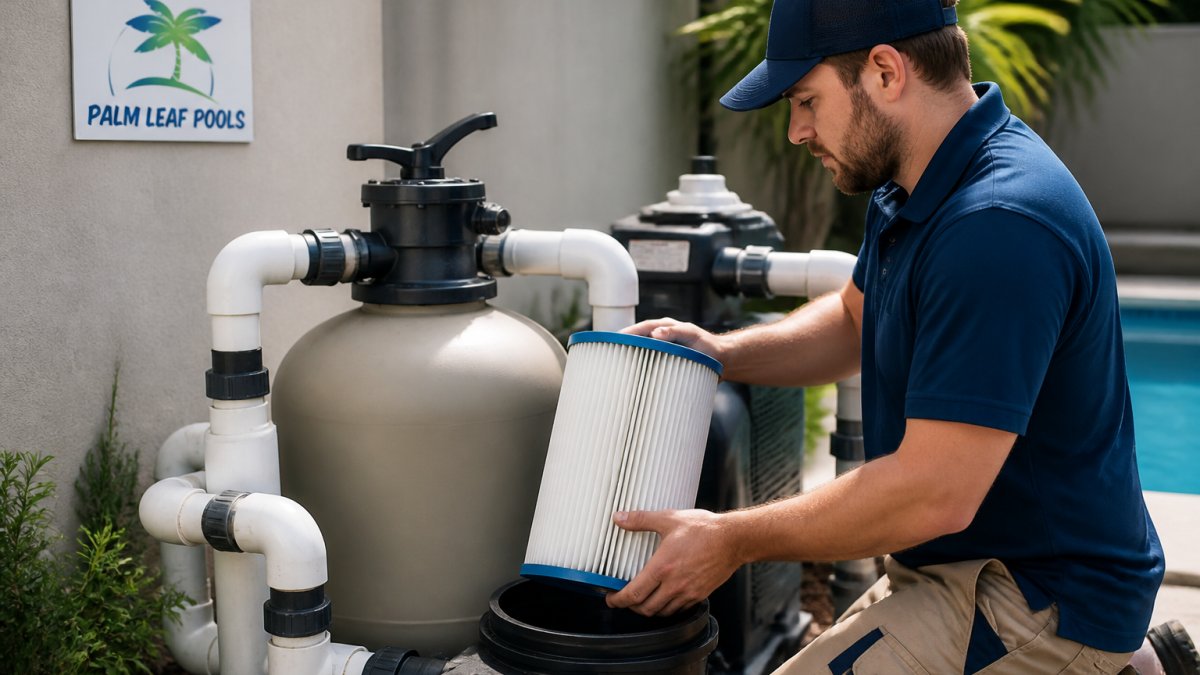
Cartridge filters trap debris in pleated fabric. Over time, pleats clog with dirt, oils, and calcium. Cleaning restores flow.
How to clean a cartridge filter:
- Turn off the pump and let pressure drop
- Remove the cartridge from the tank
- Rinse with a garden hose, starting from the top pleats downward
- Soak stubborn buildup in a filter cleaner solution for 8-12 hours
- Rinse thoroughly and reinstall
- Check the O-ring lubrication before reassembling
Replace cartridges every 3-5 years.
Backwashing Sand and DE Filters
Sand and DE filters trap debris in layers of media. When pressure builds, backwashing reverses flow to push debris out.
Backwashing steps:
- Turn off the pump
- Set the multiport valve to "backwash"
- Turn the pump on and run for 3-5 minutes until water runs clear in the sight glass
- Stop the pump
- Set the valve to "rinse" and run for 1-2 minutes
- Return the valve to "filter" and resume normal operation
Step 2: Keep Your Pool Pump Running Efficiently
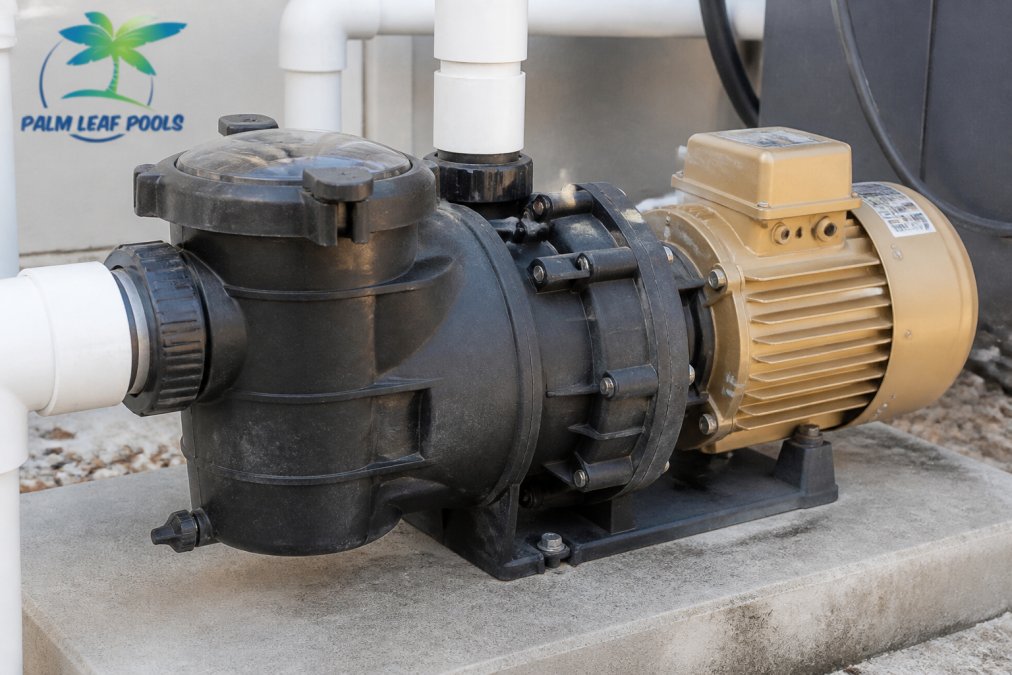
Your pump circulates water through the filter and back to the pool. A poorly maintained pump works harder, runs longer, and costs more to operate without delivering better results.
How Maintenance Affects Energy Consumption
A pool pump typically costs $400-$800 annually to operate. Poor maintenance can add $100-$200 yearly in wasted energy.
Checking Impeller and Seal Integrity
The impeller moves water; the seal prevents leaks into the motor. Both are critical to pump longevity.
Signs of impeller wear:
- Reduced flow rate (water pressure drops below normal)
- Cavitation noises (grinding, rattling, or sucking sounds)
- Water leaking from the pump housing
- Longer run times needed to achieve the same water clarity
Signs of seal failure:
- Water pooling under the pump
- Moisture around the motor shaft
- Rust or corrosion on the motor housing
- Increased energy consumption without explanation
Optimizing Pump Runtime
Most residential pools need 6-8 hours of circulation daily to maintain water clarity and chemistry. Running longer wastes energy without benefit.
Step 3: Monitor Water Chemistry and Circulation
Corrosive water attacks metal parts. Scaling clogs pipes. Poor circulation spreads problems.
Target ranges:
- pH: 7.2-7.6
- Total alkalinity: 80-120 ppm
- Calcium hardness: 200-400 ppm
- Free chlorine: 1-3 ppm
Step 4: Inspect and Maintain Your Pool Heater
Pool heaters last 8-15 years with care; neglected heaters fail in 3-5 years.
Annual heater maintenance:
- Inspect the heat exchanger for leaks or corrosion
- Check all connections for tightness
- Verify the thermostat is accurate with a thermometer
- Clean debris from the heater intake
- Check gas lines for leaks if you have a gas heater
- Inspect electrical connections if you have an electric heater
Step 5: Recognize Signs of Failing Pool Equipment and Troubleshoot Common Issues
Catching problems early saves money and prevents downtime. Understanding what's causing a problem helps you decide whether to call a professional or attempt a simple fix.
Common Warning Signs and What They Mean
Pump issues: Low flow/pressure, check filter gauge and skimmer basket. Cavitation noises, check water level and intake for leaks. Hot motor, check filter pressure and water level; shut down if too hot. Leaking housing, seal is failing; shut down until professional repair.
DIY Troubleshooting Checklist
Before calling a professional, work through this checklist:
- Is the pump running? Check that the timer is set correctly and the breaker hasn't tripped.
- Is water flowing? Look at the return jets. If no water is returning to the pool, the pump may be cavitating or the intake is blocked.
- What does the filter pressure gauge read? Compare it to the baseline pressure when the filter was clean. High pressure means the filter needs cleaning. Normal pressure with low flow means the impeller or intake line is the problem.
- Is the water level correct? It should be at the middle of the skimmer opening. Low water starves the pump.
- Are all valves open? Check that isolation valves on the pump intake and return lines are fully open.
- Are there any visible leaks? Water pooling under equipment indicates a seal or connection failure.
- What sounds is the equipment making? Cavitation (sucking/grinding) means air in the line. Squealing means a bearing or seal is failing. Grinding means debris in the impeller.
When to Call a Professional
Some problems require specialized tools or expertise. Don't attempt these yourself:
- Motor or seal replacement: Requires pump disassembly and specialized knowledge of seal orientation and lubrication.
- Heat exchanger descaling: Requires chemical treatment and pressure washing equipment.
- Electrical diagnostics: Troubleshooting heater or pump electrical issues risks injury or equipment damage.
- Cracked filter tank or heat exchanger: Requires replacement, which involves draining, disconnecting, and reinstalling equipment.
- Impeller damage or cavitation that persists after intake troubleshooting: The impeller may be cracked or the pump may have internal damage.
Step 6: DIY vs. Professional Maintenance Checklist
Some maintenance you can handle yourself. Some jobs need a professional. Knowing the difference protects your investment.
| Task | DIY | Professional | Frequency |
|---|---|---|---|
| Clean skimmer basket | Yes | Optional | Weekly |
| Backwash filter | Yes | Optional | Every 1-2 weeks |
| Test water chemistry | Yes | Optional | Weekly |
| Clean filter cartridge | Yes | Optional | Every 1-2 weeks |
| Check pump for leaks | Yes | Optional | Monthly |
| Lubricate pump seals | Yes | Optional | Seasonally |
| Replace cartridge | Yes | Optional | Every 3-5 years |
| Inspect heater | Optional | Recommended | Annually |
| Descale heat exchanger | No | Professional | Every 2-3 years |
| Replace pump seals | No | Professional | As needed |
| Repair motor damage | No | Professional | As needed |
| Winterization | Yes | Optional | Once yearly |
Step 7: Winterization and Seasonal Equipment Care
In colder months, water freezes in pipes and ice cracks components. Winterization protects equipment during off-season.
Winterization steps:
- Clean the filter thoroughly and let it dry
- Lower water level below skimmer and return lines
- Drain the pump, filter, heater, and all lines
- Blow out lines with an air compressor to remove standing water
- Remove drain plugs from equipment and leave them open
- Store removable parts indoors
- Cover the pool and equipment with tarps
Seasonal checklist:
- Spring: Inspect all equipment, replace cartridges if needed, check chemistry
- Summer: Monitor weekly, clean filters regularly, watch for leaks
- Fall: Clean equipment thoroughly, prepare for winterization
- Winter: Keep equipment drained, inspect periodically for damage
Frequently Asked Questions
How long should pool equipment last?
Most pool pumps last 8 to 12 years with proper maintenance, while filters typically need replacement every 5 to 7 years depending on type and usage. Heaters usually last 10 to 15 years. Regular maintenance, prompt repairs, and following a consistent pool filter maintenance schedule significantly extend equipment life. Neglecting water chemistry and skipping routine inspections can cut these timelines in half.
What are the signs of failing pool equipment I should watch for?
Watch for reduced water flow, unusual noises from the pump, visible corrosion or scaling on metal parts, leaking seals, and rising PSI gauge readings on the filter. A heater that won't reach temperature or a pump that trips breakers frequently also signals trouble. Catching these signs of failing pool equipment early prevents catastrophic failure and protects your investment from expensive emergency repairs.
How often should I clean my pool filter as part of maintenance?
Follow your pool filter maintenance schedule by cleaning filter cartridges every 2 to 4 weeks during peak season, or when PSI rises 8 to 10 pounds above the baseline. Sand filters need backwashing weekly or when PSI climbs. DE filters require backwashing every 1 to 2 weeks. Check your specific filter type's manual, as flow rate and debris load affect frequency. Regular cleaning prevents pressure buildup that damages the filter and reduces pump efficiency.
Can regular cleaning and maintenance prevent expensive pool equipment repairs?
Yes. Preventative maintenance catches small problems before they become costly failures. Regular debris removal, water chemistry balance, filter cleaning, and inspecting seals and O-rings extend equipment life by years. Homeowners who follow a consistent maintenance routine spend far less on emergency repairs than those who neglect upkeep. Professional inspections twice yearly catch hidden issues early, saving thousands in the long run.