 How-to
How to Winterize a Pool: 7 Beginner Steps That Protect Your Pool
Quick Summary
To winterize a pool, clean and balance the water, shock it, add winter chemicals, lower the water level, blow out the lines and install a cover. Start when water temperature drops to about 65 degrees Fahrenheit, and finish before the first hard frost.
- Start closing when water temperature drops to about 65 degrees Fahrenheit and stays there.
- Finish winterization before the first hard frost, since freezing water can crack pump housings, filters and pipes.
- Balance pH to 7.2 to 7.6, alkalinity to 80 to 120 ppm and calcium hardness to 200 to 400 ppm.
- Lower the water to about 1 inch below the skimmer, and never drain the pool completely.
- Never mix different shock or chemical products together, because the combination can release dangerous gases.
Table of Contents
- How to Winterize a Pool: 7 Beginner Steps That Protect Your Pool
- What Winterizing a Pool Means and When to Start
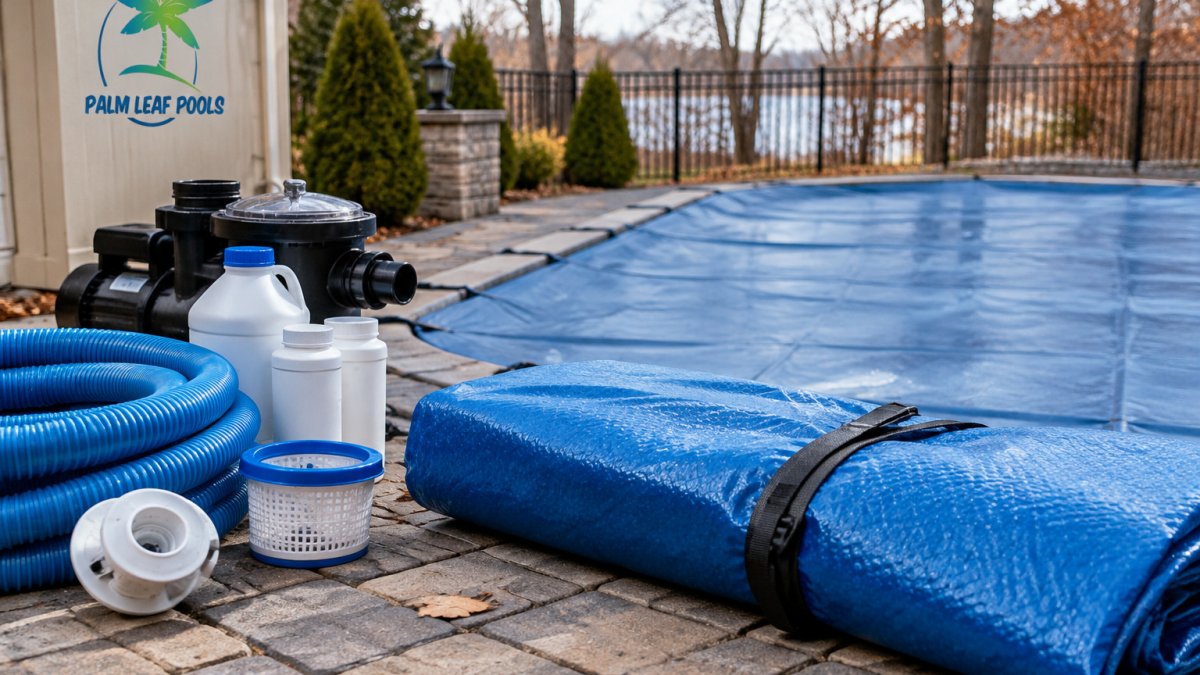
- Required Tools and Supplies
- Step-by-Step: Clean, Balance, and Shock the Water
- Pool Winterization Chemicals Kit: What to Add and Why
- How to Blow Out Pool Lines and Lower the Water Level
- Pool Winterization Cost and What Affects It
- Troubleshooting Common Winterizing Mistakes and When to Call a Pro
- Scheduling Your Pool Closing Checklist and Next Steps
- Frequently Asked Questions
How to Winterize a Pool: 7 Beginner Steps That Protect Your Pool
Last Updated: November 15, 2026
What Winterizing a Pool Means and When to Start
Winterizing a pool means preparing it so cold weather can't damage the water, the equipment or the plumbing.
Timing matters more than most beginners expect. Winterization must be finished before the first hard frost, because freezing water can crack pump housings, filters and pipes.
Pool owners in north Texas often wait too long because the weather still feels warm. A warm afternoon does not mean the pool is safe.
Above-Ground vs. Inground Pools: What Changes
Above-ground and inground pools need the same basic steps, but the details differ. An above-ground pool sits on top of the ground, so its plumbing is usually simpler and easier to drain.
Water level rules also differ. Many pool owners lower the water to about 1 inch below the skimmer, though the right level depends on your pool and cover.
Required Tools and Supplies
Gather everything before you start. Stopping halfway to hunt for a tool can leave the water unbalanced.
- Pool brush and skimmer net
- Pool vacuum and hose
- Test kit for pH, alkalinity and chlorine
A plug kit is the item beginners most often forget. Without it, water stays in the lines and can freeze.
If you would rather hand off the work, a pool maintenance service guide can help you decide whether professional help fits your budget.
Step-by-Step: Clean, Balance, and Shock the Water
Start by cleaning the pool. Remove leaves, skim the surface, brush the walls and steps, and vacuum the floor. Leftover debris feeds algae over the winter.
Next, test and balance the water. Aim for these general ranges:
- pH: 7.2 to 7.6
- Total alkalinity: 80 to 120 ppm
- Calcium hardness: 200 to 400 ppm
Once the chemistry is balanced, shock the pool. Check the guide on when it is safe to swim after shocking a pool for how to confirm the water is ready.
Watch out: never mix different shock or chemical products together in the same container. The combination can release dangerous gases.
The table below summarises the water-balance targets and the order of the first steps before the pool is closed.
| Step | What to do | Target or timing |
|---|---|---|
| Clean | Skim, brush and vacuum | Before testing |
| Balance pH | Adjust pH | 7.2 to 7.6 |
| Balance alkalinity | Adjust total alkalinity | 80 to 120 ppm |
| Balance hardness | Adjust calcium hardness | 200 to 400 ppm |
| Shock | Raise chlorine level | Run pump several hours |
| Re-entry | Wait for chlorine to drop | Until normal levels |
Pool Winterization Chemicals Kit: What to Add and Why
A winterizing kit is not one product. It is a small set of chemicals that each do a different job while the pool sits idle. Before committing to a chemical routine, you can explore alternatives to traditional pool covers that change how these products get used. Most kits for a residential pool include the following, and you should read every label before you buy because concentrations and dosages vary by brand.
- Winter algaecide: Slows algae growth in cold water. Look for a winter-specific formula, often a polymer or a copper-free blend, because some regular algaecides break down faster in cold water. Dose per the label based on pool volume; too much can cloud the water or leave residue in spring.
- Metal sequestrant: Binds iron, copper and manganese so they stay suspended instead of staining the surface or tinting the water. This matters most if you fill from a well or have seen rust-colored stains.
- Chlorine shock or a winter shock product: Raises the chlorine level high enough to kill bacteria and algae before the pool goes quiet. Some kits include a winter shock that dissolves more slowly.
Order of operations
Add chemicals in this order, and let each one circulate before the next:
- Balance pH, total alkalinity and calcium hardness first. If the water is out of range, the other products will not work as intended.
- Shock the pool and run the pump long enough for the chlorine to mix and start to fall back toward normal.
- Add the winter algaecide and the metal sequestrant last, following the label for how long to wait between products.
Watch out: never mix two chemical products together in the same bucket or pour them at the same time. Some combinations release dangerous gases, and the reaction can happen fast. Add each product separately to the pool water as the label directs.
Saltwater and above-ground differences
Saltwater pools need one extra step: many manufacturers recommend removing the salt cell and storing it indoors in a clean, dry place before freezing weather, and cleaning it per the manual first.
Above-ground pools often need less chemical volume because the water volume is smaller, so measure the actual gallonage before you dose. Some above-ground kits skip the metal sequestrant, but if your fill water is high in iron, add it anyway.
What a kit costs and what to ask
Prices for winterizing chemicals vary with pool size, brand and whether you buy a bundled kit or individual products. Ask for a quote that lists each product and the dose for your pool volume, so you can compare kits on the same basis. If you hire a service, the quote should state whether chemicals are included or billed separately.
How to Blow Out Pool Lines and Lower the Water Level
This is the step beginners most often get wrong, and it is also the step where pool type matters most. Work through the water level first, then the lines, then the equipment.
Lower the water to the right level for your pool
There is no single correct water level for every pool. The right level depends on your cover type, your skimmer design and the manufacturer's instructions.
- Above-ground pool with a skimmer: Lower the water to about 1 inch below the bottom of the skimmer opening. Above-ground skimmers are usually molded into the wall, so the water must drop below the opening or freezing water can crack the skimmer body.
- Inground pool with a skimmer: Lower the water to roughly 1 inch below the skimmer mouth, or to the level the cover manufacturer specifies. Many solid inground covers are installed with the water drawn down 12 to 18 inches so the cover can sag without touching the surface; mesh covers often stay closer to normal operating level.
- Pool with no skimmer (some above-ground models): Follow the manufacturer's closing level, which is often just below the return fitting.
Use a submersible pump or a siphon to reach the target level, and stop there. Never drain the pool completely. An empty inground pool can pop out of the ground in saturated soil, and an empty above-ground pool can collapse in wind.
Blow out the lines safely
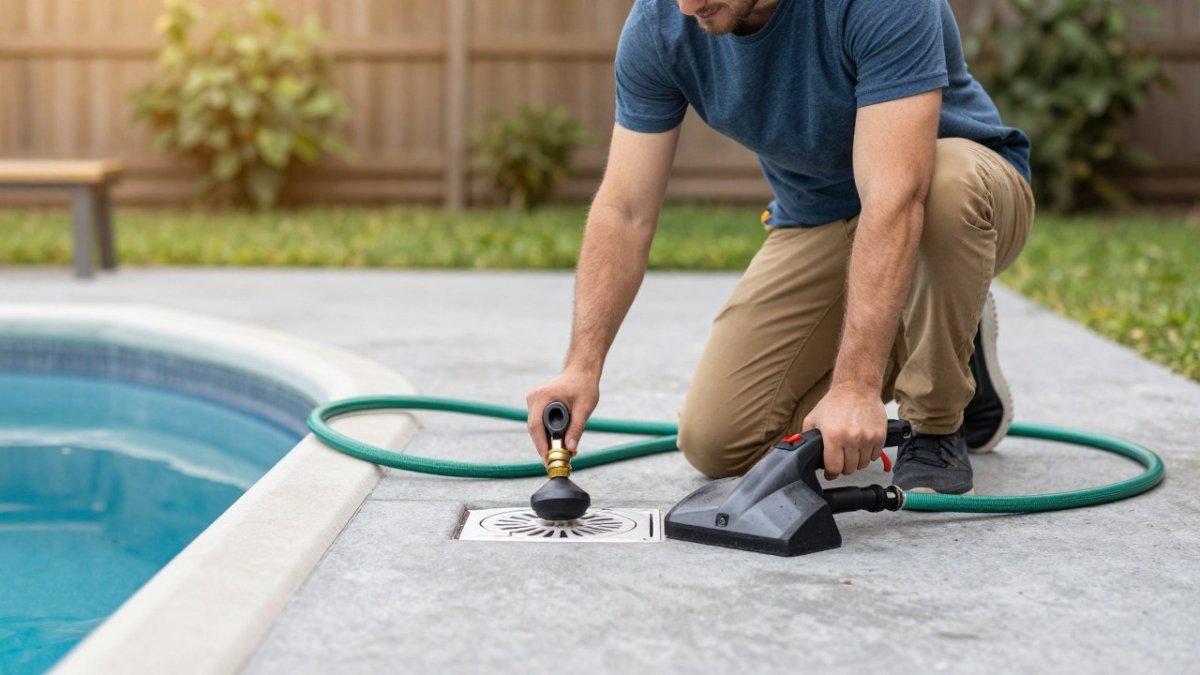
Blowing out lines means pushing air through the plumbing until no more water comes out, so nothing is left to freeze and crack a pipe or fitting.
- Shut off the pump, filter and heater at the breaker, not just at the switch.
- Open the valves you need to isolate each line, and remove the return eyeballs and skimmer baskets.
- Connect a shop vacuum set to blow, or an air compressor regulated to low pressure, at the skimmer or at the equipment pad, depending on your plumbing layout.
- Blow each line one at a time until the water stops sputtering and only air comes out.
- Plug each line as soon as it is clear, so water cannot run back in.
Watch out: compressed air can injure you or burst fittings if you use too much pressure. Keep the regulator low, never stand over a skimmer or open line while air is flowing, and wear eye protection.
Protect the skimmer and returns
Once a line is blown out, insert the expansion plug or winter plug and screw it down snugly. In the skimmer, many beginners use a gizmo, a foam or plastic insert that absorbs expansion if a little water remains, plus a skimmer cover plate. Follow the plug kit instructions for your fitting sizes; forcing the wrong plug can crack the plastic.
Drain the equipment
Finally, drain the pump, filter, heater and any salt cell according to the manufacturer's directions. Open the drain plugs, store them in a labeled bag, and leave the equipment valves in the position the manual recommends.
Pool Winterization Cost and What Affects It
The cost of winterizing depends on pool size, pool type, the chemicals you use, and whether you hire help. Costs depend on your pool's size, equipment and condition. For current prices or a quote, visit the Palm Leaf Pools website or call us.
If you do the work yourself, the main costs are chemicals, a cover and any tools you do not already own.
Troubleshooting Common Winterizing Mistakes and When to Call a Pro
Beginners make the same few mistakes again and again:
- Closing the pool with unbalanced water, which leads to staining and scale
- Leaving water in the lines, which can crack pipes when it freezes
- Draining the pool completely, which can damage the shell
If the water turns green in spring or a line cracks, stop and call a professional. Electrical equipment, heaters and salt systems should also be handled by a qualified service technician, not by a beginner working alone.
Palm Leaf Pools offers weekly maintenance and complete pool remodeling. Call us if you find damage you can't fix yourself.
Scheduling Your Pool Closing Checklist and Next Steps
Use this checklist to plan your closing day:
- Check that water temperature is at or below 65 degrees Fahrenheit
- Clean the pool and test the water
- Balance pH, alkalinity and calcium hardness
Schedule the work before the first hard frost. When you are ready, call Palm Leaf Pools today to discuss ongoing care and pool closing.
Frequently Asked Questions
What is the first step in winterizing a pool?
The first step is to clean the pool thoroughly and balance the water chemistry before adding any winterizing products. Skim debris, brush the walls and floor, and vacuum the bottom. Then test the water for pH, alkalinity, and sanitizer levels, and adjust them so the water is balanced. Start this process when water temperatures consistently drop to 65 degrees Fahrenheit or lower, and complete winterization before the first hard frost to prevent equipment damage.
Do I need to drain my pool to winterize it?
No, you should not drain the pool completely. Draining an entire pool can cause structural damage, especially to inground pools that can shift or crack without water pressure against the walls. Instead, lower the water level to approximately 1 inch beneath the skimmer, which protects the pool shell while leaving room for snow or rain. Above-ground pools follow similar guidance, with the water level kept below the skimmer opening.
What chemicals do I need to winterize my pool?
Most beginners use a winterizing chemicals kit that includes a chlorine or oxidizer shock, a winter algaecide, and a scale inhibitor or metal sequestrant. Balance pH and alkalinity first, then shock the water to clear contaminants. Add the winter algaecide to prevent algae growth during the cold months. Read each product label for dosing, since amounts depend on your pool volume. Protecting the salt cell is also part of the process for saltwater pools.
How do I protect my pool pipes from freezing?
Blow out the return lines and skimmer lines with a shop vacuum or low-pressure air to remove standing water, then install expansion plugs or freeze plugs in the openings. Remove and store the pump drain plugs and filter drain valves so water can drain fully from equipment. Winterization must be completed before the first hard frost to prevent freeze damage to the plumbing and equipment.