 How-to
7 Steps to Choose the Right Pool Tile Color
Last Updated: November 19, 2026
Quick Summary
Choose pool tile colors by first picking a color family such as blue, teal, green, gray, or neutral, then testing physical samples in sunlight, shade, and wet and dry conditions. Match the tile's lightness to your pool's depth and finish, and make sure it coordinates with your deck and coping.
- Test samples in midday sun, late afternoon, full shade, and nighttime lighting before deciding.
- Compare each sample wet and dry, since water darkens most tile by a noticeable step.
- Use lighter tiles for shallow pools and medium or darker tones for deep pools.
- Dark tiles absorb heat, so weigh comfort for children and pets in direct sun.
- Place samples beside your deck material and coping to check how they coordinate.
Table of Contents
- Step 1: Decide Between Blue, Teal, Green, Gray, and Neutral Tones
- Step 2: Test Tile Samples Under Sunlight and Shade
- Step 3: Match Light and Dark Tiles to Depth and Pool Finish
- Step 4: Coordinate Tile With the Deck, Coping, and Landscape
- Compare Glass, Porcelain, and Mosaic Tile Materials
- Pool Tile Color Ideas to Browse Before You Buy
- Booking Your Color Consultation With Palm Leaf Pools
- Frequently Asked Questions
Choosing pool tile colors is one of the few decisions that changes how your whole pool looks every single day. Homeowners make this choice with more confidence when they understand one basic fact: the tile at the waterline acts as a frame, and the water seems to take on its color. A pool with deep blue tile can look cool and clear, while the same water framed by gray tile may look calmer and darker. Before you pick a sample, it helps to know what drives that effect. Below, we walk through seven steps to narrow your options and choose a color you will still like years from now.
Pool tile colors affect more than appearance. Lighter shades tend to reflect more light and make water look brighter, while darker shades can make the pool feel deeper and more private. Water color is also shaped by depth, sunlight, and the surface finish of the pool itself, so the same tile can look different from one yard to the next. That is why we recommend testing before you commit.
Quick checklist before you start:
- Note how much direct sun your pool gets each day
- Decide whether you want a bright, calm, or natural look
- Gather your deck and coping materials, if you already have them
- Set a realistic budget for tile and installation
Step 1: Decide Between Blue, Teal, Green, Gray, and Neutral Tones
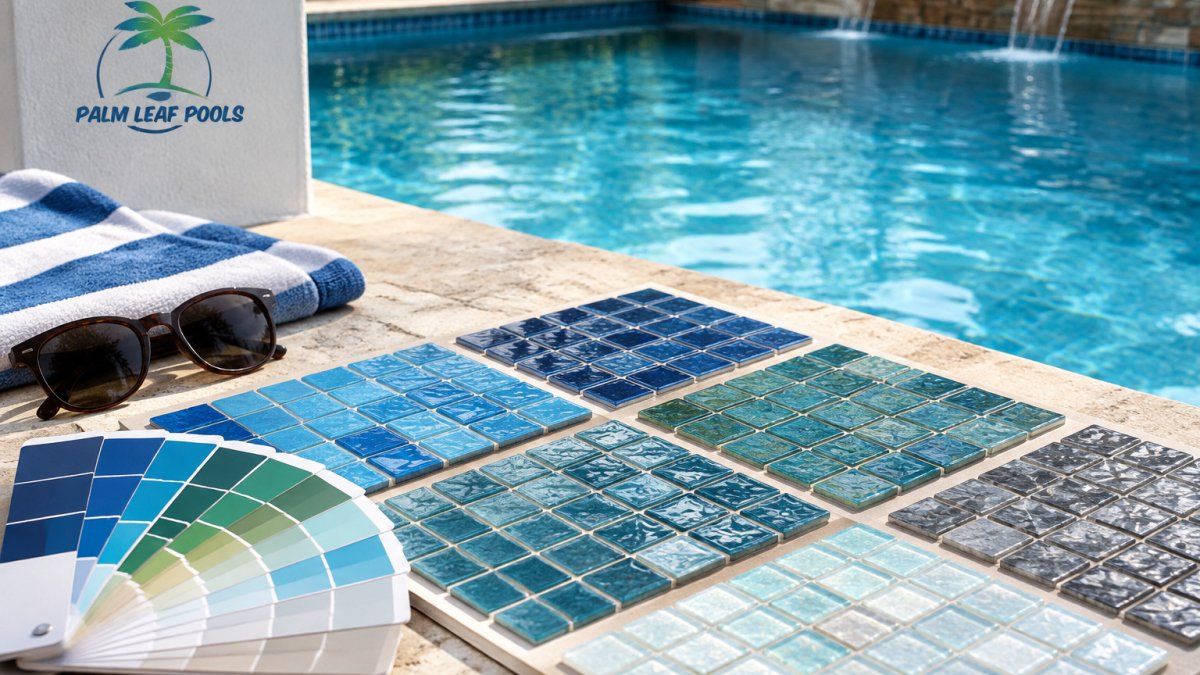
Start by choosing a color family, not a single shade. Blue and teal are the classic choices, and they tend to give water a clear, inviting look. Green tones feel more natural and can suit yards with lots of plants. Gray and neutral tones often look modern and understated, and they hide some dirt and debris better than very light colors.
Many homeowners find it easier to narrow things down by asking what they want the pool to feel like. Bright and playful points toward blue or teal. Relaxed and natural points toward green or sand. Sleek and minimal points toward gray or charcoal.
- Blue and teal: Bright, classic, and easy to match with most designs
- Green: Natural and calm, works well with landscaping
- Gray and neutral: Modern and versatile, often easier to keep looking clean
Step 2: Test Tile Samples Under Sunlight and Shade
A tile sample on a showroom wall is the least reliable way to judge pool tile color. The same tile shifts dramatically with the light it receives, the angle you view it from, and whether it is wet or dry. Homeowners who test methodically are better able to avoid a common regret: a color that looked crisp in the store but reads muddy or flat once installed.
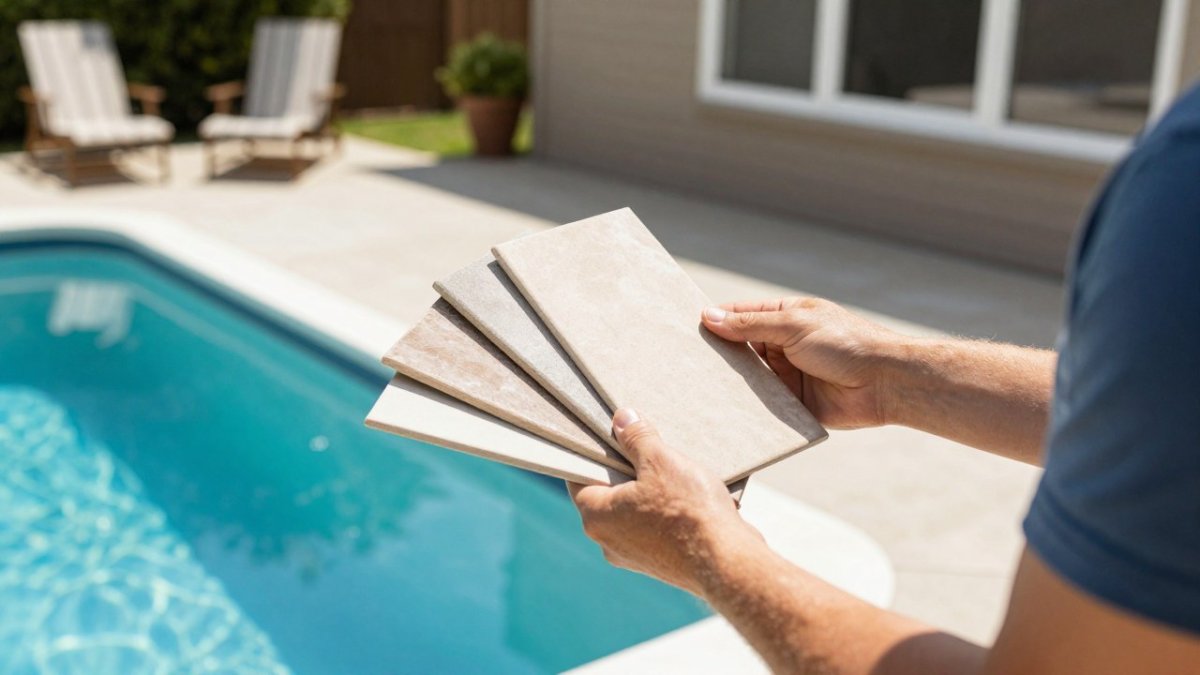
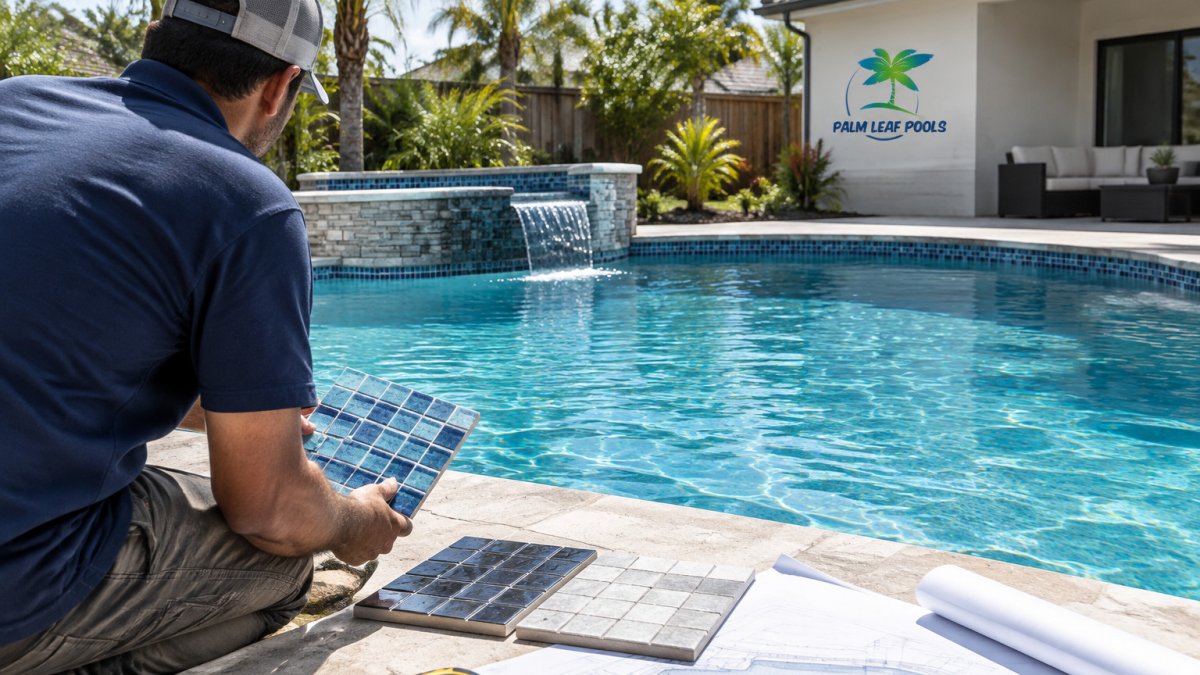
Build a simple sample board. Ask for physical samples of your top three to five colors in the actual material and finish you are considering. Mount each on a neutral gray or white board so the background does not bias your eye, and label the back with the color name and material. Learn how water chemistry affects how the pool water looks and how the tile reads in our pool chemistry step-by-step guide. Keep the board small enough to move easily, roughly 12 by 12 inches per sample works well.
Test across four lighting conditions. Place the board at the pool edge or on the patio and evaluate it at:
- Midday direct sun, the harshest test; colors wash out or turn chalky here first.
- Late afternoon or early morning, lower sun angles reveal undertones that midday hides.
- Full shade, many blues and greens go gray or dull without direct light.
- Nighttime under your pool and landscape lighting, warm bulbs can push blue tile toward green and make gray tile look brown.
Check the viewing angle. Stand where you will actually be: at the pool edge looking down, from a patio chair looking across the water, and from a doorway looking out. Tile viewed at a steep angle reflects more sky and reads lighter; tile viewed straight on shows its true body color. A color that looks balanced from the deck may look darker from inside the pool.
Wet the samples. Dip each sample in water or mist it, then compare wet against dry side by side. Water darkens most tile by a noticeable step and saturates color, so a shade that looks soft and pale dry can become deep and heavy wet. If your pool will sit under several feet of water, place the sample in a clear container of water at that depth to approximate the effect.
Compare against the water, not just the wall. Fill a white bucket with pool water and set it beside the samples. The tile's job is to frame that water color, so judge the pair together rather than the tile alone.
Watch out: Testing at only one time of day is the single most common mistake, a color that looks crisp at noon can look muddy at dusk, so do not commit until you have seen the sample in at least four lighting conditions and both wet and dry.
Step 3: Match Light and Dark Tiles to Depth and Pool Finish
Tile is only one of several variables that decide how your water reads. Depth, the pool's interior finish, water clarity, and sky reflection all pull the final color, which is why the same tile can look bright in one yard and heavy in another.
How light and dark tiles behave. Light tiles reflect more light back through the water and make shallow areas look brighter and larger. Dark tiles absorb light, add perceived depth, and can make shallow water look almost black at certain angles. Medium tones are the compromise: they hold color without going flat in shade.
Factor in depth. In a pool with a deep end, a medium or darker tile often looks rich and balanced because the water itself supplies the depth. Because tile color can make water appear lighter or darker, Clear Water Pools can help you keep those visual cues in perspective by checking the water’s chemistry regularly.
Factor in the interior finish. Plaster, pebble, and quartz finishes each shift water color. A white plaster finish pushes water toward bright blue-green; a pebble finish in tan or gray mutes the water and can make blue tile read greener. Glass and porcelain tile borders reflect differently from the finish behind them, so compare tile against a finish sample, not against white.
Factor in water chemistry and clarity. Balanced water reads clear and lets tile color show through; cloudy or unbalanced water dulls every color and can leave scale that changes the surface over time.
A quick decision framework.
- Shallow pool, bright look wanted: light blue, aqua, or white-based tile.
- Deep pool, rich look wanted: medium blue, teal, or gray.
- Natural, landscape-heavy yard: green, sand, or blended neutral.
- Modern, minimal design: gray, charcoal, or large-format porcelain.
- Safety priority on steps and ledges: a contrasting tone or a textured band that stands out from the field tile.
Watch out: Dark tiles absorb heat and can become uncomfortably hot in direct sun, so weigh how the pool will feel for children and pets before choosing a deep shade, and confirm slip resistance on any tile used on steps and ledges.
Step 4: Coordinate Tile With the Deck, Coping, and Landscape
Your tile should work with everything around it. Look at the deck color, the coping, the fencing, and the plants nearby. Warm deck tones often pair well with blue or green tile, while cool gray decks suit neutral or gray pool tile. If your yard has strong greenery, a green-toned tile can blend into the setting instead of competing with it.
Check the whole picture by placing your samples next to the deck material and any patio furniture. Avoid common errors by reading about costly pool remodeling mistakes to avoid. A tile that looks great alone may clash once everything is in view together.
Compare Glass, Porcelain, and Mosaic Tile Materials
The material you choose changes how the color looks and how the tile performs over time. Glass tile reflects light and gives water a bright, shimmering look. Porcelain is durable and comes in many finishes, which makes it a practical choice for many designs. Mosaic tile can create detailed patterns and gradients, though it takes more grout lines to maintain.
| Material | Look | Maintenance | Best For |
|---|---|---|---|
| Glass | Bright, reflective, shimmering | Smooth surface, easy to clean | Sparkling, modern pools |
| Porcelain | Consistent color, many finishes | Durable, low upkeep | Practical, long-lasting designs |
| Mosaic | Detailed patterns and gradients | More grout lines to maintain | Custom or artistic designs |
Choose the material first if you want a specific shine or texture, then match the color within that material. Ask for samples of each finish before you decide, since the same color can look very different in glass and in porcelain.
Pool Tile Color Ideas to Browse Before You Buy
Browsing ideas helps you see how colors look in real pools. Look for photos taken in full sun and in shade, not just professional shots with perfect lighting. Many homeowners find that a blended palette, such as blue water with a deck in warm sand tones, gives a balanced look that works in most yards.
Save the images you like and compare them side by side. Notice which pools look inviting and which look harsh, and think about whether the mood matches what you want from your backyard.
Booking Your Color Consultation With Palm Leaf Pools
Once you have narrowed your choices to two or three colors, the next step is to see them in your own yard. Palm Leaf Pools can help you plan a palette that fits your deck, coping, and surroundings. Contact us to schedule a consultation and bring your favorite samples for a side-by-side review. You can also explore our professional pool remodeling services in DFW.
Frequently Asked Questions
What is the best color for pool tiles?
There is no single best color, because the right choice depends on the look you want, your climate, and how the tile interacts with your pool finish and sunlight. Blue and teal tiles are the most traditional choices and tend to make water look bright and clear. Gray and neutral tones give a calmer, more natural look and can make water appear deeper and darker. Start by narrowing the options to two or three colors, then compare physical samples in your own yard at different times of day before deciding.
How does pool tile color affect the appearance of the water?
Tile color strongly influences how the water looks. Light tiles, such as sand or white, can make water appear lighter and more turquoise, while dark tiles tend to make it look deeper and more reflective. Water depth, sunlight, and the pool's surface finish also change the result, so the same tile may look different in a shallow pool than in a deep one. Testing samples in the water itself gives a more accurate picture than looking at them dry.
Should pool waterline tile match the pool finish?
Waterline tile does not have to match the pool finish exactly, but the two should work together. A waterline band in a color that complements the interior finish creates a cohesive look, while a strong contrast can add a modern accent. Consider how the waterline will look when the water level drops slightly, and make sure the tile is durable and easy to clean at that level. Ask your pool professional to show you how the combination looks in person.
How do I choose a pool tile color that complements my backyard?
Start with the surfaces around the pool, including the deck, fencing, home exterior, and any plants or stone features. Tile colors that echo these surroundings, such as sandy neutrals with a stone patio or soft teals with lush landscaping, usually feel most natural. Take photos of your yard in different lighting and compare them with tile samples.