 how-to
Signs of Structural Damage in Pools: 2026 Guide
Table of Contents
- Structural vs. Cosmetic Damage: What's the Difference?
- 1. Structural Pool Cracks in the Shell and Walls
- 2. Pool Settlement Signs Around the Deck and Coping
- 3. Bulging Walls, Buckling, and Visible Fractures
- 4. Persistent Water Loss and Pool Leak Detection
- 5. Surface Damage That Points to Deeper Problems
- 6. What Drives Pool Structural Repair Costs
- When to Call a Professional: Urgency and Safety Triage
- Frequently Asked Questions
Last Updated: October 6, 2026
Structural vs. Cosmetic Damage: What's the Difference?
A pool crack is not automatically a crisis. Most cracks are cosmetic, affecting appearance but not the load-bearing structure. Structural damage in pools is different: it changes how the shell, walls, or deck carry weight and hold water. Persistent soil shifting around the pool perimeter often mirrors the underlying instability seen when identifying failing retaining walls, signaling that the ground itself may no longer support the weight of the structure.
Here is the simple rule we use on every inspection:
- Surface crack: thin, stable, and only in the plaster or finish
- Structural crack: wider, growing, and often paired with movement, water loss, or bulging
How to Tell a Structural Crack from a Surface Crack
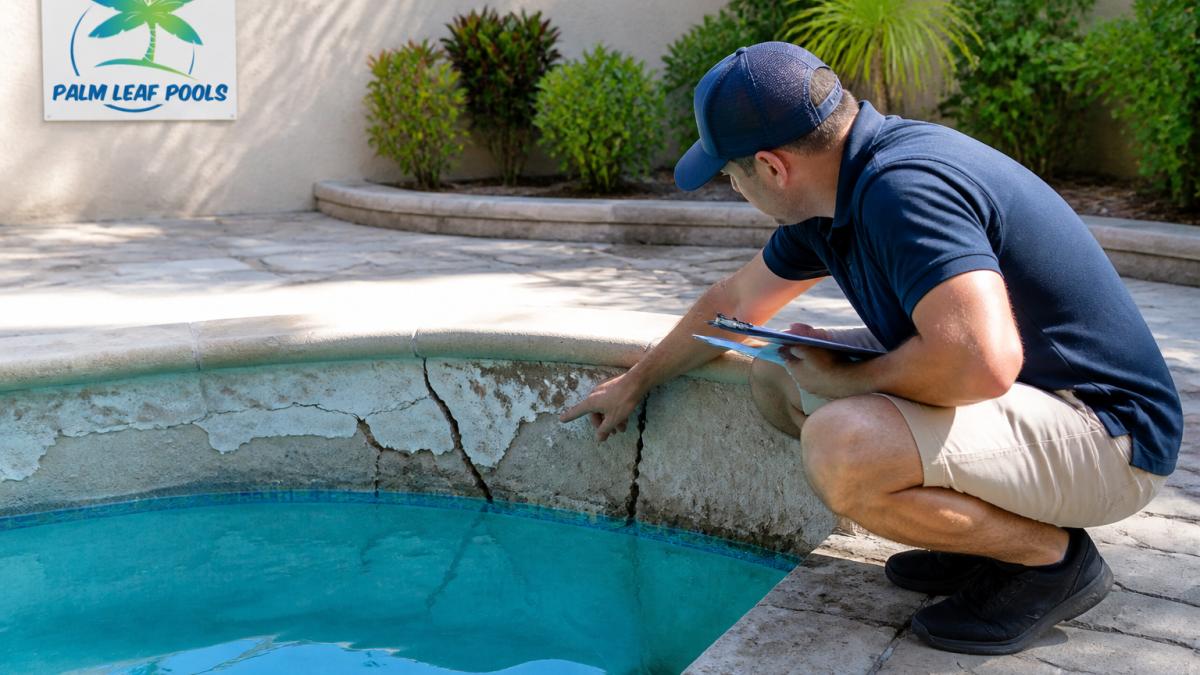
A surface crack is a cosmetic flaw in the plaster or finish, while a structural crack runs deeper into the pool shell and often signals movement. Three checks tell them apart: width, direction, and progression.
- Width: hairline cracks under the width of a credit card are often cosmetic
- Progression: mark the crack with tape and measure it again in 30 days
- Direction: vertical cracks in the wall are more concerning than most surface spidering
A structural crack rarely travels alone. If you find one, look for a second sign nearby: a sinking deck, a bulging wall, or a dropping water line.
1. Structural Pool Cracks in the Shell and Walls
Structural pool cracks in the shell are the clearest sign something is wrong beneath the surface. They break through the plaster into the concrete or gunite that holds the pool together, often follow a straight line, and widen over time.
Watch for these signals:
- Cracks that run the full height of a pool wall
- Cracks that reappear after patching
- Rust-colored staining along a crack line, which can point to reinforcement corrosion
A common mistake is patching a structural crack with epoxy and calling it done. According to the American Concrete Institute's guidance on crack evaluation, cracks should be assessed by cause and activity, not just appearance, before any repair is chosen.
Vertical vs. Horizontal Cracks: Why Direction Matters
A vertical crack in a pool wall usually points to settlement or lateral soil pressure, while a horizontal crack often signals a structural or bond failure. Direction tells you where the force comes from.
- Vertical cracks: often tied to shifting soil or uneven settlement
- Horizontal cracks: can indicate delamination or a failure at a construction joint
- Diagonal cracks: frequently appear where two forces meet, such as settlement plus water pressure
Direction is a clue, not a diagnosis. Pair it with the other signs in this guide before deciding how urgent the problem is.
2. Pool Settlement Signs Around the Deck and Coping
Pool settlement signs show up first at the edges, where the pool meets the deck. The coping is the cap around the pool's rim; the deck is the surrounding concrete.
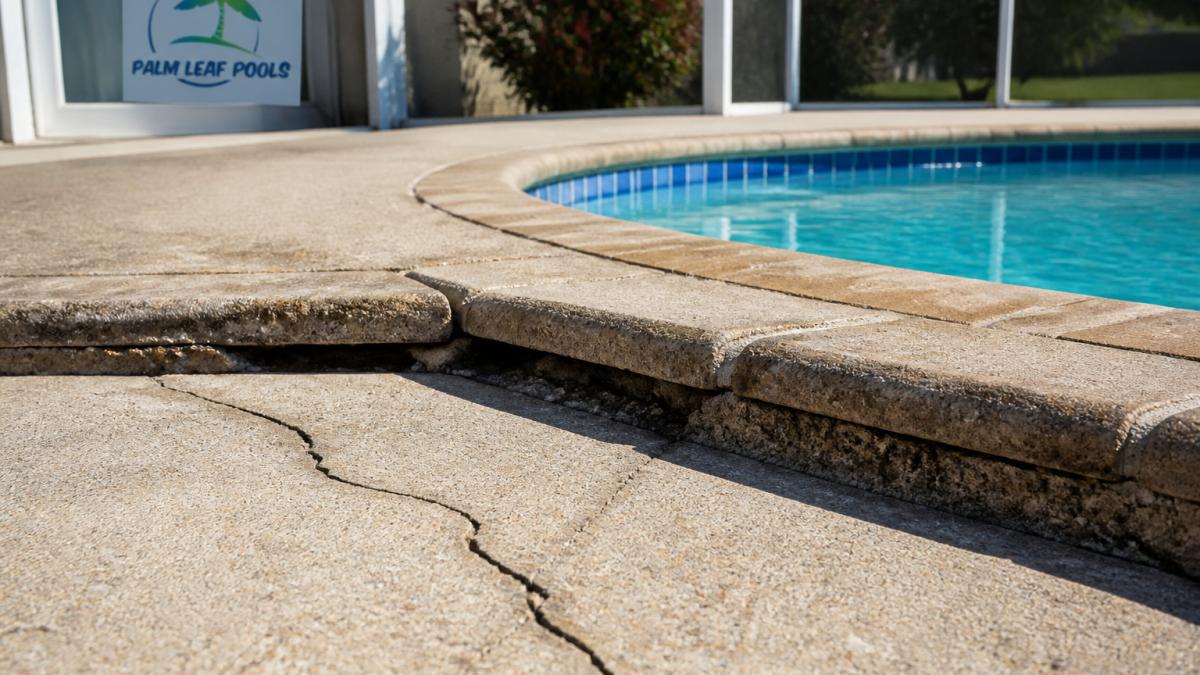
Walk the perimeter and look for:
- A visible gap between the coping and the deck
- Coping stones that sit at different heights
- Deck slabs that have dropped or tilted
A small, even gap can be normal expansion. A gap wider on one side than the other points to movement, the difference between settling evenly and settling on one side.
Uneven Coping, Gaps, and Sinking Deck Sections
Uneven coping and sinking deck sections are pool settlement signs caused by soil movement, poor compaction, or water eroding the ground under the deck. The shell may be fine while the ground around it moves.
Check these spots:
- Where the deck meets the house or a patio
- Low corners where water pools after rain
- Areas near downspouts or irrigation heads
If one corner of the deck has dropped while the rest is level, the soil under that corner is the likely culprit. Fixing the deck without addressing the soil usually means the problem returns.
3. Bulging Walls, Buckling, and Visible Fractures
A bulging wall is one of the most serious signs of structural damage in pools: the wall is no longer holding its shape, and the pressure behind it is winning. Buckling is the same problem, more advanced.
Look for:
- A wall that bows outward when you sight down its length
- Plaster that has cracked in a curved or bowing pattern
- A visible fracture that runs with the bulge
A bulging wall is a collapse risk, not a cosmetic issue. Treat it as urgent.
4. Persistent Water Loss and Pool Leak Detection
Persistent water loss is one of the most reliable signs of structural damage in pools, but also the easiest to misread.
Normal evaporation in warm weather can drop a pool's water level noticeably over a week. A structural leak behaves differently: the loss is steady, does not stop when the pool is covered, and often comes with a crack or gap nearby.
For pool leak detection, work through the likely causes in order:
- Evaporation and splash-out
- Equipment leaks at the pump, filter, or heater
- Plumbing leaks in the return lines
Checking the simple causes first saves time and money before anyone starts digging.
The Bucket Test: A Simple Way to Check for Leaks
The bucket test compares water loss in a bucket to water loss in the pool to separate evaporation from a real leak. How to run it:
- Fill a bucket with pool water and set it on the top step
- Mark the water level inside the bucket and on the pool wall
- Leave both for 24 hours with the pump running normally
- Compare the two drops
If the pool level drops more than the bucket, you likely have a leak. If they drop about the same, evaporation is the cause. Run the test twice for a clearer read. The Centers for Disease Control and Prevention guidance on residential pool safety is a useful reference for keeping water conditions safe while you investigate.
5. Surface Damage That Points to Deeper Problems
Surface damage is not always just surface damage. Plaster, tile, and finishes wear out with age, but some patterns point to problems underneath. Here is how to inspect them safely and what to write down.
Watch for:
- Delamination: plaster that has separated and sounds hollow
- Etching: rough, chalky patches that hold stains
- Staining: rust-colored streaks that can signal reinforcement corrosion
Rust staining is the one to take seriously. It often means water has reached the steel reinforcement inside the shell. Once that steel corrodes, it expands and pushes the concrete apart from the inside, spalling the shell surface and widening the very crack the water is using to get in.
A Safe Surface Inspection You Can Do Yourself
A careful 20-minute walk-around catches more than a casual glance ever will. Do it in daylight, with dry hands, and never lean over the water or step onto a wet coping edge. If a wall looks bulging or a deck section feels spongy, stop and call a professional rather than testing it.
Work in this order:
- Walk the perimeter on dry deck. Look down at the coping line first, then out at the deck. Note anything that sits out of line.
- Sight down each wall. Stand at one end and look along the wall toward the other end. A wall that bows away from a straight line is a red flag.
- Tap suspect areas with a plastic screwdriver handle. A hollow, drummy sound over plaster suggests delamination; a dull thud is normal.
- Photograph every crack with a reference. Lay a tape measure or a coin against the crack and shoot straight on, not at an angle.
- Log the date and the water level. Write down the water line against the skimmer or tile each morning for a week.
How to Document Cracks So an Inspector Can Read Them
A photo without scale tells an inspector almost nothing; one with a ruler, a date, and a direction note tells them whether the damage is active. Use this record for each crack:
- Location: which wall, how far from a corner, and whether it is above or below the waterline
- Width: compare it to a credit card edge (about 1/32 inch) or measure it directly
- Direction: vertical, horizontal, diagonal, or stair-step
That record is the single most useful thing you can hand a professional. It turns a vague "my pool looks bad" into a timeline they can act on.
6. What Drives Pool Structural Repair Costs
Pool structural repair costs depend on what caused the damage, how far it has spread, and how much access the repair requires. There is no single number, and any quote given before an inspection is a guess. What most guides skip is the "why", the site conditions that create the damage, and the "what happens next", the inspection that turns a symptom into a scope of work.
Causes and Site Conditions That Lead to Structural Damage
Structural damage rarely appears out of nowhere. It is usually the end result of one or more of these conditions working on the pool over years:
- Soil movement and settlement. Expansive clay soils swell when wet and shrink when dry. That cycle pushes and pulls on the shell and the deck, which is why cracks often appear after a wet season followed by a dry one.
- Poor compaction during construction. If the soil under the deck was not compacted in lifts before the slab was poured, the deck can settle unevenly while the shell stays put.
- Drainage and groundwater. Water that pools against the deck, or a high water table, adds hydrostatic pressure. It can erode soil from under the deck and push against the shell from outside.
Knowing which applies to your pool matters because the fix is different for each. Patching a crack without addressing the soil or drainage underneath is the most common reason repairs fail and the crack returns.
What a Professional Inspection Actually Involves
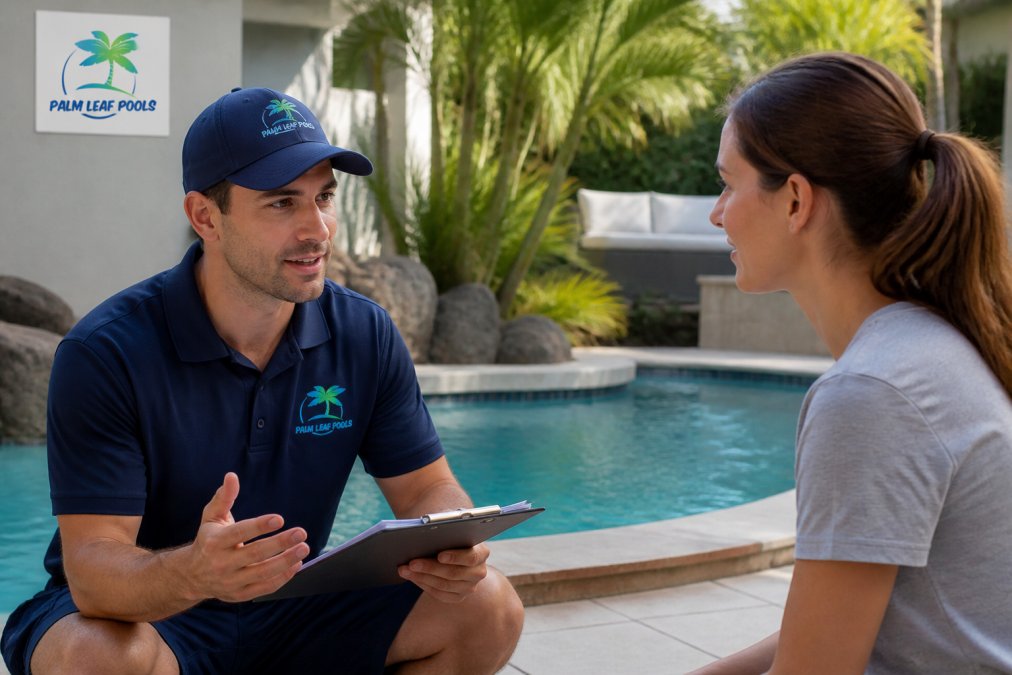
A qualified inspection is not just a visual walk-around. Depending on the symptoms, it may include:
- A full visual survey of the shell, coping, deck, and equipment pad, with photos and measurements
- Crack mapping, recording location, width, direction, and whether the crack is active
- Water-loss testing, including a bucket test and, if needed, dye testing at suspect cracks and fittings
Ask for the scope in writing, and ask the inspector to note what they ruled out as well as what they found. A good report tells you which symptoms are active, stable, or need monitoring.
The Main Cost Factors
Once you have an inspection, the cost conversation becomes concrete. The main factors are:
- Scope: a single crack versus a full wall or shell repair
- Cause: soil stabilization, drainage fixes, or plumbing work may be needed first
- Access: deck removal and excavation add labor and time
We do not publish flat prices because every pool is different. We provide a clear, itemized quote after an inspection so you know what is being fixed and why before any work starts.
When to Call a Professional: Urgency and Safety Triage
Some signs can wait a few weeks. Others cannot wait a day. Use this triage guide to decide how fast to act.
| Sign | Urgency | What to Do |
|---|---|---|
| Hairline surface crack, stable | Low | Monitor and measure monthly |
| Crack that is widening | Medium | Book an inspection within weeks |
| Uneven coping or sinking deck | Medium | Inspect drainage and soil |
| Persistent water loss | Medium-High | Run a bucket test, then call |
| Rust staining along a crack | High | Inspect for reinforcement corrosion |
| Bulging or buckling wall | Emergency | Keep water in, call immediately |
| Visible fracture with movement | Emergency | Keep people away from the edge |
Before any pro arrives, document what you see: photos with a tape measure against the crack, the date, and your water level each morning.
If you are in the Dallas-Fort Worth area and unsure what you are looking at, Palm Leaf Pools can help. We handle weekly maintenance and full pool remodeling, and we keep you informed at every step so nothing feels like a surprise.
Frequently Asked Questions
What are the signs of structural damage in a pool?
The main signs include structural pool cracks wider than 1/8 inch, vertical cracks in the shell, uneven or sinking coping, gaps between the pool and deck, bulging or buckling walls, and persistent water loss. Rust stains or delamination on the plaster also point to reinforcement issues. If you notice any of these, document them with photos and arrange a professional pool inspection before the damage progresses.
How can you tell if a pool crack is structural or cosmetic?
Cosmetic cracks are typically hairline, less than 1/8 inch wide, and appear in the plaster or tile surface without spreading. Structural cracks are wider, often vertical or horizontal across the pool shell, and may continue growing. A structural crack lets water seep behind the shell, which can cause rust stains and further movement. If a crack widens over weeks or feels deep when probed, treat it as structural until a pro says otherwise.
Can a pool crack cause water loss?
Yes. Structural cracks that penetrate the pool shell allow water to escape into the surrounding soil, which can also erode the base and worsen settlement. However, not all water loss comes from cracks. Evaporation, plumbing leaks, and equipment issues are common alternatives. A bucket test can help you separate normal evaporation from a real leak before you assume the worst.
When should a pool crack be inspected by a professional?
Call a professional if a crack is wider than 1/8 inch, is growing, runs vertically or horizontally across the shell, or is accompanied by water loss, deck movement, or wall bulging. Cracks that reappear after patching also warrant an inspection. Early assessment matters because structural pool cracks tend to worsen, and the repair scope and pool structural repair costs increase once surrounding materials are affected.
Aging pools rarely fail overnight. They give you signs first, and the homeowners who catch them early spend far less than the ones who wait for a wall to move. If your pool is showing cracks, water loss, or uneven coping, do not guess at the cause. Palm Leaf Pools offers weekly maintenance, complete pool remodeling, and constant communication from first call to final walkthrough, so you always know exactly where your pool stands. Call today and let us protect your investment.