 how-to
How to Avoid Hidden Pool Repair Costs
Table of Contents
- Understanding Hidden Pool Repair Costs
- Build a Preventative Pool Maintenance Checklist
- Recognize Signs of Pool Equipment Failure Early
- Manage Pool Leak Detection Cost Before It Escalates
- Budget for Water Chemistry and Utility Increases
- Plan for Liner, Coating, and Structural Repairs
- Know When to Call a Professional vs. DIY
- Frequently Asked Questions
Last Updated: September 21, 2026
Understanding Hidden Pool Repair Costs
Most pool owners don't realize how quickly small maintenance gaps turn into expensive repairs. A clogged filter ignored for two weeks becomes a replacement. A tiny leak left unchecked becomes structural damage. This pattern is almost always preventable.
Hidden pool repair costs aren't really hidden. They're the result of deferred maintenance decisions made months or years earlier. The good news: you can avoid most of them with a straightforward approach to preventative maintenance and early problem detection.
This guide covers the specific steps to protect your investment and keep your pool safe and functional year-round. We'll walk you through what to monitor, when to act, and how to distinguish between a DIY fix and a call to a professional.
Build a Preventative Pool Maintenance Checklist
A preventative pool maintenance checklist is your first line of defense against hidden pool repair costs. The work takes minutes per week, but it prevents hundreds of dollars in emergency repairs.
The checklist breaks into two categories: weekly tasks and seasonal preparation. Both are essential.
Weekly and Monthly Tasks
Weekly maintenance keeps your water chemistry stable and catches equipment problems before they escalate.
Check your pool water chemistry twice per week using FAS-DPD testing or a digital meter. Test for pH levels (ideal range 7.2-7.6), alkalinity (80-120 ppm), and chlorine (1-3 ppm for freshwater systems). Unbalanced water chemistry corrodes equipment and damages your pool liner or coating. It also creates safety hazards. Spending five minutes on water testing prevents weeks of equipment problems.
Skim debris from the surface daily. Leaves and dirt clog your filter system faster and reduce its lifespan. Remove visible debris before it sinks and compacts at the pool bottom.
Brush the pool walls and floor weekly. This prevents algae buildup, which forces your filter to work harder and shortens its life. Brushing also keeps your coating or liner in better condition by preventing staining and damage.
Monthly tasks catch equipment problems early:
- Inspect your pump and motor for unusual noise or vibration
- Check filter pressure gauges (rising pressure means the filter needs cleaning)
- Look for visible cracks, leaks, or corrosion around equipment
- Test your safety covers and drain systems
| Task | Frequency | Time | Why It Matters |
|---|---|---|---|
| Water chemistry testing | 2x per week | 5 minutes | Prevents equipment corrosion and safety issues |
| Skimming debris | Daily | 5 minutes | Reduces filter strain and clogging |
| Brushing walls/floor | Weekly | 10 minutes | Prevents algae and coating damage |
| Equipment inspection | Monthly | 10 minutes | Catches failures before they worsen |
| Filter pressure check | Monthly | 2 minutes | Signals when cleaning is needed |
Seasonal Preparation
Seasonal changes create specific stress on your pool equipment. Preparing for these transitions prevents costly failures.
Before summer, inspect your entire system. Run your pump for a full cycle and listen for grinding, squealing, or rattling sounds. These are early warnings of motor or bearing failure. Clean your filter cartridges or backwash your sand filter. Check that all drain plugs are secure and there are no visible leaks.
Before winter, drain your lines and add freeze protection chemicals if you live in a cold climate. Frozen water inside pipes expands and cracks the plumbing, a repair that costs thousands. Shut down your system properly according to your equipment manufacturer's instructions. Cover your pool with a safety cover to prevent debris accumulation and reduce chemical loss from evaporation.
Spring startup requires flushing your system. Run water through all lines before reconnecting equipment. Check for leaks that developed over winter. If you winterized with drain plugs removed, reinstall them and inspect for cracks.
Recognize Signs of Pool Equipment Failure Early
Equipment failure warning signs appear weeks or months before total breakdown. Catching these signals saves you thousands in replacement costs.
Filter System Warnings
Your filter is your pool's first defense against debris and contaminants. When it fails, water quality drops fast and other equipment works overtime to compensate.
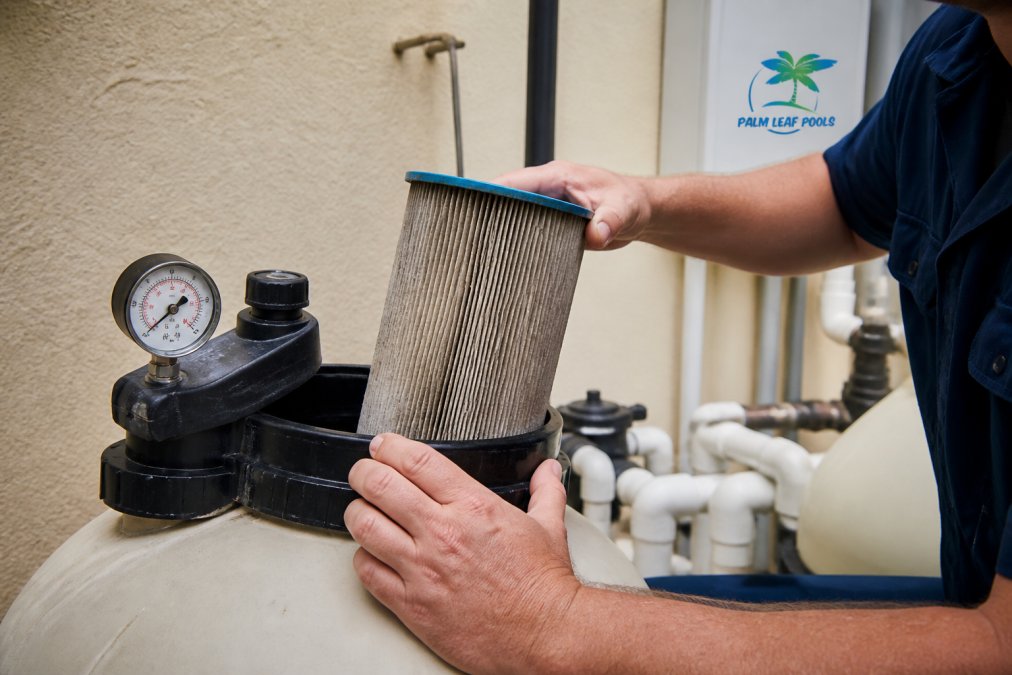
A rising pressure gauge is the clearest filter warning. Most filters run at 10-20 PSI. When pressure climbs above 25 PSI, your filter needs cleaning. Ignoring this signal forces your pump to work harder, consuming more energy and wearing out faster. A clogged filter that isn't cleaned becomes a replacement.
Cloudy water despite correct chlorine levels signals a filter problem. Your filter may be torn (cartridge filters) or have a broken lateral (sand filters). Both require professional repair or replacement.
Reduced water flow from return jets happens when filter cartridges are clogged or damaged. This also stresses your pump motor because it's working against increased resistance.
Pump and Motor Issues
Your pump moves water through your filter and circulation system. When it fails, your entire pool becomes stagnant within days.
Listen for noise changes. A pump that hums but doesn't push water suggests an internal blockage. A grinding sound indicates bearing wear. A squealing noise means the motor shaft seal is failing. All three require professional diagnosis, but catching them early prevents catastrophic failure.
Reduced water pressure at return jets, even after cleaning your filter, points to pump wear. The pump's impeller may be damaged or cavitating (pulling air instead of water). A professional can diagnose and repair this before complete failure.
Leaks around the pump housing or motor indicate seal degradation. Small drips become larger leaks. A leaking pump seal costs less to replace when caught early. Ignoring it leads to water damage and motor burnout, costing more.
Manage Pool Leak Detection Cost Before It Escalates
A small leak costs pennies in water loss per day. A large leak costs dollars. But the real expense comes from structural damage that develops while the leak goes undetected.
Detect leaks early by monitoring your water level. Mark the current level on your pool wall with a piece of tape. Check it daily for one week. Normal evaporation in summer is about 1/4 inch per day. If your level drops faster, you likely have a leak.
Isolate the leak location by performing a simple dye test. Add food coloring near suspected areas (pump connections, filter housing, return lines, drains). The dye will be pulled toward the leak. This narrows the search area for a professional.
Small leaks in plumbing lines or equipment connections sometimes seal themselves temporarily with mineral deposits. Don't assume the problem is solved. The underlying issue remains and will reopen. Have a professional inspect and repair any detected leak, no matter how small it seems.
Structural leaks (cracks in the pool shell or damage to your liner) require immediate attention. Water escaping through the pool structure can erode soil around your pool, causing settling and additional cracking. Early repair prevents cascading damage.
Budget for Water Chemistry and Utility Increases
Maintaining proper water chemistry requires regular chemical additions. Unbalanced water forces your equipment to compensate, driving up energy consumption.
Your pH levels directly affect how efficiently chlorine works. When pH drifts above 7.8, chlorine becomes less effective and you need more of it to maintain sanitation. This increases chemical costs and stresses your circulation system.
Alkalinity buffers pH changes. Low alkalinity means your pH swings wildly, requiring constant adjustment and more chemicals overall. Proper alkalinity maintenance (80-120 ppm) stabilizes your system and reduces total chemical use.
Energy consumption increases dramatically with equipment strain.
Plan for Liner, Coating, and Structural Repairs
Your pool's surface, whether it's a vinyl liner, plaster coating, or fiberglass finish, protects the structure underneath. When surface damage goes unrepaired, water penetrates the substrate, causing expensive structural failure.
Know When to Call a Professional vs. DIY
Some maintenance tasks are DIY-friendly. Others require professional expertise and equipment.
- Equipment making unfamiliar noises
- Visible cracks or structural damage
- Water leaks you can't locate
- Electrical components (pump motors, control systems)
- Plumbing connections and lines
- Safety cover or drain system repairs
Frequently Asked Questions
What are the most common hidden pool repair costs homeowners face?
The biggest surprises come from equipment failure, water chemistry imbalances, and structural damage. A saltwater system conversion, a failing pump, or a clogged filter cartridge can catch many owners off guard. Evaporation and chemical loss also add up quickly. Regular water testing and preventative maintenance checklist items help you spot these before they become expensive emergencies.
How often should I test my pool water to avoid hidden costs?
Test your water at least twice weekly during swimming season using FAS-DPD testing for chlorine and pH levels. This catches alkalinity and chemical imbalance issues before they damage equipment or require expensive treatments. If you notice cloudiness, algae, or equipment strain, test immediately. Consistent testing prevents corrosion of metal parts, extends filter life, and keeps your pool safe without emergency service calls.
What does pool leak detection cost, and how do I know if I have a leak?
Professional pool leak detection can vary in cost depending on complexity, but catching a leak early saves significantly in water waste and structural damage. Watch for water level drop beyond normal evaporation (more than ¼ inch per day), wet spots around the pool deck, or cracks in the pool shell. A DIY dye test around suspected areas can help you locate the source before calling a professional, reducing the overall pool leak detection cost.
How can I protect my pool investment from expensive seasonal damage?
Freeze protection is critical in colder months, drain lines, add antifreeze to equipment, and use safety covers to prevent debris accumulation and structural stress. In hot seasons, monitor evaporation closely and maintain proper water levels to avoid pump cavitation. Winterizing your pool and performing seasonal preparation tasks prevents freeze damage, equipment corrosion, and the need for costly spring repairs that could have been avoided with basic preventative care.