 How-to
How to Tell How Long Pool Shock Takes to Work
Last Updated: November 12, 2026
Quick Summary
Pool shock starts reacting within a few hours, but the full result takes longer. Dead algae can cloud the water for several days until the filter removes it, and free chlorine must fall back into the safe range before anyone swims. Test free chlorine and combined chlorine before swimming, and follow the product label.
- Shock generally begins reacting within a few hours after it is added.
- Dead algae stays suspended and keeps water cloudy until the filter removes it.
- A green pool can clear in two to three days, while severe cases take one to two weeks.
- Test free chlorine and combined chlorine separately, not just total chlorine.
- Retest free chlorine before every swim, even if the water already looks clear.
Table of Contents
- How Pool Shock Works and Why Timing Matters
- How Long Pool Shock Takes to Start Working
- How Long Does Shock Take to Clear a Pool With Algae
- How Long Does Pool Shock Take to Work on Chlorine Levels
- How to Shock a Pool That Is Green
- Shock Pool How Long Before You Can Swim
- Booking Pool Care Help From Palm Leaf Pools
- Frequently Asked Questions
How Pool Shock Works and Why Timing Matters
Pool shock is a high dose of sanitizer that raises free chlorine fast enough to kill bacteria, break down contaminants and clear algae. Knowing how long it takes to work helps you know when you can test, when you can swim and when you need to treat the pool again.
Shock does not work in one step. It reacts with contaminants almost right away, but the water takes longer to look clear and test safe. Keep these four timelines separate in your head:
- Reaction time: the first chemical activity after you add shock
- Algae-kill time: how long dead algae needs to stop coloring the water
- Clarification time: how long the filter needs to make the water look clear
Many people expect one of these to stand in for all four. That is where most timing mistakes start.
How Long Pool Shock Takes to Start Working
Shock treatments generally begin reacting within a few hours. The chlorine begins oxidizing organic material right after it dissolves, so the water usually shows some change within the first day.
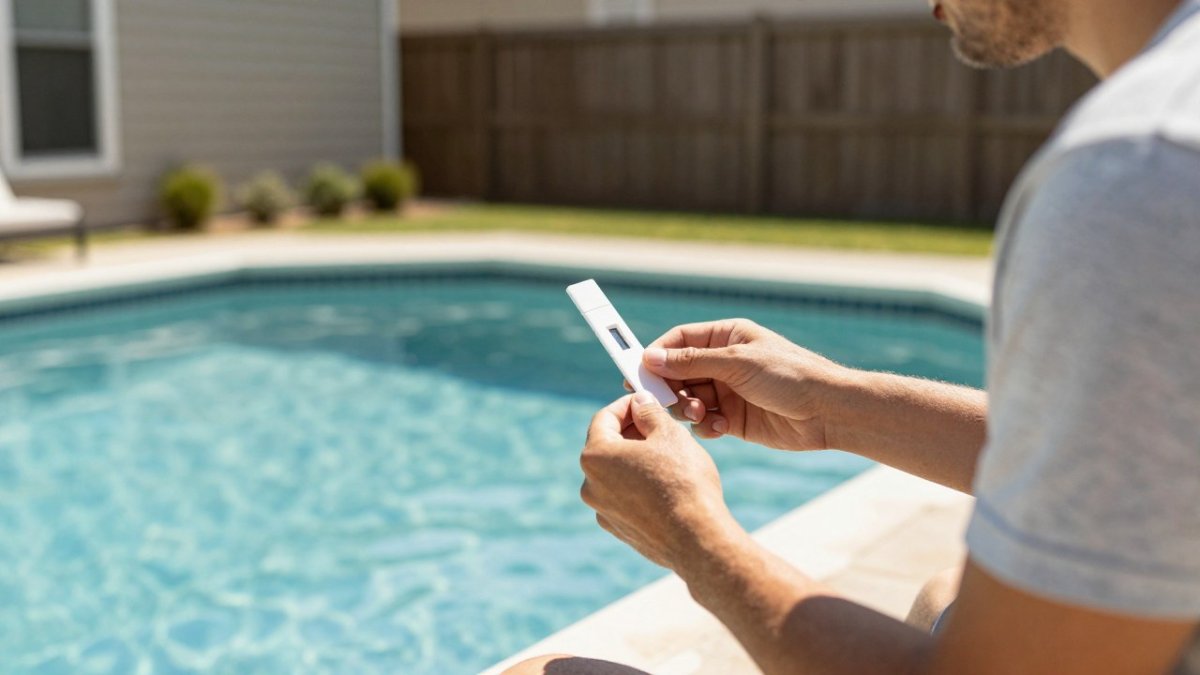
Several factors change that timing:
- Water temperature: warm water reacts faster
- Sunlight: UV light breaks down chlorine, so evening treatment often holds up longer
- Pump run time: circulation spreads the chemical through the pool
The product label is your best guide for dose and wait time. Follow it, because the label reflects the chemistry of that specific product.
Several factors change how quickly shock begins to react, and the timing differs for each pool.
| Factor | Effect on timing | Note |
|---|---|---|
| Water temperature | Warm water reacts faster | Heat speeds the chemical reaction |
| Sunlight | UV breaks down chlorine | Evening treatment often holds up longer |
| Pump run time | Spreads chemical through pool | Circulation distributes the shock |
| Pool size and dose | Larger pool or heavier dose takes longer | Full effect takes more time |
How Long Does Shock Take to Clear a Pool With Algae
Algae clearing takes longer than the first reaction. Shock kills algae quickly, but dead algae stays suspended in the water and keeps it cloudy until the filter removes it.
Why Clearing Takes Longer Than Killing Algae
Killing algae and clearing the water are two separate jobs. Dead algae cells are tiny, so the filter has to catch them one pass at a time. A green pool can need several days of filtering, and some pools need a second round of brushing and vacuuming before the water looks right.
Watch out: vacuuming dead algae straight to waste can cloud the water further. Use your filter's waste setting only if your filter manual says it is safe for that job.
How Long Does Pool Shock Take to Work on Chlorine Levels
Chlorine readings move faster than most people expect, but they do not move in a straight line. Free chlorine typically spikes within one to four hours after shock dissolves, holds elevated through the first day, and then falls as it oxidizes contaminants and burns off in sunlight. The only reliable way to know where you are in that curve is to test, and to test the right two numbers.
Test Free Chlorine and Combined Chlorine, Not Just One
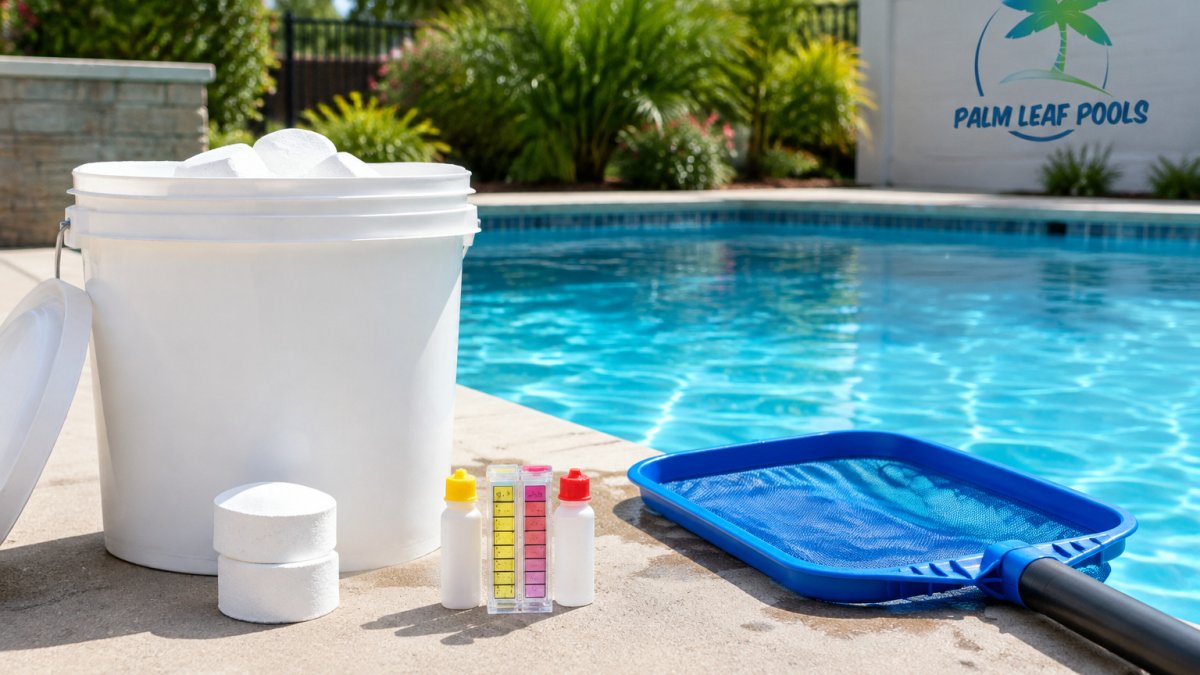
A basic kit that reads only total chlorine will mislead you. Use a kit or strips that report free chlorine (FC) and combined chlorine (CC) separately, or take a sample to a pool store for a printed readout.
- Free chlorine is the chlorine still available to sanitize. It is the number that decides whether the pool is safe to swim in.
- Combined chlorine (chloramines) is chlorine that has already reacted with sweat, urine, and other organics. It is the source of the sharp "pool smell" and eye sting. A combined chlorine reading above roughly 0.5 ppm is a signal that the shock has not finished the job, even if free chlorine looks high.
When to Retest After Shocking
A practical retest schedule looks like this:
- One to four hours after adding shock: confirm free chlorine is rising. If it has barely moved, the dose was too low, the product was old, or circulation is poor.
- The next morning: check free chlorine again. Overnight loss is a useful diagnostic, because there is no sunlight to blame. A large drop overnight points to high chlorine demand from organics or algae.
- Before every swim: retest free chlorine and confirm it sits in the safe range for your product and local health code.
What the Readings Tell You
- Free chlorine still climbing or holding high, combined chlorine low: the shock is working. Wait for free chlorine to fall into the safe range before swimming.
- Free chlorine high but combined chlorine also high: the shock is still oxidizing. Give it another day of circulation and retest.
- Free chlorine drops quickly and combined chlorine stays elevated: you likely have high chlorine demand. Brush, remove debris, clean the filter, and consider a second dose per the label.
Watch out: a pool that looks clear can still read free chlorine well above the safe-swimming level right after shocking, so never use clarity as a substitute for a test.
Safe Chlorine Levels for Swimming
Always defer to the safe range printed on your shock product label and to your local health department's pool code, because those override general guidance. If free chlorine is above the label's safe-swimming ceiling, keep swimmers out and let it drift down with sunlight and normal circulation.
Testing gives you a clear answer that a fixed timeline cannot, and it is the only way to separate "the shock is still working" from "the shock never worked."
How to Shock a Pool That Is Green
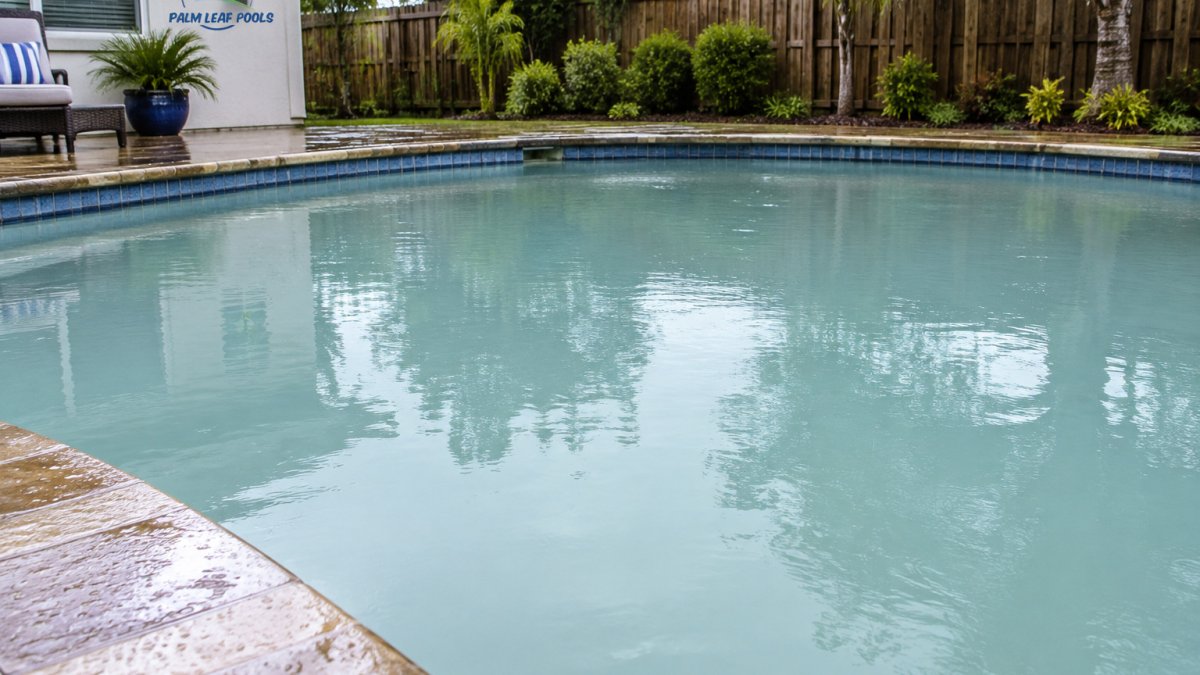
A green pool is a chlorine-demand problem, not just a dosing problem. Learn why pool water turns green so quickly so you can prevent a repeat. The algae, plus the organic load feeding it, consumes chlorine as fast as you add it, which is why one shock dose often disappears without visible progress. Treat the first round as a measurement, not a cure.
The Step-by-Step Process
- Test and balance first. Get pH into roughly 7.2 to 7.6 and confirm total alkalinity is in range before you shock. Chlorine is far less effective at high pH, and shocking an unbalanced pool wastes product.
- Check stabilizer (cyanuric acid). If cyanuric acid is very high (common in pools that use stabilized chlorine tablets year-round), chlorine is locked up and shock will underperform. Partial drain and refill may be needed before shock can work.
- Remove what you can mechanically. Skim leaves and debris, brush walls, steps, ladders, and the floor, and clean the filter before adding shock. Every bit of debris you remove is chlorine you do not have to spend.
- Add shock in the evening. UV light destroys chlorine, so dosing after sunset lets more of it do its job overnight.
- Run the pump continuously. Circulation is what distributes the shock and feeds the filter. Run it 24 hours a day until the water clears.
- Brush daily and clean the filter as pressure rises. Dead algae loads the filter fast. Backwash or clean cartridges when the pressure gauge climbs about 8 to 10 psi over the clean baseline.
- Retest and repeat. Check free and combined chlorine the next morning. If free chlorine has fallen back near zero, the demand is still high and a second dose is warranted.
Watch out: follow the label's mixing and application directions exactly, and add chemicals to water, not water to chemicals.
A Realistic Green-Pool Recovery Timeline
A lightly green pool can clear in two to three days. A swamp-green pool usually takes one to two weeks and multiple shock rounds. Check the signs your pool needs professional cleaning to decide whether that is faster. A realistic pattern:
- Day 1: Shock added in the evening; water may look worse before it looks better as algae dies and turns gray-brown.
- Days 2 to 3: Dead algae clouds the water and begins loading the filter. Brush daily, clean the filter, and retest. Expect to add a second dose if free chlorine keeps crashing.
- Days 3 to 7: Water shifts from green to cloudy blue to clear as the filter catches dead algae. Vacuum settled debris to waste if your filter manual permits it.
Troubleshooting When Shock Appears Not to Work
If the pool is still green after a full shock cycle, work through this sequence before adding more chemicals:
- High chlorine demand: free chlorine drops to near zero overnight. The organic load is simply larger than the dose. Remove debris and dose again per the label.
- Inadequate dose: the label dose assumed a clean pool. Green pools often need the higher end of the label's range or a dedicated algae treatment.
- Poor circulation: dead spots, a clogged impeller, or a failing pump leave shock sitting in one part of the pool. Confirm strong return flow and no air in the system.
If the water is still cloudy after a week of continuous filtering and repeated dosing, a professional inspection of the filter and circulation system is usually faster than another round of shock.
Shock Pool How Long Before You Can Swim
Do not swim based on the clock alone. Read the full guide on when swimming is safe after shocking for detailed re-entry steps. Wait until both of these are true:
- Free chlorine has dropped back into the safe range on the product label
- The water looks clear and the chemistry is balanced
Retest before every swim session. A pool that looks clear can still have chlorine above the safe level right after shocking.
Booking Pool Care Help From Palm Leaf Pools
If your pool stays green, cloudy or hard to balance after a full shock cycle, professional help can save you time. Palm Leaf Pools offers weekly maintenance and complete pool remodeling services. Call Palm Leaf Pools today for a quote on pool care. If you are comparing options in the area, learn how to choose a pool maintenance company in Dallas.
Frequently Asked Questions
How long does it take for a pool to clear up after being shocked?
Pools often begin to look clearer within a day if the shock dose was right and the filter keeps running. Cloudy water from dissolved particles usually takes longer, sometimes two to three days, and heavy algae can take longer still. Keep the pump running continuously, brush the walls and steps, and clean or backwash the filter when the pressure rises. Retest free chlorine before deciding the pool is ready, because clear-looking water does not always mean chlorine has returned to a swimmable level.
Can I swim 4 hours after shocking the pool?
Not safely in most cases. Four hours is often too soon, because free chlorine may still be above the level recommended for swimming. Check the product label for the re-entry guidance, then test the water with a reliable kit. Most manufacturers and pool service guides recommend waiting until free chlorine falls back into the normal range, commonly 1 to 4 parts per million, and the pH is balanced. If you are unsure, wait longer and retest.
Why is my pool still green after I shocked it?
A green pool often needs more than one treatment. The first shock may have been too weak for the algae load, the pump may not have run long enough, or the filter may be clogged so it cannot remove dead algae. Check pH and total alkalinity, since unbalanced water can slow chlorine. Brush the surfaces to loosen algae, run the filter continuously, and shock again if free chlorine drops quickly. A green pool that does not respond after two rounds of careful treatment should be checked by a pool professional.
How long should I run the pool pump after shocking?
Run the pump continuously for at least 8 to 12 hours after shocking and keep it running until the water clears and the chlorine test is back in range. Stopping the pump early leaves chlorine and dead algae unevenly distributed and can let the water cloud again. Clean or backwash the filter when pressure rises, because a clogged filter slows clearing. Many homeowners run the pump overnight after an evening treatment so the full filtration cycle runs without interruption.