 comparison
Pool Resurfacing Cost Analysis: Finishes, Estimates & Hidden Fees
Table of Contents
- Swimming Pool Resurfacing Cost Overview
- Pool Resurfacing Cost by Finish: Material Comparison
- Getting an Accurate Pool Resurfacing Estimate
- Pool Resurfacing Hidden Costs and Scope Variables
- Pool Resurfacing Timeline and Project Duration
- Cost Factors: Size, Surface Area, and Regional Pricing
- Conclusion
- Frequently Asked Questions
Last Updated: October 20, 2026
Swimming Pool Resurfacing Cost Overview
Pool resurfacing cost analysis helps homeowners decide whether to refresh an aging pool shell or invest in a full renovation. Understanding what drives resurfacing expenses helps you avoid sticker shock and choose the finish that offers the best value.
The cost of resurfacing a swimming pool depends on pool size, finish choice, and local labor rates. Smaller pools or budget options using paint or epoxy coatings can cost less, while premium pebble finishes or pools with complex shapes push estimates higher.
What most homeowners don't realize: the quote depends heavily on project scope. Some contractors bundle surface preparation, shell repair, and refilling into one price; others itemize them separately, creating surprise charges. At Palm Leaf Pools, transparency about what's included is where most confusion happens.
The real cost drivers aren't always obvious. Pool size matters, but so do surface condition, equipment accessibility, regional labor rates, and whether the pool needs structural repairs beneath the visible surface. Below, we break down how each finish stacks up on cost, lifespan, and maintenance, so you can compare true cost over time, not just upfront price.
Pool Resurfacing Cost by Finish: Material Comparison
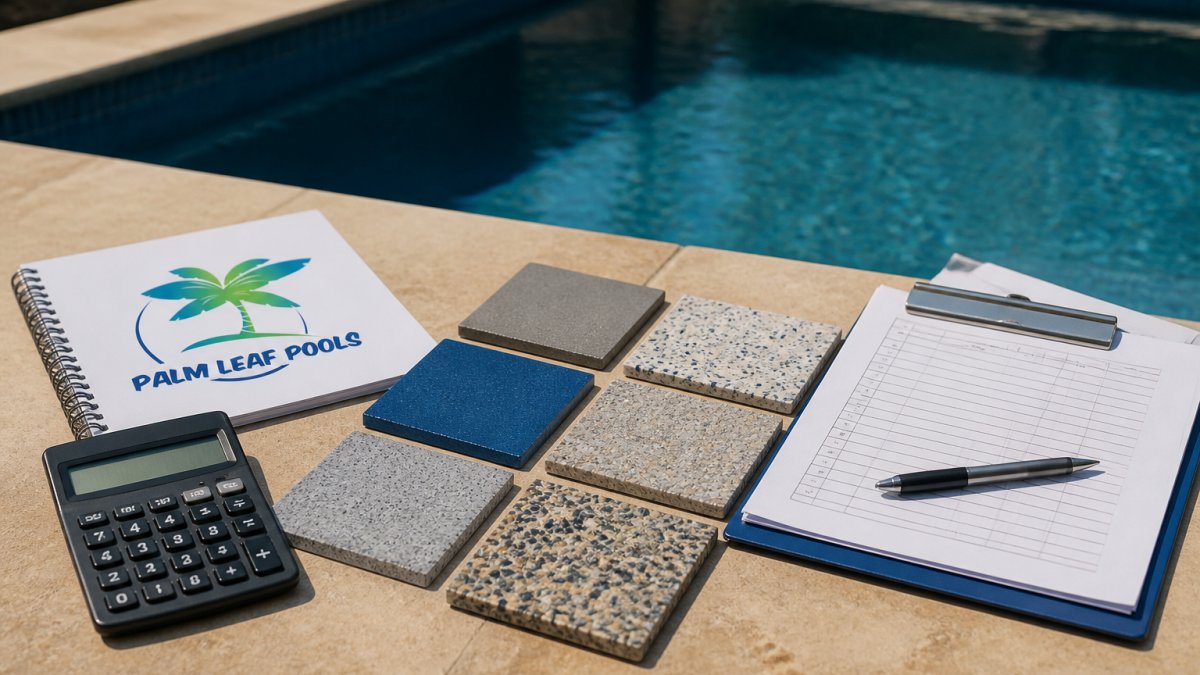
Different finish materials command vastly different price points, each with its own maintenance burden and durability. Choosing the right one means balancing initial cost against lifespan and ongoing care.
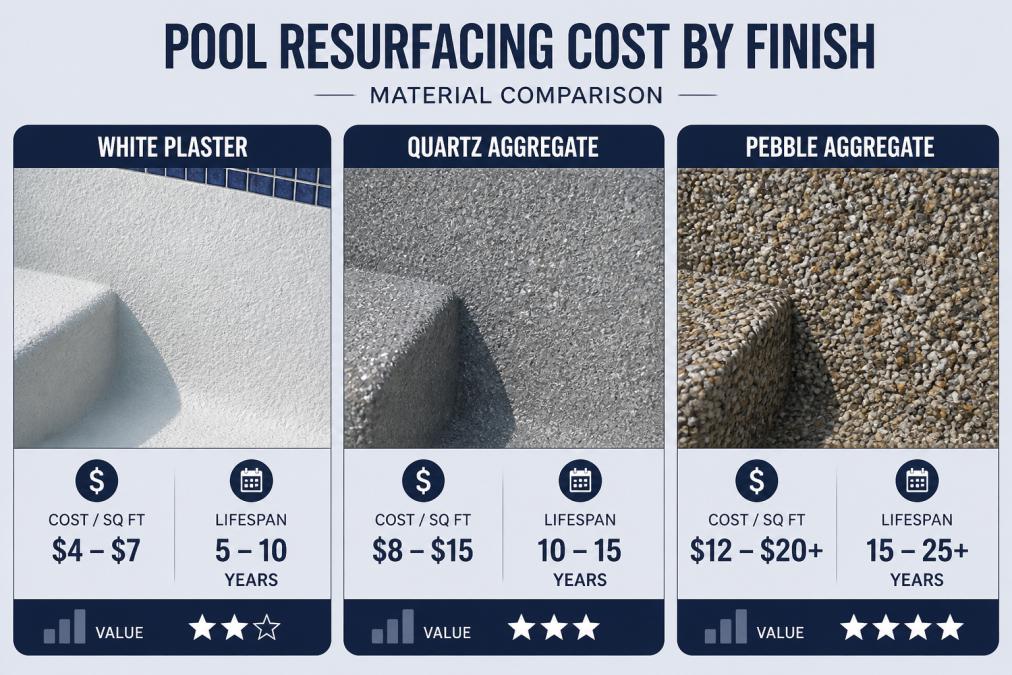
Plaster Finishes
White plaster is the most economical resurfacing option and the industry standard for decades. It's affordable upfront because the material itself is inexpensive and installation is straightforward, crews apply it wet, smooth it, and let it cure.
The trade-off is durability. Standard white plaster typically lasts 8 to 12 years before it cracks, stains, or feels rough underfoot. You'll also need to acid-wash every 3 to 5 years to remove algae and mineral buildup, adding to long-term costs.
Colored plaster and marble dust finishes (sometimes called "Marcite") cost slightly more than white plaster but offer similar durability. They add aesthetic appeal without the premium price of aggregate finishes, making them a middle-ground choice for budget-conscious homeowners.
Quartz Aggregate Finishes
Quartz aggregate mixes crushed quartz crystals into a plaster base, creating a sparkly, durable surface that resists staining better than plain plaster. It feels smoother underfoot and maintains its appearance longer, typically 15 to 20 years with proper maintenance.
The cost is roughly 30 to 50 percent more than plaster, but the extended lifespan and reduced maintenance offset that premium for many homeowners. Quartz resists algae better than plaster, so you spend less time scrubbing and less on chemicals, and the sparkle adds visual appeal.
One limitation: quartz finishes can still develop small cracks if the pool shell settles or if ground movement occurs. They're more resilient than plaster, but not immune to structural stress.
Pebble Finishes
Pebble aggregate finishes use larger, rounded stone pieces embedded in the plaster base, creating a textured, natural-looking surface. They're the most durable option, often lasting 25 to 30 years, and resist staining and algae exceptionally well.
The cost premium is substantial: pebble finishes typically run 50 to 100 percent more than plaster, a significant jump in the resurfacing estimate. But the extended lifespan and minimal maintenance make them attractive to homeowners keeping their pools long-term. Investing in a durable finish often offsets the recurring expenses associated with monthly pool maintenance, which varies significantly depending on whether you manage the chemical balance yourself or hire professional assistance.
Pebble surfaces feel rougher underfoot than plaster or quartz, which some swimmers prefer for traction and some find uncomfortable. They're also harder to repair if damage occurs, patching a pebble finish is more complex than touching up plaster.
Epoxy and Paint Options
Epoxy coatings and pool paint are the budget tier of resurfacing. They're applied over the existing shell without major surface removal, making installation faster and cheaper than aggregate finishes.
Epoxy coatings last 5 to 7 years; pool paint typically lasts 3 to 5. Both require frequent reapplication and offer minimal protection against UV damage or chemical wear. They suit pools you plan to replace or refinish soon, or as a temporary cosmetic fix while you save for a permanent solution.
The upfront savings are real, but cost-per-year often favors more durable finishes. You'll resurface again sooner, compounding labor costs and disruption to your pool use.
Getting an Accurate Pool Resurfacing Estimate
A credible estimate requires contractors to inspect your pool in person and ask detailed questions about your expectations. Red flags include phone quotes without a site visit or estimates that don't specify scope.
Legitimate estimates should break down labor, materials, and any additional work like shell repair or equipment replacement, and state the finish type, warranty terms, and timeline. At Palm Leaf Pools, we always provide written estimates spelling out exactly what you're paying for and what's excluded, because hidden costs are the enemy of trust.
Ask whether the estimate includes surface preparation, draining and refilling, and minor repairs; some crews charge extra, others bundle them in. Clarify whether it covers only finish application or also removing old coating, patching cracks, or stabilizing the shell. These details separate a $10,000 project from a $15,000 one.
Request references from recent local resurfacing jobs. Ask those homeowners whether the final bill matched the estimate and whether the contractor communicated throughout. This is where you'll catch patterns: reliable crews deliver on their promises; unreliable ones surprise you with add-ons or delays.
Pool Resurfacing Hidden Costs and Scope Variables
Most homeowners focus on finish material cost and miss the variables that inflate the final bill. Understanding these helps you budget realistically.
Shell repair and structural work. If the shell has cracks, leaks, or structural damage, contractors must fix those before applying new finish.
Pool accessibility and equipment removal. Pools surrounded by dense landscaping or with limited equipment access cost more because crews need more time to maneuver materials.
Surface preparation intensity. Old plaster with heavy algae, mineral deposits, or multiple coating layers requires aggressive prep: acid washing, grinding, or full removal. Light prep on a clean pool costs less.
Drain and refill logistics. Draining a 15,000-gallon pool requires proper water disposal (some municipalities charge for this) and often takes 24 to 48 hours; refilling takes similar time. Water restrictions or high municipal water costs add expense.
Regional labor rates and seasonal demand. Resurfacing is busiest in spring and early summer. High-cost markets charge more per hour than rural areas. Scheduling in the off-season (fall or winter) often brings discounts because crews have more availability.
Pool Resurfacing Timeline and Project Duration
Most pool resurfacing projects take 2 to 4 weeks, but the timeline varies by pool size, finish choice, and whether repairs are needed.
A straightforward resurfacing, surface prep, finish application, curing, and refill, typically runs 10 to 14 days. Smaller pools or simpler finishes move faster. Projects requiring structural repair, complex shell work, or extensive surface preparation can stretch to 3 to 4 weeks.
The curing phase is critical and often underestimated. After the finish is applied, it needs time to set and cure before the pool can be refilled and used. Plaster typically requires 7 to 14 days of curing. Quartz and pebble finishes may need similar or slightly longer periods depending on conditions.
Weather matters. Rain, extreme heat, or cold temperatures can delay curing and extend the project. Contractors working in the Dallas-Fort Worth area often schedule resurfacing during dry months to minimize weather-related delays.
During the project, your pool is out of service. Plan accordingly, if you rely on your pool for exercise or family recreation, coordinate the timing with your schedule.
Cost Factors: Size, Surface Area, and Regional Pricing
Pool resurfacing cost scales with surface area, not just volume. A 12-foot-by-24-foot pool has roughly 800 square feet of interior surface. A 15-foot-by-30-foot pool has roughly 1,050 square feet.
Cost per square foot varies by finish type. Budget paint or epoxy coatings, plaster, quartz aggregate, and pebble finishes all have varying costs per square foot. These figures include material and labor, though regional rates shift these ranges.
Pool shape affects cost too. A simple rectangular pool costs less to resurface than a kidney-shaped pool or one with attached spas or fountains. Irregular shapes mean more surface area and more complex application work, both of which increase labor hours.
Regional pricing reflects local labor costs and material availability. Urban areas typically charge more than rural regions.
Seasonal pricing also plays a role. Spring and summer demand drives rates up. Fall and winter often bring discounts as crews compete for fewer projects. If your pool can wait until October or November, you may negotiate better pricing.
| Finish Type | Cost per Sq. Ft. | Typical Lifespan | Annual Maintenance | Best For |
|---|---|---|---|---|
| Plaster | $6-$10 | 8-12 years | High (acid wash every 3-5 years) | Budget-conscious, short-term ownership |
| Quartz Aggregate | $8-$15 | 15-20 years | Moderate (occasional brushing) | Long-term owners seeking durability |
| Pebble Finish | $12-$20 | 25-30 years | Low (minimal algae growth) | Premium finish, extended lifespan priority |
| Epoxy/Paint | $3-$5 | 3-7 years | Moderate to high | Temporary fix, quick cosmetic refresh |
Conclusion
Pool resurfacing cost analysis reveals that the cheapest option upfront rarely delivers the best long-term value. Plaster saves money initially but demands frequent maintenance and replacement within a decade. Quartz and pebble finishes cost more to install but last substantially longer and reduce your maintenance burden, which matters if you're a busy professional or simply want to enjoy your pool without constant upkeep.
The key to accurate budgeting is getting detailed, site-specific estimates that spell out what's included and what isn't. Hidden costs like shell repair, accessibility challenges, and regional labor rates can shift your final bill by thousands of dollars. At Palm Leaf Pools, we provide transparent estimates that break down materials, labor, and timeline so you know exactly what to expect.
Ready to refresh your pool with expert guidance? Contact Palm Leaf Pools today for a comprehensive resurfacing estimate and honest advice about which finish makes sense for your situation. Our team will inspect your pool, explain your options, and deliver results that protect your investment and make pool ownership effortless. Call today to schedule your consultation.
Frequently Asked Questions
How much does it cost to resurface a 20,000 gallon pool?
The cost to resurface a 20,000-gallon pool depends on the finish material, current shell condition, and your location. Plaster finishes run lower, while pebble and quartz aggregate finishes cost more. Site accessibility, required repairs, and regional labor rates all affect the final estimate. Request quotes from local contractors to get accurate pricing for your specific pool.
What factors affect the cost of pool resurfacing?
Pool resurfacing costs depend on surface area, finish material choice, shell condition, site accessibility, and regional labor rates. Larger pools cost more due to increased material and labor. Surface preparation, drain and refill requirements, and structural repairs discovered during the project can increase the estimate. Your location also matters, labor rates vary significantly by region. A detailed contractor quote accounts for all these variables.
How do pool finish materials compare in cost and durability?
White plaster is a budget-friendly option. Quartz aggregate typically lasts longer with lower maintenance. Pebble finishes are a premium option, offering superior durability. Epoxy coatings fall between plaster and aggregate in cost and lifespan. Consider both upfront installation cost and long-term maintenance when comparing finishes, a more durable material may provide better value over time.
What hidden costs should I expect in a pool resurfacing project?
Common hidden costs include structural repairs (cracks, leaks), equipment upgrades, and extended timelines due to weather delays. Draining and refilling adds to project scope. If the contractor discovers damage during surface removal, repair costs increase. Some quotes exclude equipment servicing, plumbing work, or deck repairs. Always ask contractors what their estimate includes and what triggers additional charges. Request a detailed scope document before work begins.