 how-to
Pool Equipment Repair vs Replacement: 2026 Guide
Table of Contents
- When Pool Equipment Repair Beats Replacement
- Common Pool Equipment Problems and What They Signal
- Pool Pump Repair or Replacement: A Practical Decision Path
- Pool Equipment Lifespan: How Long Each Component Lasts
- Pool Equipment Replacement Cost: What Drives the Price
- Warranty, Compatibility, and Code Checks Before You Commit
- Preventive Maintenance That Delays the Replacement Decision
- Frequently Asked Questions
Last Updated: October 6, 2026
When Pool Equipment Repair Beats Replacement
Most pool owners assume a broken pump or heater means a full replacement. That assumption costs them money.
Pool equipment repair is restoring a failed or underperforming component, a pump motor, filter, heater, or salt cell, instead of installing a new unit.
Here's the tension most guides ignore. A cheap repair on a dying pump is not a bargain, it's a down payment on the replacement you'll make in six months anyway. The goal isn't to avoid spending.
The 50% Rule: Age + Repair Cost vs. New Unit
A common industry guideline: if the repair costs more than half the price of a new unit and the equipment is past the midpoint of its expected lifespan, replacement usually wins. If the repair is well under half and the unit has years left, repair is smarter.
This isn't a hard rule, just a starting point. A $400 repair on a pump two years into a ten-year life is easy math. The same $400 on a twelve-year-old pump is throwing money at a problem that's already solved itself.
When a Repair Makes Sense: 3 Scenarios
Repair is the right call in three situations:
- The equipment is young. A motor or heater in the first third of its service life with a single failed part is almost always worth fixing.
- The failure is isolated. A bad capacitor, a worn seal, or a clogged impeller doesn't mean the whole unit is done.
- The rest of the system is healthy. If the pump, filter, and heater are all in good shape, replacing one working component rarely makes sense.
Common Pool Equipment Problems and What They Signal
Pool equipment problems fall into predictable categories, and each points to a different decision. A grinding noise usually means a failing bearing or motor.
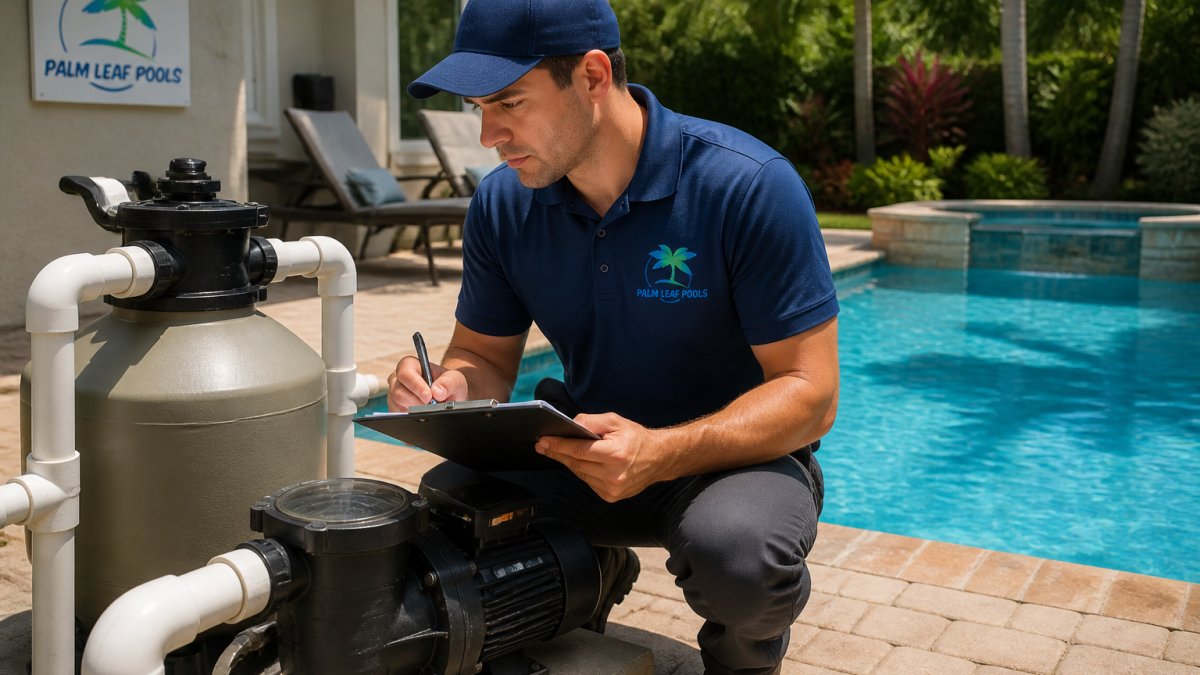
What most guides miss: the symptom tells you the cost, not the verdict. A grinding pump motor is a repair-or-replace question; a cracked filter tank is almost always a replacement.
Pool Pump Repair or Replacement: A Practical Decision Path
The pool pump is where the repair-versus-replacement decision gets made most often, but the same logic applies to every component on the pad. Work through these questions in order:
- How old is it? Under a third of expected service life, lean repair. Past two-thirds, lean replacement.
- What failed? A wear item (seal, capacitor, gasket, O-ring) is a repair. A structural failure (cracked housing, burnt winding, corroded heat exchanger) is usually a replacement.
- What's the repair quote versus a new unit? If the repair is more than half the cost of new, replacement usually wins.
- Is the unit energy-efficient by current standards? An older single-speed pump or a low-efficiency heater can cost far more to run than a modern equivalent. Sometimes replacement pays for itself in operating cost alone.
- Is the rest of the system compatible? A new unit that doesn't match your plumbing, electrical supply, or automation creates a second problem.
Equipment-Specific Decision Rules
The pump gets the most attention, but the same framework applies to every major component.
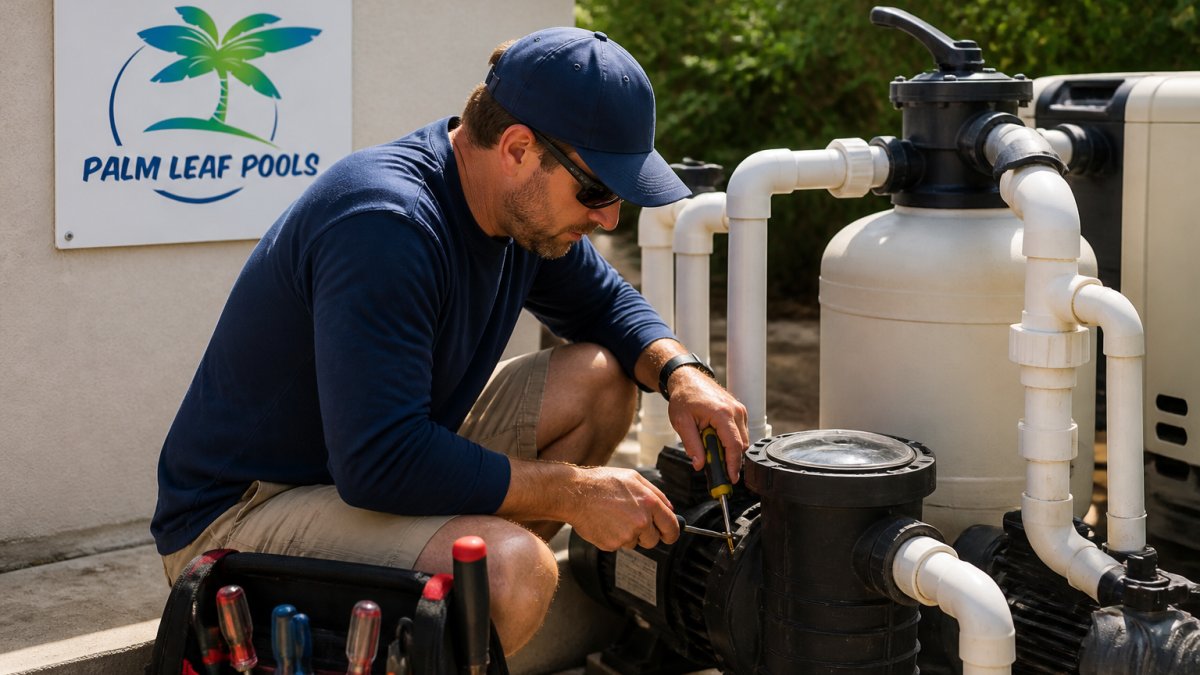
Pumps. A seal, capacitor, or impeller is a repair. A cracked housing or burnt-out motor is usually a replacement.
Filters. Cartridges are a wear item, so replacing them is routine.
Heaters. Heat exchangers, igniters, and pressure switches are common repair items.
Cleaners. Robotic cleaners have repairable motors, drive belts, and power supplies; suction and pressure cleaners are mostly mechanical and cheap to fix.
Automation systems. Control boards, relays, and actuators are repairable.
The Unified Decision Framework
Across every component, the same four factors decide the call:
- Age relative to expected service life. Past two-thirds, replacement gets more attractive with every repair.
- Repair cost relative to replacement cost. Over half the price of new, replacement usually wins.
- Condition of the rest of the unit. One failed part on an otherwise healthy unit is a repair. A second major failure in a short window is a pattern.
- Reliability and efficiency. A unit that has stranded you twice in a season, or that costs far more to run than a modern equivalent, is a replacement candidate even if the repair quote is low.
When to Call a Professional
Some decisions are safe to make yourself, some aren't. Filter cartridge replacement, skimmer basket cleaning, and water chemistry are homeowner tasks. Pump motor replacement, heater repair, salt system electrical work, and anything involving gas lines or 240-volt connections need a licensed professional.
A qualified technician can also give you something a DIY diagnosis cannot: a repair quote and a replacement quote side by side, so you can run the framework above with real numbers instead of guesses.
Pool Equipment Lifespan: How Long Each Component Lasts
Knowing each component's expected service life makes the decision concrete. Lifespans vary with water chemistry, operating hours, and maintenance, but here's the general picture:
| Component | Typical Service Life | Common Failure Sign |
|---|---|---|
| Pump motor | 8-12 years | Grinding, vibration, overheating |
| Filter (cartridge) | 2-3 years per cartridge | Poor flow, torn pleats |
| Filter (sand) | 5-8 years media | Cloudy water, channeling |
| Pool heater | 8-12 years | Leaks, no heat, error codes |
| Salt cell | 3-5 years | Low chlorine output |
| Automation system | 10-15 years | Unresponsive controls |
Once a component crosses its expected lifespan, every repair is a bet against the next failure. That's when replacement starts to look less like an expense and more like a reset.
Pool Equipment Replacement Cost: What Drives the Price
Replacement cost comes down to four things: the equipment itself, labor, installation complexity, and system compatibility. A straightforward pump swap costs less than a heater replacement requiring gas line work or an automation upgrade needing new wiring. Most guides stop there and never say what actually moves the number. This one does.
The Four Cost Buckets
Every replacement quote breaks into the same four buckets. Knowing them lets you compare bids apples to apples instead of guessing why one contractor is $800 higher than another.
- Equipment. The unit plus accessories it needs to run (pump controller, heater bypass, salt cell power supply). Usually the largest line item.
- Labor. Removal, installation, and startup. Labor scales with job time, not equipment cost.
- Installation complexity. Anything beyond a like-for-like swap: new plumbing, gas line modifications, electrical work, pad reinforcement, or re-piping a manifold.
- Compatibility and code. Adapter parts, bonding and grounding updates, permits, and inspections, the line items most homeowners forget to ask about.
What Actually Drives the Price Up or Down
- Equipment tier. Variable-speed pumps and high-efficiency heaters cost more upfront but lower operating cost over time. A single-speed pump replacement is cheaper today and more expensive every month it runs.
- Compatibility. If a new unit doesn't match your existing plumbing, electrical supply, or automation, expect adapter parts and extra labor. A pump that fits the existing union connections is a half-day job; one that doesn't can stretch to a full day.
- Permits and code. Some replacements require a permit or inspection, which adds cost and time. Electrical replacements in particular often trigger bonding and grounding checks.
- Access. Equipment pads tucked behind landscaping, inside a shed, or in tight side yards take longer to work on. Clear access is free; clearing access is not.
- Season and scheduling. Emergency replacements during peak swim season cost more than planned replacements in the shoulder months, because contractors are booking premium rates for urgent calls.
Repair Cost vs. Replacement Cost: The Real Comparison
The mistake most owners make is comparing the repair quote to the replacement quote. The right comparison is repair cost plus the expected cost of the next failure versus the replacement quote minus the new unit's operating savings.
A repair that costs a third of a new unit but only buys six more months of life is more expensive per month of service than a full replacement. Run the math on cost-per-year-of-remaining-life, not on the sticker price of the repair.
Lifecycle Cost: The Number Nobody Quotes
The number that actually decides repair versus replacement is lifecycle cost: purchase price plus installation plus energy plus maintenance plus expected repairs, divided by years of service.
When you get quotes, ask each contractor for three numbers: the upfront cost, the estimated annual operating cost, and the expected service life of the proposed equipment. Those three numbers let you compare any repair quote against any replacement quote on equal footing.
Warranty, Compatibility, and Code Checks Before You Commit
Before you commit to either path, check three things. Warranty: repairing a unit under warranty with a third party can void coverage, so confirm the terms first. Compatibility: a new pump, heater, or salt cell must match your plumbing, electrical supply, and automation.
A repair that voids a warranty is rarely a good deal. A replacement that doesn't fit your existing system creates a second problem. And skipping a required permit can create a headache at resale. The cheapest option today isn't always the cheapest option overall.
Preventive Maintenance That Delays the Replacement Decision
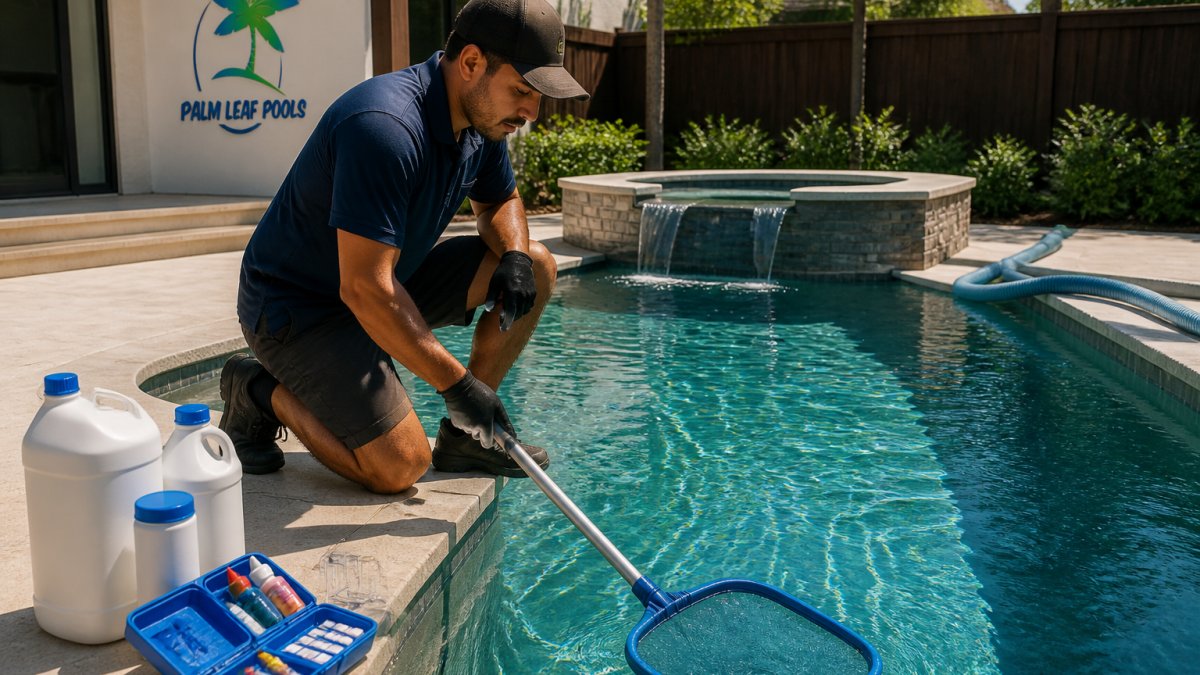
The single best way to push the replacement decision further out is preventive maintenance. Clean filters reduce strain on the pump. Balanced water chemistry slows corrosion on heaters and salt cells. Regular inspection catches small problems before they become motor failures.
A simple inspection schedule keeps equipment healthy:
- Weekly: Skim, check water chemistry, and confirm normal flow and pressure.
- Monthly: Inspect the pump for leaks, noise, and vibration; clean the filter as needed.
- Seasonally: Service the heater before heavy use, inspect the salt cell, and check electrical connections.
Frequently Asked Questions
Should I replace my entire pool pump or just the motor?
If the pump housing, seal plate, and impeller are in good condition, a motor swap can restore performance at a lower cost than a full pump replacement. But if the housing shows cracks, the impeller is worn, or the pump is more than 8-10 years old, replacing the whole unit is often the better long-term move. A technician can test the motor windings and inspect the wet end to tell you which path makes sense for your system.
How long does pool equipment typically last?
Pool equipment lifespan varies by component. A pump motor often lasts 8-12 years, filters 10-15 years, heaters 7-10 years, and salt cells 3-7 years depending on water chemistry and operating hours. Equipment that runs longer daily, sits in harsh sun, or operates with unbalanced water tends to fail sooner. Keeping a simple log of installation dates helps you anticipate when replacement is likely and budget for it.
How much does it cost to replace all pool equipment?
Pool equipment replacement cost depends on which components you replace and the size of your pool. A single pump replacement costs far less than a full system overhaul that includes a filter, heater, and automation controls. Pricing also varies by brand, efficiency rating, and installation complexity. Request a written quote that separates parts, labor, and any permit fees so you can compare options clearly.
Which pool equipment problems can be repaired?
Many common pool equipment problems are repairable: leaking pump seals, worn O-rings, clogged impellers, faulty pressure switches, cracked filter lids, and thermostat failures. These fixes are usually cost-effective when the unit is under 8 years old and parts are available. Problems like a cracked filter tank, a rusted heater exchanger, or a motor with burned windings often push the decision toward replacement instead.
Pool equipment eventually forces a decision, and making the wrong one means paying twice. Palm Leaf Pools takes the guesswork out of that call. Our team handles weekly maintenance to keep equipment running longer, full remodeling when replacement is the right move, and clear communication so you always know what's happening and why. Call Today to get started with Palm Leaf Pools and protect your investment.