 ultimate-guide
Average Monthly Pool Maintenance Cost: DFW Guide
Table of Contents
- What Factors Affect Your Monthly Pool Maintenance Cost
- What Is Included in Weekly Pool Maintenance
- Chemical-Only vs. Full-Service Plans
- Seasonal Maintenance and Winterization Costs
- How to Choose a Pool Maintenance Company
- DIY Maintenance vs. Professional Service
- Total Cost of Ownership for Pool Owners
- Frequently Asked Questions
Last Updated: September 30, 2026
What Factors Affect Your Monthly Pool Maintenance Cost
The monthly pool maintenance cost in the Dallas-Fort Worth area depends on pool size, service frequency, climate, and equipment needs. Understanding these factors helps you anticipate expenses.
Pool size is the primary cost driver. A small residential pool (15,000 gallons) requires less chemical treatment than a large in-ground pool (40,000+ gallons), which demands more labor, chemicals, and equipment inspections.
Weekly service visits cost less per visit than bi-weekly schedules but require higher total monthly commitment. Weekly maintenance prevents problems from accumulating and keeps water chemistry stable.
Pool size and type
In-ground pools cost more to maintain than above-ground pools due to complex equipment, deeper water volumes, and integrated circulation systems.
Saltwater systems require specialized knowledge of mineral balance and cell maintenance. Salt systems corrode metal components faster than chlorine-only setups, especially in hard water regions.
Pools with unusual shapes or multiple depth zones require more thorough brushing and vacuuming. Shallow pools lose chlorine faster under the Texas sun.
Service frequency and plan type
Weekly visits prevent chemical imbalances from escalating into expensive problems by catching small issues early.
Chemical-only plans cost less but require homeowner discipline. Improper pH or alkalinity levels can damage pool surfaces and equipment.
Full-service plans include skimming, brushing, vacuuming, chemical balancing, and equipment inspection. This protects your investment and saves money on repairs.
DFW climate and water chemistry impact
DFW summer temperatures regularly exceed 95°F, accelerating chlorine consumption, requiring higher chemical costs and more frequent rebalancing June through September.
North Texas hard water causes calcium scaling, requiring acid washing or chelation treatments. Professional technicians account for hard water in pricing.
Evaporation rates in the DFW area can be significant during peak summer, requiring more frequent water additions and chemical rebalancing.
Fall brings significant leaf debris accumulation, which can impact monthly costs if your service plan doesn't account for seasonal debris loads.
Occasional freezes require winterization to protect equipment. Spring startup requires deep cleaning and equipment inspection.
Equipment and utility costs
A standard pool pump represents a significant portion of total ownership expense during summer months.
Gas heaters can incur daily costs during shoulder seasons. Heat pumps are more efficient but require higher upfront investment.
What Is Included in Weekly Pool Maintenance
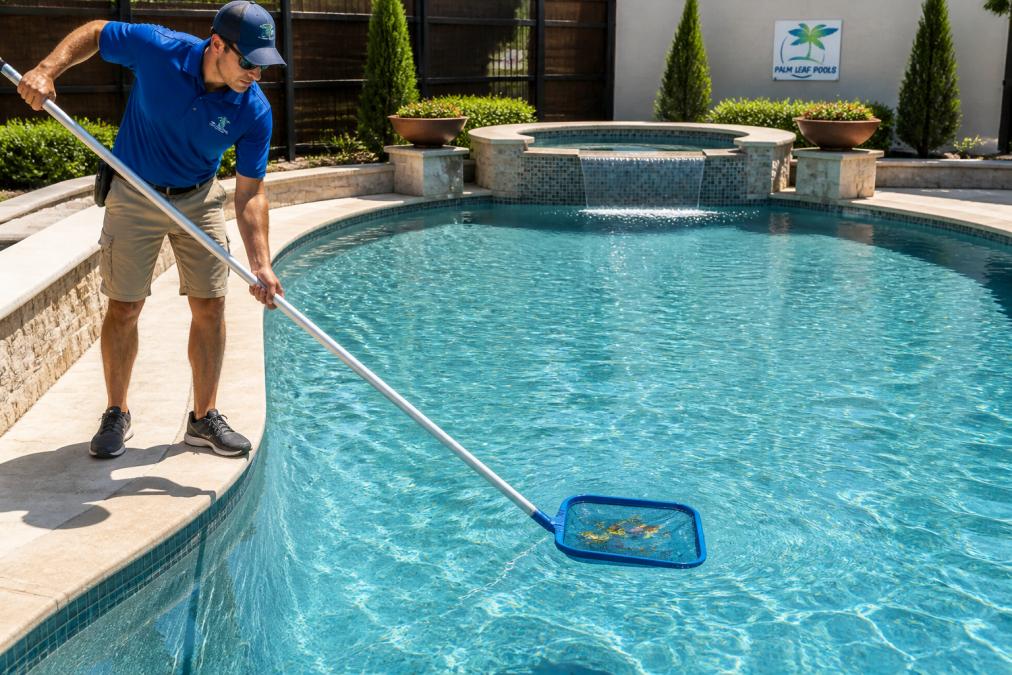
Weekly pool maintenance covers the essential tasks that keep water safe, clear, and chemically balanced. A professional technician typically spends 30 to 60 minutes per visit, depending on pool size and condition.
Standard cleaning tasks
Skimming removes floating debris before it sinks and clogs filters or consumes chlorine.
Brushing prevents algae buildup and loosens debris for vacuuming.
Vacuuming removes settled debris and dead algae cells.
Filter cleaning keeps water flowing efficiently through the circulation system. A clogged filter reduces water clarity and forces the pump to work harder, increasing utility costs and shortening equipment lifespan.
Chemical balancing and testing
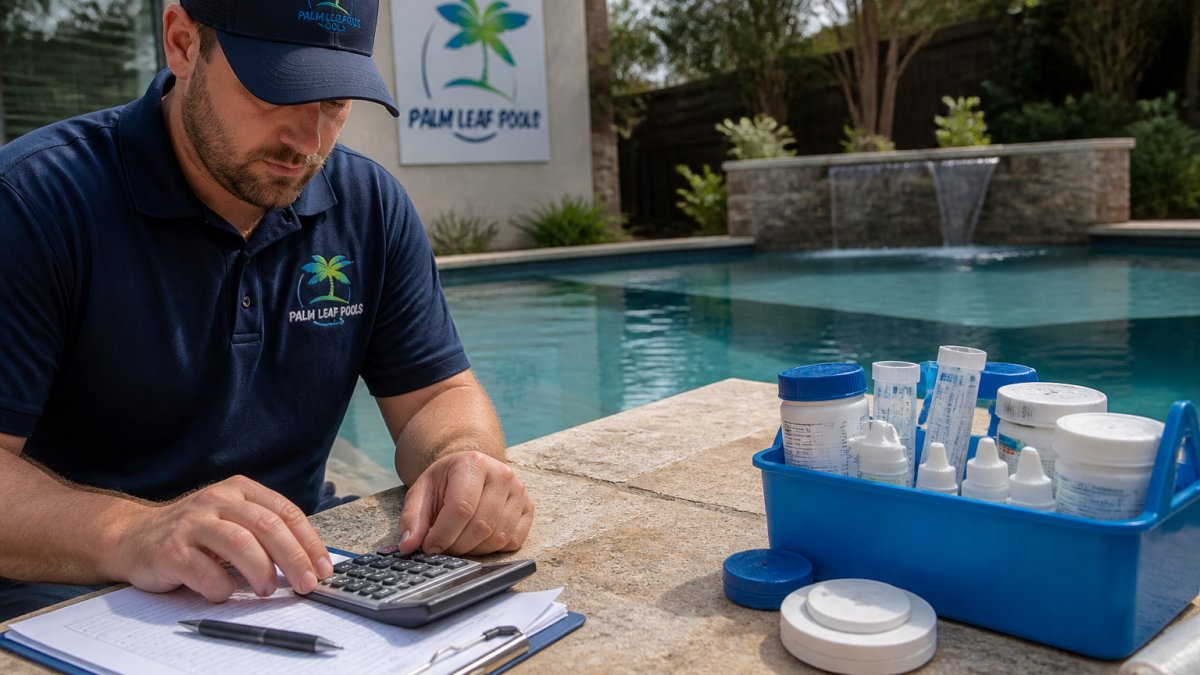
Water chemistry testing measures pH, alkalinity, chlorine, and calcium hardness to prevent algae growth and ensure safe swimming conditions.
pH should stay between 7.2 and 7.6 to prevent equipment corrosion or cloudy water. Alkalinity buffers pH swings.
Chlorine kills bacteria and algae. Too little allows blooms; too much irritates eyes and skin.
Equipment inspection
Technicians check the pump, filter, and circulation system for leaks or performance drops, preventing catastrophic failures.
Skimmer and pump strainer baskets are cleaned to maintain water flow and prevent debris damage.
Chemical-Only vs. Full-Service Plans
Chemical-only plans let homeowners handle physical cleaning while paying for professional testing, chemical treatment, and equipment inspection.
Full-service plans include all cleaning, chemical balancing, and equipment inspection, eliminating guesswork and ensuring consistent water quality.
Palm Leaf Pools recommends full-service maintenance for many homeowners. This provides peace of mind and investment protection.
Seasonal Maintenance and Winterization Costs
Seasonal maintenance in the DFW area involves distinct cost phases tied to the region's climate patterns. Understanding these costs helps you budget for the full year rather than focusing only on monthly service fees.
Fall preparation and leaf management
Fall brings significant leaf debris, which may require additional skimming during October and November.
DIY fall cleanup requires a significant time commitment. Filter cartridges may need more frequent replacement, which can add to monthly costs.
Winter winterization (November-December)
Winterization involves draining equipment, adding algaecide, lowering water level, and covering the pool to prevent freeze damage and algae blooms.
Professional winterization is an option. DIY winterization requires specific products. Professional service can be a valuable investment compared to potential freeze damage repair costs.
Spring startup (March-April)
Spring startup includes deep cleaning, equipment inspection, chemical rebalancing, and filter cleaning after 3-4 months of reduced circulation.
Professional spring startup is available. Significant algae treatment may incur additional costs. Annual packages bundling winterization and startup are also offered.
Summer maintenance intensification (June-September)
Summer maintenance may include acid washing, additional chemical treatments, and more frequent filter cleaning due to heat and usage.
If you're using the pool heavily, chemical costs may increase compared to light-use pools.
Annual cost breakdown example
Homeowners who choose chemical-only plans or DIY maintenance may see different cost outcomes, but consistent maintenance is critical in the DFW area.
How to Choose a Pool Maintenance Company
Selecting a reliable pool service provider protects your investment and ensures consistent water quality. The wrong choice leads to missed appointments, poor communication, and expensive equipment failures.
Evaluating reliability and communication
Ask potential service providers about their scheduling consistency. Do they show up on the same day each week? Can they accommodate schedule changes if needed? A company that prioritizes reliability demonstrates respect for your time and your pool.
Communication matters as much as technical skill. You should receive updates about your pool's condition, any issues discovered during service, and recommendations for repairs or upgrades. A responsive company answers questions promptly and explains what they're doing and why.
Check online reviews and ask for references from current customers in the DFW area. Local references matter because they've experienced the company's service in your climate and market conditions.
Understanding service agreements
Read the contract carefully before signing. Understand what's included in the monthly fee and what costs extra. Hidden fees for equipment repairs, chemical treatments, or emergency calls create frustration and damage trust.
Ask about cancellation policies. Can you pause service during winter if you close your pool? Can you switch to bi-weekly service during slower months? Flexible contracts indicate a company confident in their service quality.
Clarify response times for equipment problems. If your pump fails on a Saturday, how quickly can they respond? Emergency service availability matters if you're planning to host swimmers.
Transparency about additional fees
A reputable company explains additional costs upfront. Equipment repairs, acid washing, and seasonal services should be quoted separately before work begins.
Ask whether chemical costs are included in the monthly fee or billed separately. Some companies include basic chemicals but charge extra for algaecide or specialty treatments. Understanding this distinction prevents billing surprises.
Inquire about equipment inspection fees. Some companies inspect equipment during routine visits at no charge; others bill separately for detailed inspections. Knowing this policy helps you budget for preventive maintenance.
DIY Maintenance vs. Professional Service
DIY pool maintenance appeals to homeowners who want to save money and maintain control over their pool. However, most DIY attempts fail because they underestimate the skill, time, and consistency required.
Water chemistry testing requires understanding pH, alkalinity, chlorine, and calcium hardness. Mistakes in chemical balance lead to algae blooms, cloudy water, or equipment corrosion. Correcting chemical errors often costs more than professional service would have.
Equipment maintenance requires mechanical knowledge. A pump making unusual noises might need simple repairs or might signal imminent failure. Without experience, you can't distinguish between minor issues and major problems until something breaks completely.
Time commitment is the real cost of DIY maintenance. Weekly cleaning, testing, and chemical adjustments require 2 to 4 hours per week during peak season.
Professional service through Palm Leaf Pools eliminates these challenges. Our technicians have years of experience diagnosing problems early, balancing chemicals precisely, and maintaining equipment properly. Professional service can be a valuable investment against expensive repairs and water quality problems.
Total Cost of Ownership for Pool Owners
Understanding total cost of ownership helps you evaluate whether professional maintenance is worth the investment. The monthly pool maintenance cost is only part of your annual pool expenses.
Equipment replacement represents a major long-term cost. Pumps, filters, and heaters typically last 10 to 15 years. Proper maintenance extends equipment lifespan and delays these expensive replacements. Neglected pools often experience premature equipment failure, adding thousands in unexpected costs.
Chemical costs vary seasonally but typically run between routine maintenance expenses. Professional service providers apply chemicals efficiently, which can reduce waste compared to DIY approaches.
Utility costs for pumps and heaters depend on run time and equipment efficiency. Well-maintained pools with clean filters require less pump runtime, reducing electricity consumption. This savings compounds over years of ownership.
Repair costs escalate dramatically when maintenance is neglected.
Frequently Asked Questions
How much does monthly pool maintenance cost in the DFW area?
Monthly pool maintenance costs depend on pool size, service frequency, and the specific tasks included. Pricing varies based on whether you choose chemical-only service, full-service weekly cleaning, or bi-weekly options. Contact Palm Leaf Pools for a personalized quote based on your pool's needs and your preferred service level.
What is included in weekly pool maintenance service?
Standard weekly pool maintenance typically includes skimming debris, brushing walls, vacuuming the floor, testing and balancing water chemistry (pH, alkalinity, chlorine), cleaning the filter, and inspecting equipment. A professional technician will also check the pump and other components to catch potential issues early before they become expensive repairs.
How do I choose a reliable pool maintenance company?
Look for a company with clear communication practices, transparent pricing, and a detailed service agreement that explains what's included and what costs extra. Ask about their response time for equipment issues, request references, and verify they handle both routine maintenance and repairs. A trustworthy provider will explain water chemistry and equipment status in terms you understand.
Should I do my own pool maintenance or hire a professional?
DIY maintenance saves money upfront but requires consistent effort, chemical knowledge, and equipment investment. Professional service ensures proper water chemistry, catches equipment problems early, and saves you time. Many homeowners find that professional maintenance protects their pool investment by preventing costly repairs and extending equipment life.